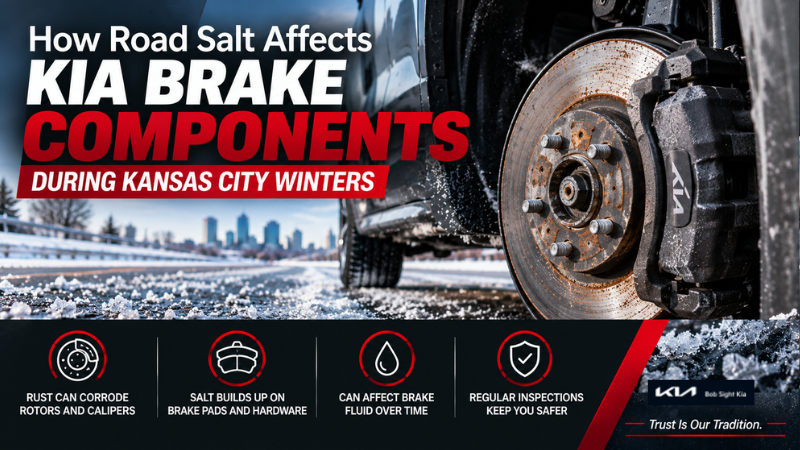
How Road Salt Affects Kia Brake Components During Kansas City Winters When winter storms move through Jackson County, road crews may use salt, brine, and other deicing materials to help manage snow and ice on major highways and neighborhood streets. These treatments can improve winter road conditions, but they also expose vehicles to salt-containing moisture that can contribute to corrosion over time. For Kia drivers in Independence, Blue Springs, Lee's Summit, and the greater Kansas City metro, winter road salt is more than a cosmetic concern. Repeated exposure to salty slush can affect brake rotors, caliper brackets, hardware, and certain underbody components. When corrosion interferes with the movement or condition of brake parts, drivers may experience unusual noises, uneven brake pad wear, or changes in braking performance. Understanding how road salt affects your Kia's braking system can help you recognize early warning signs, distinguish normal surface rust from more serious concerns, and make informed maintenance decisions. At Bob Sight Kia in Independence, Missouri, our service department helps local drivers address brake wear, seasonal maintenance, and vehicle performance concerns. Whether your daily commute takes you along Interstate 70, Highway 291, or neighborhood roads throughout Jackson County, knowing how to care for your brakes during winter is an important part of vehicle ownership. Schedule Kia Brake Service at Bob Sight Kia in Independence, MO In This Guide You'll Learn This guide explains how winter road treatments interact with braking components and what Kia owners should know about corrosion-related maintenance. Why road salt and moisture accelerate corrosion on exposed metal components How brake rotors, calipers, slide pins, pad hardware, and brake lines can be affected Which braking symptoms may indicate corrosion, uneven wear, or a mechanical problem How to distinguish ordinary rotor surface rust from corrosion that needs inspection Practical ways to remove winter road residue without damaging brake components Why proper brake hardware inspection and lubrication require the correct procedures How seasonal brake maintenance supports long-term vehicle care When to schedule a professional brake inspection at Bob Sight Kia The Chemistry of Road Salt and Automotive Corrosion Road salt can accelerate corrosion because dissolved salts increase the electrical conductivity of water. When salt-containing moisture contacts susceptible metal surfaces, it can support the electrochemical reactions responsible for corrosion. Iron and steel components are vulnerable to oxidation when exposed to moisture and oxygen. In the presence of dissolved salts, corrosion may progress more quickly than it would under comparable conditions without salt contamination. During Kansas City winters, road treatments can mix with melting snow, rain, and slush. Passing vehicles may spray this mixture into wheel wells and onto exposed underbody components. Over time, repeated wetting and drying can leave salt deposits on surfaces that are difficult to see during routine vehicle washing. Why Salt and Water Create a Corrosive Environment Corrosion is an electrochemical process involving reactions at the metal surface. Water containing dissolved salts acts as an electrolyte, allowing electrical charge to move more readily between areas where corrosion reactions occur. This can accelerate the deterioration of unprotected or damaged metal surfaces. Protective coatings, component materials, environmental exposure, and maintenance all influence how quickly corrosion develops. Not every brake component exposed to road salt will experience the same level of damage. What About Calcium Chloride and Magnesium Chloride? Road maintenance agencies may use different deicing materials depending on temperature, precipitation, road conditions, and local operating practices. Common deicing materials include sodium chloride, calcium chloride, and magnesium chloride. Some chloride-based products can attract moisture from the surrounding environment. This characteristic may contribute to prolonged moisture exposure when residues remain on susceptible metal surfaces. However, the specific products used on Independence and Kansas City roads can vary. Drivers should not assume every treated roadway contains the same chemical mixture. Why Repeated Winter Exposure Matters A single trip on a salted road does not necessarily cause meaningful brake damage. Long-term concerns are more closely related to repeated exposure, retained moisture, protective coating condition, and whether corrosion develops in areas that affect component operation. Vehicles driven frequently on treated roads may encounter more salt residue than vehicles used primarily in dry conditions. Regular inspections can help identify corrosion before it contributes to significant mechanical problems. How Road Salt Affects Specific Kia Brake Components Your Kia's braking system contains several components that work together to slow and stop the vehicle. Disc brake systems generally use hydraulic pressure to press brake pads against a rotating brake rotor. Depending on the design, caliper components and brake pads must move correctly for braking force to be applied and released as intended. Corrosion can affect these components in different ways. Brake Rotors Many automotive brake rotors contain cast iron, a material that can develop visible surface rust when exposed to moisture and oxygen. During winter, salt-containing water may accelerate corrosion on exposed rotor surfaces. Some areas of a rotor, such as the hat, outer edges, and internal ventilation passages on vented designs, may not receive the same regular contact from brake pads as the friction surfaces. Corrosion can accumulate in these areas over time. Light surface rust on the braking face is common after a vehicle has been parked in damp conditions. More extensive pitting, scaling, or deterioration may require professional evaluation. Brake Calipers and Slide Pins Brake calipers apply braking force through the brake pads. Many floating-caliper designs use slide pins that allow the caliper assembly to move as intended during brake application and release. These pins are commonly protected by rubber boots and appropriate lubrication. If protective boots become damaged or contamination enters the sliding mechanism, corrosion may interfere with normal movement. A sticking caliper or slide pin can contribute to uneven brake pad wear, brake drag, abnormal heat, or reduced braking performance. The exact wear pattern depends on the caliper design and the nature of the problem. Brake Pad Abutment Clips and Hardware Brake pads must fit and move correctly within their mounting hardware. Some disc brake designs use metal clips or guides at the points where the pads contact the caliper bracket. Corrosion can develop beneath or around these components. In certain situations, expanding corrosion products may reduce the available clearance and interfere with pad movement. This condition is sometimes described as rust jacking. If brake pads cannot move as designed, they may wear unevenly or remain in contact with the rotor longer than intended. Cleaning, inspection, and hardware replacement should follow the procedures specified for the particular brake assembly. Brake Lines and Hydraulic Fittings Brake lines carry hydraulic pressure through the braking system. Metal brake lines and fittings can be vulnerable to corrosion, depending on their material, protective coating, location, and exposure history. Severe corrosion may eventually compromise a component and contribute to a brake fluid leak. Because hydraulic pressure is essential for normal braking, suspected brake fluid leaks require prompt professional attention. A corroded brake line should not be repaired using improvised methods or temporary sealants. Brake Hoses and Protective Boots Flexible brake hoses and rubber protective components can deteriorate with age, environmental exposure, and mechanical wear. Road salt may contribute to the harsh environment surrounding these parts, but it is not accurate to assume that salt exposure directly destroys every rubber component. Cracks, swelling, leakage, loose protective boots, and other visible deterioration should be evaluated during brake inspections. Warning Signs of Road Salt-Related Brake Problems Brake corrosion does not always produce an obvious symptom immediately. However, certain changes in braking behavior may indicate that components are worn, sticking, contaminated, or otherwise malfunctioning. These symptoms are not unique to road salt exposure. A proper inspection is needed to identify the actual cause. Squealing, Scraping, or Grinding Noises Brake noises can develop for several reasons, including moisture-related rotor rust, worn brake pads, debris, hardware problems, or damaged friction surfaces. A brief change in brake sound after a vehicle has been parked in damp conditions may be associated with light rotor surface rust. However, loud grinding, recurring scraping, or noises that continue during normal driving should not be dismissed as harmless. Persistent grinding can indicate significant brake wear or another condition requiring prompt inspection. Your Kia Pulls to One Side While Braking If your Kia consistently pulls toward one side when the brakes are applied, the cause may involve uneven braking force. A sticking caliper, restricted brake component movement, uneven friction material condition, or other mechanical concern may contribute. Tire problems, suspension issues, and road conditions can also influence vehicle pull. Because several systems may be involved, professional diagnosis is important. One Wheel Becomes Unusually Hot A brake component that does not release correctly can create continuous friction between the pad and rotor. This may cause excessive heat, unusual odors, or accelerated wear. If you notice smoke, a strong burning smell, or signs of an overheated wheel, stop in a safe location and avoid continuing to drive until the concern has been assessed. Do not touch the wheel, rotor, or caliper to check its temperature. Brake components can become hot enough to cause burns. The Brake Pedal Feels Soft or Spongy A noticeable change in brake pedal feel can indicate a hydraulic braking concern. Possible causes include air in the hydraulic system, brake fluid leakage, or other component faults. Severe corrosion of a metal brake line is one possible source of a leak, but it is not the only explanation. If the brake pedal suddenly feels unusually soft, sinks toward the floor, or braking performance decreases, stop driving as soon as it is safe. Arrange professional assistance or towing rather than continuing a normal commute. Uneven Brake Pad Wear Brake pads do not always wear at exactly the same rate. However, a substantial difference between pads on the same axle or within a caliper assembly can indicate a mechanical concern. Sticking hardware, caliper movement problems, piston issues, and other conditions may contribute. Measuring pad thickness and inspecting the associated components can help determine why the wear pattern developed. Surface Rust vs. Serious Brake Corrosion: What Is Normal? One of the most common winter brake concerns involves orange rust appearing on the surface of a brake rotor. For many vehicles with cast-iron rotors, light surface rust after rain, snow, or washing is normal. However, not every type of visible corrosion should be treated the same way. Normal Light Surface Rust When a vehicle is parked in damp conditions, a thin layer of oxidation may form on exposed rotor friction surfaces. This can occur even when the braking system is otherwise functioning normally. During subsequent braking, contact between the pads and rotors may remove some of this light surface oxidation. A brief noise or rough sensation may occur in certain situations. There is no universal number of brake applications required to remove surface rust, and drivers should not assume that all grinding sounds are normal. When Rust Becomes a More Serious Concern More substantial corrosion may appear as deep pitting, scaling, flaking material, or significant deterioration of rotor surfaces and edges. Corrosion affecting the rotor's friction area may contribute to uneven contact with the brake pads. Depending on severity, this can be associated with noise, vibration, or reduced braking consistency. Heavy corrosion in other rotor areas may also affect the component's condition. Not every corroded rotor is unsafe, but a rotor with significant deterioration should be evaluated rather than judged by appearance alone. How Technicians Evaluate Brake Rotor Condition A professional brake inspection may include checking rotor thickness, friction surface condition, visible corrosion, and other measurements when appropriate. Rotor condition must be evaluated against the specifications and service procedures for the particular vehicle. Some rotor concerns may be addressed through approved service procedures, while others require replacement. Rotor resurfacing is not appropriate in every situation. Remaining thickness, rotor design, condition, and manufacturer requirements must be considered. Step-by-Step: How to Protect Your Kia Brakes From Road Salt Drivers cannot eliminate all winter road exposure, but practical maintenance habits can help reduce salt accumulation and make developing problems easier to identify. The goal is to remove residue where practical while avoiding cleaning methods that could damage sensitive components. Step 1: Wash Your Vehicle After Significant Salt Exposure Regular washing can help remove road salt, dirt, and slush from accessible vehicle surfaces. Consider washing your Kia after periods of heavy road treatment, when weather conditions make washing practical. A car wash with an underbody rinse can help reach areas that are difficult to clean by hand. There is no universal washing interval that guarantees corrosion prevention. Frequency should reflect how often your vehicle encounters treated roads and whether temperatures allow safe cleaning. Step 2: Rinse Accessible Wheel Wells and Underbody Areas Salt residue may accumulate inside wheel wells and along exposed underbody surfaces. Rinsing these areas with clean water can help remove loose contamination. Avoid directing concentrated high-pressure spray into brake seals, electrical connectors, bearings, or other sensitive components. Do not crawl beneath an unsupported vehicle to clean the undercarriage. Step 3: Watch for Changes in Brake Performance Pay attention to unusual noises, vehicle pulling, brake pedal changes, vibration, or persistent burning odors. These symptoms may have causes unrelated to salt, but they still deserve attention. Do not wait for a routine maintenance appointment if braking performance becomes noticeably abnormal. Step 4: Have Brake Hardware Inspected During Service Brake inspections may reveal uneven pad wear, damaged protective boots, sticking components, or corrosion that is not visible from outside the wheel. When appropriate, technicians can inspect caliper movement, pad hardware, rotor condition, and related components. Inspection findings help determine whether cleaning, lubrication, adjustment, or component replacement is needed. Step 5: Leave Brake Lubrication to Proper Service Procedures Brake hardware requires the correct lubricant in the correct locations. Lubricant compatibility depends on component materials, brake design, and manufacturer specifications. Using an inappropriate product or applying lubricant to the wrong surface can interfere with braking performance. Never apply grease, penetrating oil, or other lubricants to brake pad friction material or rotor braking surfaces. Brake disassembly and lubrication should follow the vehicle's service procedures. Step 6: Schedule Brake Inspections When Conditions Warrant Routine maintenance visits provide an opportunity to evaluate brake wear and identify developing problems. Drivers who frequently travel on heavily treated roads or notice unusual braking symptoms may benefit from discussing additional inspections with their service advisor. Follow your Kia maintenance schedule and address concerns promptly rather than relying on a fixed seasonal replacement schedule. Schedule a Kia Brake Inspection in Independence Quick Facts: Winter Brake Care for Independence Drivers Salt and Corrosion: Salt-containing moisture can accelerate corrosion on susceptible metal brake components. Brake Rotors: Light surface rust is common on many cast-iron rotors after wet weather. Caliper Slide Pins: Corrosion or contamination can interfere with normal caliper movement. Brake Hardware: Corrosion around pad guides and mounting components can contribute to binding or uneven wear. Brake Lines: Severe corrosion can compromise hydraulic components and may contribute to fluid leaks. Vehicle Washing: Removing accumulated salt residue can reduce exposure, but it does not guarantee corrosion prevention. Brake Lubrication: Only approved products and model-appropriate procedures should be used. Warning Signs: Persistent grinding, pulling, abnormal heat, and changes in pedal feel require attention. Planning Your Kia's Winter Brake Maintenance Winter brake care works best as part of a broader vehicle maintenance routine. Road salt exposure, changing temperatures, wet pavement, and repeated freeze-thaw conditions can create additional challenges for drivers throughout the Kansas City metro. Reviewing your Kia's brake condition before and after the winter season can help identify wear and corrosion concerns. Consider a Brake Inspection Before Winter Before winter weather arrives, check whether your Kia is due for maintenance under its recommended service schedule. If you have noticed brake noise, vibration, pulling, or changes in pedal feel, mention those symptoms when scheduling service. A technician may inspect brake pad condition, rotor surfaces, caliper components, and other relevant parts based on the concern. Pay Attention to Brake Behavior During Winter Cold weather and moisture may change the sounds you hear from the braking system. However, unusual sounds should not automatically be attributed to harmless surface rust. If a noise persists, becomes louder, or is accompanied by a change in braking performance, have the vehicle inspected. Review Brake Condition After Heavy Salt Exposure Drivers who spend much of the winter traveling on treated highways and neighborhood streets may want to discuss corrosion-related concerns during their next maintenance appointment. Technicians can evaluate visible corrosion and determine whether it affects component operation or serviceability. Remember That Winter Stopping Distance Involves More Than Brakes Even a properly functioning braking system cannot provide normal dry-pavement traction on snow or ice. Tire condition, road surface, vehicle speed, following distance, and driver inputs all influence stopping performance. Maintaining the braking system is important, but it does not eliminate the need to adjust driving habits for winter conditions. Drivers can also review available offers through the Bob Sight Kia Service Specials page. Frequently Asked Questions About Road Salt and Kia Brakes Why do my Kia brakes make a grinding noise on cold winter mornings? Moisture can cause light surface rust to develop on cast-iron brake rotors while a vehicle is parked. When the brakes are first applied, contact between the pads and rotors may remove some of this oxidation and produce a temporary noise or rough sensation. However, grinding is not always caused by harmless surface rust. Worn brake pads, damaged rotors, trapped debris, and other mechanical problems can also produce grinding sounds. If the noise is loud, persistent, recurring, or accompanied by reduced braking performance, arrange a brake inspection promptly. Do not continue driving with suspected severe brake damage. Can road salt cause my Kia brake pedal to feel soft or spongy? Road salt can contribute to corrosion of susceptible metal brake components, including certain brake lines and fittings. If corrosion becomes severe enough to cause a hydraulic fluid leak, braking performance and pedal feel may be affected. However, a soft or spongy brake pedal can have several causes, including air in the hydraulic system or other hydraulic faults. A sudden change in pedal feel should be treated as a serious concern. If the pedal sinks unusually far, feels significantly softer than normal, or braking performance decreases, stop in a safe location and arrange professional assistance. Towing may be necessary. Do not continue a normal drive with suspected hydraulic brake failure. How often should I wash my Kia's undercarriage during winter? There is no single undercarriage washing schedule that applies to every driver. The appropriate frequency depends on road salt exposure, weather, driving habits, and the availability of safe washing conditions. Washing after substantial salt exposure can help remove accumulated residue. During extended periods of treated-road driving, periodic underbody rinsing may be useful. Avoid washing in conditions where water may immediately freeze around doors, locks, or other components. When using a pressure washer, follow the equipment instructions and avoid concentrated spray on sensitive brake and electrical components. What is a brake slide pin, and why can corrosion cause it to stick? A brake slide pin is a component used in many floating-caliper disc brake systems. It allows the caliper assembly to move as designed when braking force is applied and released. Slide pins typically operate within protected, lubricated areas of the caliper mounting system. If contamination enters the mechanism or corrosion develops, movement may become restricted. A sticking slide pin can contribute to uneven pad wear, abnormal heat, or brake drag. The exact symptoms and wear pattern depend on the caliper design and the location of the problem. Proper service may involve inspecting the pins, protective boots, mounting hardware, and related components. Are genuine OEM Kia brake parts more resistant to road salt than aftermarket parts? Genuine Kia replacement parts are designed to meet the specifications established for the applicable vehicle. However, it is not accurate to assume that every genuine Kia brake component is more corrosion-resistant than every aftermarket alternative. Aftermarket brake parts vary considerably in design, materials, coatings, manufacturing quality, and compatibility. Some replacement rotors and hardware use corrosion-resistant coatings, while others may have different protective features. The most important considerations include correct fitment, appropriate specifications, component quality, and proper installation. If you are comparing replacement brake parts, ask your service advisor about the options appropriate for your specific Kia model. Can road salt make my Kia brake caliper stick? Road salt exposure can contribute to corrosion around susceptible caliper hardware. If corrosion or contamination interferes with slide pins, pad guides, or other moving components, the caliper assembly may not operate as intended. This can contribute to brake drag, uneven wear, or abnormal heat. However, sticking calipers can also result from hydraulic or mechanical problems unrelated to road salt. A professional inspection is needed to determine the cause and the appropriate repair. Should I spray lubricant on rusty brake parts? No. Do not spray general-purpose lubricants, penetrating oils, or grease onto brake rotors or brake pad friction surfaces. Contaminating friction materials can interfere with braking performance. Brake hardware lubrication requires products and application locations specified for the particular brake system. If corrosion is affecting caliper movement or pad hardware, have the components inspected and serviced using the correct procedures. Can road salt damage the brake lines underneath my Kia? Repeated exposure to salt-containing moisture can contribute to corrosion of susceptible metal brake lines and fittings. The risk depends on the material, protective coating, age, location, and condition of the components. Severe corrosion may eventually compromise a line and contribute to brake fluid leakage. Because the hydraulic system is critical to braking performance, suspected brake line deterioration should be evaluated promptly. If a brake fluid leak or significant loss of braking performance is suspected, do not continue driving. Does washing my Kia prevent all brake corrosion? No. Washing can help remove salt residue and reduce continued exposure, but it cannot prevent every form of corrosion. Protective coatings, component design, existing corrosion, moisture retention, and operating conditions all influence long-term results. Regular washing is a useful maintenance habit, but it should be combined with appropriate inspections and attention to changes in braking performance. Schedule Kia Brake Service in Independence, MO Road salt is a normal part of winter driving throughout the Kansas City area, but its effects on exposed brake components deserve attention. Understanding how corrosion develops, recognizing unusual brake symptoms, and following appropriate maintenance practices can help you make informed decisions about your Kia's braking system. If you notice persistent grinding, uneven brake wear, vehicle pulling, unusual brake heat, or changes in pedal feel, a professional inspection can help identify the cause. Bob Sight Kia serves drivers throughout Independence, Blue Springs, Lee's Summit, Raytown, Sugar Creek, Grain Valley, Liberty, and the greater Kansas City metro. Our service department can help you schedule an appointment to evaluate brake concerns and discuss maintenance or repair recommendations based on your vehicle's condition. Visit Bob Sight Kia at 1700 S Noland Road, Independence, MO 64055, or schedule service online. Schedule Kia Brake Service at Bob Sight Kia Helpful Kia Service and Shopping Links Schedule Kia Brake Service in Independence, MO Explore Kia Service Specials Browse New Kia Vehicles Shop Used Vehicles at Bob Sight Kia Value Your Trade Online Proud to Be Part of the Bob Sight Auto Group Bob Sight Kia is proud to be part of the Bob Sight Auto Group, serving drivers across Missouri and Kansas with automotive sales and service resources. Whether you are shopping for a new vehicle, exploring pre-owned inventory, or scheduling maintenance, our dealership family is committed to helping drivers find the information and services they need. Bob Sight Kia | Independence, MO Bob Sight Honda | Lawrence, KS Bob Sight CDJR | Lawrence, KS Bob Sight Ford | Lee's Summit, MO Trust Is Our Tradition.




 Warranties include 10-year/100,000-mile powertrain and 5-year/60,000-mile basic. All warranties and roadside assistance are limited. See retailer for warranty details.