
Today: 8:30AM - 6:00PM
Blog / Independence Kia Dealer

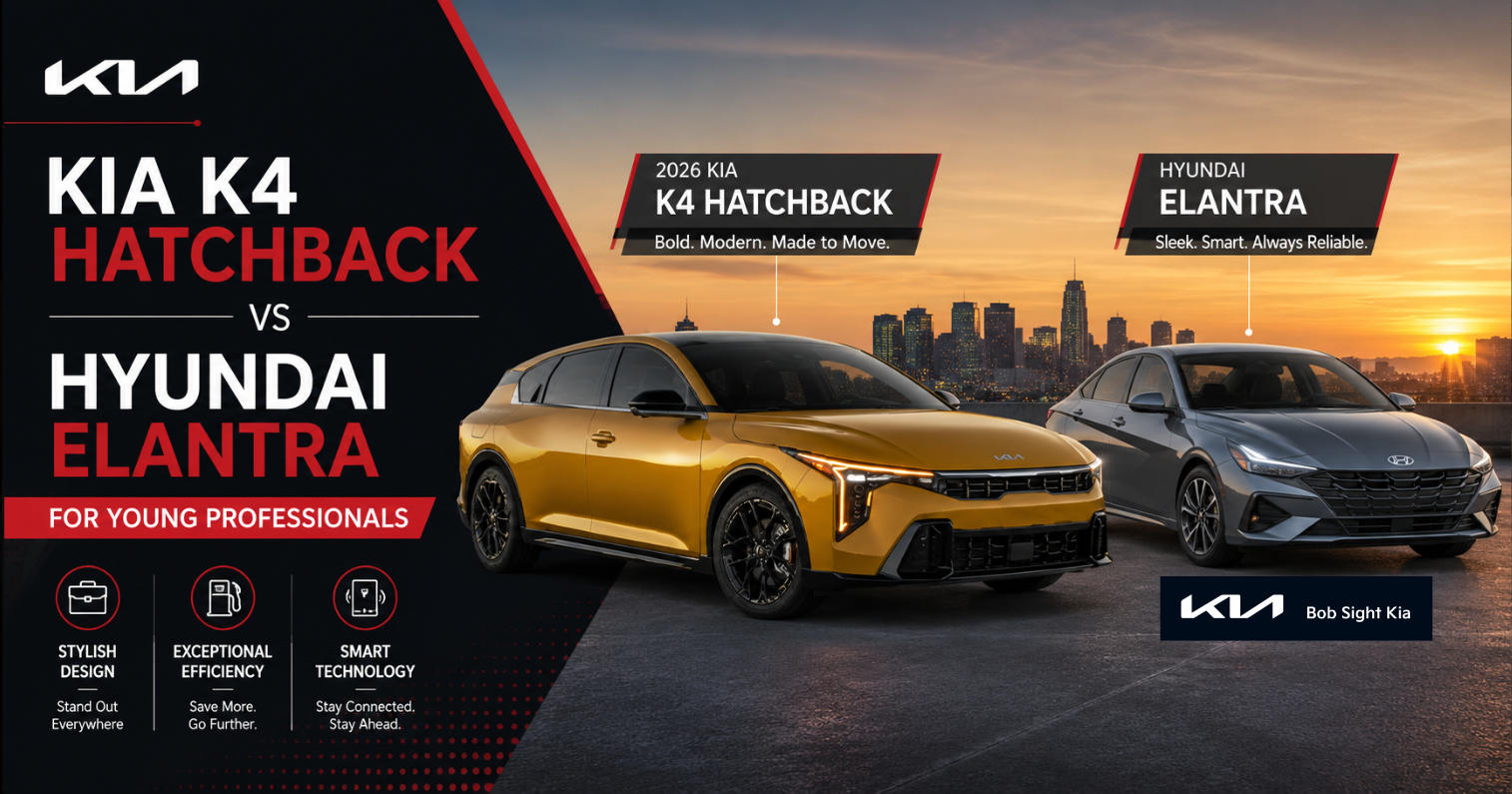
Kia K4 Hatchback vs Hyundai Elantra for Young Professionals in the Kansas City Metro

Bob Sight Kia comparison of the 2026 Kia K4 Hatchback and Hyundai Elantra, highlighting modern design, fuel efficiency, smart technology, and value for young professionals in Independence, MO and the Kansas City Metro.

Young professionals comparing the all-new Kia K4 Hatchback and the Hyundai Elantra will find that the K4 Hatchback offers superior cargo versatility, standard 12.3-inch touchscreen technology, and a more refined commuting experience across the Kansas City Metro. Navigating daily work commutes along Interstate 70 from Independence into downtown Kansas City demands a compact car that balances aggressive exterior styling with modern digital connectivity. At Bob Sight Kia, we know that young drivers in Jackson County prioritize smart ownership value, advanced driver-assistance technology, and flexible cargo space for weekend road trips. While the Hyundai Elantra remains a traditional four-door sedan, the Kia K4 Hatchback elevates daily practical utility with its wide-opening rear liftgate, spacious cabin dimensions, and smooth eight-speed automatic transmission on turbocharged models.

Kia K4 Hatchback vs Hyundai Elantra for Young Professionals in the Kansas City Metro

Explore New Kia K4 Hatchback Inventory at Bob Sight Kia in Independence, MO

In This Guide You'll Learn

Discover how the Kia K4 Hatchback outpaces the Hyundai Elantra to deliver the ultimate compact vehicle for young professionals in Independence and surrounding communities:

  • Why the hatchback design of the Kia K4 delivers superior cargo flexibility compared to the traditional sedan trunk of the Elantra.
  • How standard infotainment technology, featuring a massive 12.3-inch central touchscreen, gives the K4 a clear digital advantage.
  • Performance differences between the base 2.0-liter engine and available turbocharged powertrains across both compact models.
  • Step-by-step guidance for organizing your vehicle cabin and technology settings for an efficient daily highway commute.
  • A detailed head-to-head interior dimension, tech feature, and warranty specification comparison table.
  • How to evaluate long-term ownership costs, fuel economy ratings, and resale value advantages for career-focused drivers.
  • Answers to frequently asked questions regarding highway fuel efficiency, digital key setup, and driver-assist safety tech.

Hatchback Utility vs Sedan Trunk: Cargo Space for Active Young Professionals

The Kia K4 Hatchback provides significantly greater cargo versatility and rear loading access than the Hyundai Elantra sedan, making it the ideal compact car for busy midwestern lifestyles. Young professionals living in Independence often lead dynamic routines that require transporting gym gear, office presentation equipment, luggage, or outdoor recreational equipment. Traditional sedan trunks, such as the 14.2 cubic feet trunk found on the Hyundai Elantra, are limited by narrow decklid openings and fixed rear shelf heights. In contrast, the Kia K4 Hatchback features a wide-opening rear liftgate and low liftover height that allows owners to slide bulky boxes and awkwardly shaped items into the cargo bay effortlessly.

Cargo volume and usability extend far beyond static cubic-foot measurements when evaluating real-world utility. While standard compact sedans require maneuvered angling to fit larger items, the K4 Hatchback offers a wide 60/40 split-folding rear seat configuration that expands flat cargo space dramatically. Whether you are loading flat-pack furniture purchased near Summit Fair, packing camping supplies for a weekend getaway to Fleming Park, or loading bicycle equipment near Little Blue Parkway, the hatchback design adapts instantly to your active schedule without compromising passenger comfort.

Defining cargo accessibility in plain language helps career-focused buyers evaluate practical daily ownership. A traditional three-box sedan layout separates the engine bay, passenger cabin, and trunk into three distinct compartments divided by structural sheet metal. A two-box hatchback layout integrates the passenger cabin and cargo hold into a single continuous space under a high roofline. This structural advantage gives the Kia K4 Hatchback superior vertical loading clearance, allowing young professionals in Jackson County to haul items that simply cannot fit through a standard sedan trunk opening.

Digital Cockpit Technology: Standard 12.3-Inch Display vs Elantra Touchscreen

In-cabin technology in the Kia K4 Hatchback sets a higher segment baseline by offering a standard 12.3-inch touchscreen display, easily outperforming the standard 8.0-inch screen found on base Hyundai Elantra models. Today's career-focused drivers expect seamless digital integration the moment they start their vehicle. Kia equips every K4 with a modern widescreen infotainment interface that presents navigation maps, media options, and vehicle diagnostics in high-definition clarity, helping drivers stay organized while navigating heavy morning traffic along Noland Road or US-40.

Wireless Apple CarPlay and Android Auto come standard across the K4 Hatchback lineup, allowing you to stream podcasts, access turn-by-turn navigation apps, and manage phone calls hands-free. While higher trim levels of the Hyundai Elantra require upgrading to expensive package groups to access larger displays, the Kia K4 makes premium visual tech standard from the ground up. An available dual 12.3-inch panoramic display unit combines the digital gauge cluster and central display under a single curved glass panel, creating a futuristic cockpit aesthetic that mirrors luxury sport sedans costing thousands more.

Furthermore, the Kia K4 digital system supports Over-the-Air (OTA) software updates, ensuring your navigation software and media features remain current without scheduling dealership service visits. Intuitive voice recognition software allows drivers to adjust climate control settings, select music tracks, or send text messages using natural voice commands. This advanced driver-centric interface minimizes visual distraction, allowing young professionals commuting across the Kansas City Metro to keep their focus where it belongs on the road.

Powertrain Performance: Turbocharged Power and Transmission Efficiency

The Kia K4 Hatchback delivers a smoother, more refined driving feel thanks to its available 1.6-liter turbocharged engine paired with an eight-speed automatic transmission, replacing jerky dual-clutch setups. Under the hood, both the base Kia K4 and base Hyundai Elantra utilize a dependable 2.0-liter four-cylinder engine producing 147 horsepower and 132 lb-ft of torque, mated to an Intelligent Variable Transmission (IVT). This powertrain combination offers exceptional daily fuel economy, making it a cost-effective choice for young professionals driving daily between Independence, Raytown, and downtown Kansas City.

However, performance-minded drivers seeking extra passing power on Interstate 70 will appreciate the available K4 GT-Line Turbo model. Packed with a 1.6-liter turbocharged engine generating 190 horsepower and 195 lb-ft of torque, the K4 Turbo delivers rapid acceleration for highway merging. Crucially, Kia pairs this turbocharged engine with a smooth conventional eight-speed torque-converter automatic transmission. This mechanical choice avoids the low-speed hesitation and clunky gear engagement often experienced in the dual-clutch transmission (DCT) found on competitive sport sedans like the Elantra N Line.

A multi-link rear suspension system comes standard on GT-Line models of the K4, delivering responsive cornering stability and composed ride quality over rough midwestern pavement. Highway road noise is minimized through enhanced acoustic windshield glass and strategic sound-dampening insulation throughout the floor structure. Whether cruising along Highway 291 or tackling suburban commutes through Blue Springs, the Kia K4 Hatchback strikes a perfect balance between energetic handling dynamics and refined daily ride comfort.

Step-by-Step Guide to Setting Up Your K4 Digital Workspace and Drive Profile

Configuring your Kia K4 Hatchback driver profile and wireless connectivity features optimizes your daily commute, transforming your vehicle into a connected mobile workspace. Modern young professionals rely on personalized digital settings to transition seamlessly from the office to the highway. Taking a few minutes to customize your digital cluster settings, smartphone integrations, and driver preferences at Bob Sight Kia ensures a personalized driving experience every time you get behind the wheel.

Follow these simple numbered steps to set up your Kia K4 Hatchback digital environment before embarking on your daily Kansas City commute:

  1. Pair Your Smartphone via Bluetooth and Wireless CarPlay / Android Auto: Turn on the vehicle ignition, access the "Setup" menu on the 12.3-inch touchscreen, select "Device Connections," and pair your smartphone wirelessly to enable hands-free navigation and media.
  2. Create and Name Your Personal Driver Profile: Navigate to "User Profile" settings, select "Add New Profile," enter your name, and save your specific audio presets, display theme preferences, and climate control defaults.
  3. Register Kia Digital Key 2.0 on Your Smartphone: Open the Kia Connect mobile application, select "Digital Key," and follow the prompts to save a digital vehicle key directly into your Apple Wallet or Google Wallet for keyless access.
  4. Configure Custom Steering Wheel Shortcut Buttons: Program the custom star button on your steering wheel controls to quickly launch your favorite app, such as Apple Maps navigation or phone projection.
  5. Customize Advanced Driver Assistance Alerts: Adjust lane-keeping assist sensitivity, forward collision warning distances, and blind-spot monitoring chime volumes within the vehicle settings menu to match your driving style.

Completing this initial tech setup creates an effortless driving routine. The moment you enter your K4 Hatchback, the digital display recognizes your phone or digital key, glides into your custom settings, and prepares your navigation route into downtown Kansas City without requiring manual adjustments.

Bob Sight Kia service coupon graphic showing lifetime oil changes and tire rotations in Independence MO

Head-to-Head Comparison: Kia K4 Hatchback vs Hyundai Elantra

Comparing the Kia K4 Hatchback and Hyundai Elantra across critical specifications highlights clear advantages for the K4 in touchscreen size, cargo access, and interior room. While both vehicles share underlying engineering expertise from their parent automotive group, Kia has tailored the K4 Hatchback specifically to appeal to tech-savvy drivers who demand bold design and maximum utility. Reviewing a side-by-side feature comparison clarifies why the K4 is the superior investment for career-focused buyers in Jackson County.

In terms of cabin space, the K4 Hatchback provides impressive front legroom measuring 42.3 inches and generous rear legroom measuring 38.0 inches, allowing adult colleagues to ride comfortably in the back seat during business lunch trips near Independence Center. Furthermore, the K4 offers 51.9 inches of rear hip room compared to 50.5 inches in the Elantra, creating a more relaxed seating environment. Below is a structured comparison table detailing key specifications between both compact contenders:

Specification / FeatureKia K4 HatchbackHyundai Elantra (Sedan)
Body Style & Access5-Door Hatchback w/ Wide Rear Liftgate4-Door Traditional Notchback Sedan
Standard Infotainment Screen12.3-Inch HD Color Touchscreen8.0-Inch Color Touchscreen
Available Turbo TransmissionSmooth 8-Speed Automatic (GT-Line Turbo)7-Speed Dual-Clutch Transmission (N Line)
Base Powertrain Output2.0L 4-Cylinder (147 hp / 132 lb-ft)2.0L 4-Cylinder (147 hp / 132 lb-ft)
Front Legroom / Headroom42.3 in. / 39.0 in.42.3 in. / 40.6 in.
Rear Legroom / Hip Room38.0 in. / 51.9 in.38.0 in. / 50.5 in.
Cargo Loading CapabilityFlexible Hatchback Hold w/ Fold-Flat UtilityStandard Fixed 14.2 cu. ft. Sedan Trunk
Standard Driver Safety SuiteDrive Wise w/ Junction Turning & Cyclist DetectSmartSense Safety Suite

Comprehensive Driver Safety: Kia Drive Wise Active Safety Technologies

The Kia K4 Hatchback comes standard with Kia Drive Wise driver-assistance technologies, offering superior collision-avoidance capabilities designed for dense Kansas City traffic. Commuting along major arterial highways like I-470 or US-40 during peak rush hours presents sudden hazards, from abrupt traffic stops to merging vehicles in blind spots. Kia equips the K4 with advanced radar sensors and optical camera systems that actively monitor surrounding traffic, providing warning chimes and automated braking intervention when potential collisions are detected.

Key safety systems standard on the K4 Hatchback include Forward Collision-Avoidance Assist with Pedestrian, Cyclist, and Junction Turning Detection. When making a left turn across oncoming traffic at busy intersections near Trueman Road, the system automatically detects oncoming vehicles and applies the brakes if a risk of collision exists. Additional standard features include Lane Keeping Assist, Lane Following Assist, Driver Attention Warning, and Rear Cross-Traffic Collision-Avoidance Assist, which scans behind the vehicle when backing out of tight parking spaces at local shopping centers.

Available active safety upgrades elevate driver confidence even further. Blind-Spot Collision-Avoidance Assist not only alerts you to vehicles in adjacent lanes but can actively apply subtle braking pressure to steer the car back into your lane if you attempt an unsafe lane change. Highway Driving Assist combines adaptive cruise control with lane-centering tech to control steering, acceleration, and braking during long highway drives toward Columbia or St. Louis, drastically reducing driver fatigue on extended midwestern road trips.

Step-by-Step Purchasing Roadmap for Young Professionals at Bob Sight Kia

Navigating your first or second new car purchase at Bob Sight Kia is straightforward, transparent, and tailored to fit your professional career timeline and household budget. Purchasing a new vehicle represents a major milestone for young professionals. Having a clear step-by-step roadmap simplifies the buying process, ensuring you secure the ideal trim, color, and financing terms without stress.

Follow these actionable steps when purchasing your new Kia K4 Hatchback at our dealership in Independence, Missouri:

  1. Research Trims and Inventory Online: Visit the Bob Sight Kia website to browse our live inventory of new K4 models, comparing features across LX, LXS, EX, and sporty GT-Line trims.
  2. Get Pre-Approved for Auto Financing: Complete our quick, secure online credit application to secure competitive interest rates and establish a clear monthly payment budget before visiting the showroom.
  3. Value Your Current Trade-In Vehicle: Utilize our online trade-in tool to obtain an accurate market estimate for your current car, which can be applied directly toward your new K4 down payment.
  4. Schedule an Interactive Test Drive: Contact our sales team to schedule a personalized test drive along I-70 to evaluate engine responsiveness, cabin quietness, and screen visibility firsthand.
  5. Finalize Delivery and Technology Walkthrough: Complete your purchasing paperwork with our finance team and receive a comprehensive delivery walkthrough from a Kia specialist who will help pair your phone and customize your digital settings.

Our experienced team at Bob Sight Kia takes pride in delivering a relaxed, customer-focused showroom environment with zero pressure. We work with young professionals across Jackson County to ensure every detail of their purchase aligns with their financial goals and lifestyle demands.

Quick Facts: Kia K4 Hatchback Highlights for Career-Minded Drivers

The Kia K4 Hatchback combines futuristic exterior styling, expansive digital displays, and practical hatchback utility into an affordable, high-value package. Here is a quick reference summary of essential features and specifications that make the K4 Hatchback a standout choice for young professionals in Independence, MO:

  • Body Style: 5-Door Compact Hatchback featuring hidden rear door handles and vertical LED lighting.
  • Standard Display Tech: 12.3-inch HD central touchscreen display with wireless Apple CarPlay and Android Auto.
  • Base Powertrain: 2.0L 4-Cylinder engine delivering 147 horsepower and up to an EPA-estimated 39 MPG highway.
  • Turbo Powertrain Option: 1.6L Turbocharged engine generating 190 hp / 195 lb-ft torque w/ 8-speed automatic.
  • Rear Passenger Legroom: Generous 38.0 inches of rear legroom for comfortable adult seating.
  • Key Safety Suite: Standard Kia Drive Wise with Junction Turning and Cyclist Collision-Avoidance Assist.
  • Digital Connectivity: Available Kia Digital Key 2.0 allows keyless access via Apple or Google smartphone wallets.
  • Factory Warranty Protection: Industry-leading 10-Year/100,000-Mile Limited Powertrain Warranty included.

These key specifications illustrate why the Kia K4 Hatchback represents the future of compact vehicle ownership. By offering luxury-level display screens and versatile hatchback storage at a budget-conscious price point, Kia delivers unmatched value for career-driven drivers across the Kansas City Metro area.

Ownership Planning: Long-Term Maintenance for Your Kia K4 Hatchback

Establishing a proactive maintenance schedule for your Kia K4 Hatchback ensures peak fuel economy, preserves mechanical reliability, and protects your 10-Year/100,000-Mile Factory Warranty. Taking proper care of your new compact car protects your financial investment over years of daily commuting. Following factory-recommended service guidelines at Bob Sight Kia keeps your engine, transmission, and electronic systems operating at peak performance.

Schedule synthetic oil changes every 5,000 to 7,500 miles using high-grade synthetic engine oil meeting OEM standards. Synthetic oil prevents thermal breakdown during extreme Missouri summer heatwaves and ensures fast lubrication during freezing winter cold starts near Little Blue Battlefield Historic Site. Rotating your tires during every oil change balances tread wear across all four wheels, protecting your steering alignment and maximizing tire lifespan on Midwest highways.

Additionally, inspect cabin air filters every 15,000 miles to maintain fresh indoor air quality and ensure optimal performance from your climate control system. Utilizing the factory-certified service center at Bob Sight Kia guarantees that certified master technicians perform all scheduled maintenance using genuine Kia OEM parts. Maintaining complete digital service records protects your warranty coverage and ensures maximum trade-in value when you decide to upgrade in the future.

Frequently Asked Questions About the Kia K4 Hatchback and Hyundai Elantra

Why is a hatchback better for young professionals than a traditional sedan?

A hatchback offers superior daily utility compared to a traditional sedan thanks to its wide-opening rear liftgate, continuous cargo hold, and fold-flat rear seating. While a sedan trunk is restricted by a fixed metal opening and low decklid, the Kia K4 Hatchback allows you to easily load oversized items like flat-pack furniture, bicycles, luggage, or trade-show materials.

The 60/40 split-folding rear seats in the K4 Hatchback fold down to expand vertical and horizontal cargo volume significantly. This cargo flexibility means young professionals do not need to rent a truck or compromise their lifestyle when embarking on weekend road trips across Missouri or hauling gear across the Kansas City Metro.

At Bob Sight Kia in Independence, our sales specialists can demonstrate the versatile cargo loading configurations of the K4 Hatchback in person. You will instantly see how its practical design outperforms traditional compact sedans like the Hyundai Elantra during daily errands.

What is the fuel economy of the Kia K4 Hatchback for daily commutes?

The Kia K4 Hatchback with the standard 2.0-liter engine achieves up to an EPA-estimated 30 MPG city and 39 MPG highway, making it exceptionally economical for daily commuting. This high fuel efficiency helps young professionals keep monthly commuting expenses low when traveling along Interstate 70 or Highway 291.

Even if you choose the more powerful 1.6-liter Turbocharged engine in the GT-Line, the K4 delivers impressive highway efficiency while providing 190 horsepower for energetic acceleration. The vehicle's aerodynamic profile, smooth underbody covers, and efficient transmission logic optimize fuel consumption during long highway drives.

Pro-Tip from the Bob Sight Service Bay: Maintaining proper cold tire inflation pressures listed on the driver's door jamb and utilizing clean synthetic engine oil during routine maintenance visits ensures your K4 achieves its maximum rated fuel economy across all four Missouri seasons.

How does Kia Digital Key 2.0 work on the Kia K4 Hatchback?

Kia Digital Key 2.0 transforms your compatible Apple iPhone, Apple Watch, Google Pixel, or Samsung Galaxy smartphone into a fully functional vehicle key. Using Ultra-Wideband (UWB) technology, the system unlocks your K4 Hatchback as you approach the vehicle and allows you to start the engine with your phone resting in your pocket or purse.

Digital Key 2.0 also enables young professionals to share vehicle access securely with family members or colleagues via text messaging. You can assign full driving privileges or restricted access, making it convenient when sharing driving duties on multi-state road trips.

Our technology specialists at Bob Sight Kia in Independence assist new owners with setting up initial Digital Key pairing during vehicle delivery. We ensure your smartphone wallet is fully configured so you can enjoy keyless convenience from day one.

What warranty protection comes with the Kia K4 Hatchback at Bob Sight Kia?

Every new Kia K4 Hatchback includes Kia's industry-leading 10-Year/100,000-Mile Limited Powertrain Warranty and a 5-Year/60,000-Mile Limited Basic Warranty. This comprehensive manufacturer warranty coverage provides career-focused buyers with complete long-term financial security against unexpected repair costs.

In addition to powertrain and bumper-to-bumper protection, new K4 owners receive 5 Years or 60,000 Miles of 24/7 Emergency Roadside Assistance. If you experience a flat tire, run out of fuel, or need a battery jump-start while commuting across Jackson County, emergency roadside service is available with a single phone call.

Buying your K4 Hatchback locally at Bob Sight Kia guarantees that all covered warranty repairs are performed by factory-certified Kia technicians using authentic OEM replacement parts, preserving your vehicle's long-term health and resale value.

Why Buying and Servicing Locally at Bob Sight Kia Matters

Purchasing your new Kia K4 Hatchback from Bob Sight Kia in Independence, Missouri, guarantees dedicated local customer service, transparent vehicle pricing, and long-term care from a trusted family-owned auto group. Choosing a local dealership means partnering with automotive professionals who understand the daily commuting demands of career-focused drivers across Jackson County. For generations, the Bob Sight Auto Group has built lasting relationships with midwestern families through honesty, integrity, and personal service.

Our modern dealership on Noland Road features an extensive inventory of new Kia K4 models in popular colors and trim configurations. Beyond our sales showroom, our state-of-the-art service center is staffed by factory-certified master technicians equipped with genuine OEM Kia parts and advanced diagnostic tools. Whether you require routine synthetic oil changes, tire rotations, brake service, or digital software updates, our service team provides fast, high-quality maintenance that keeps your vehicle performing flawlessly.

Supporting local businesses like Bob Sight Kia keeps hard-earned tax dollars directly within our community, supporting local public infrastructure, schools, and neighborhood organizations across Independence, Raytown, and Lee's Summit. We invite you to visit our showroom today to test drive the all-new Kia K4 Hatchback, explore flexible financing options, and discover why so many young professionals trust Bob Sight Kia for all their automotive needs.

Helpful Links

Explore these useful website resources to browse new K4 inventory, schedule certified service, or value your trade-in vehicle online at Bob Sight Kia:

PROUD TO BE PART OF THE BOB SIGHT AUTO GROUP

Bob Sight Kia is proud to be part of the Bob Sight Auto Group, serving drivers across Missouri and Kansas for generations with trusted sales, service, and automotive collision repair. Whether you are searching for a new Kia SUV in Independence, a Honda in Lawrence, a Ford in Lee's Summit, or certified Chrysler Dodge Jeep Ram inventory, our auto group is committed to providing an exceptional customer experience at every store location.
Posted in:

Related Posts

Certified Kia service technician testing 12-volt automotive battery health under hood in Independence MO

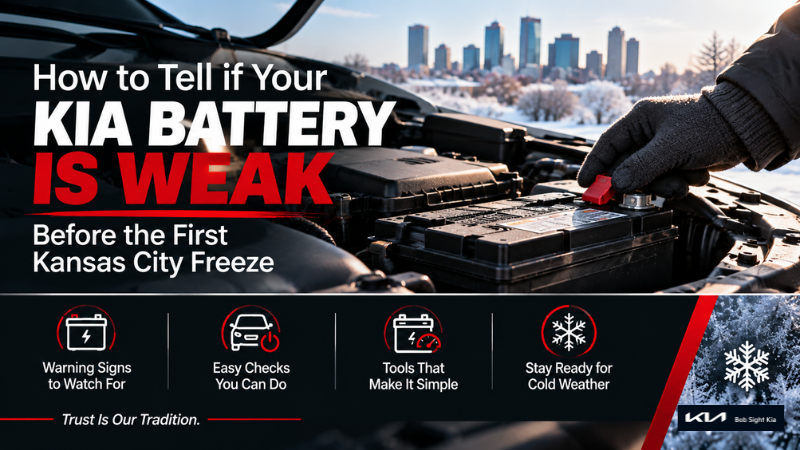
How to Tell if Your Kia Battery Is Weak Before First Kansas City Freeze

How to Tell if Your Kia Battery Is Weak Before the First Kansas City Freeze Cold mornings in Independence, Missouri, can make an aging car battery work harder than usual. If your Kia has been starting slowly, making clicking noises, or showing unusual electrical symptoms, it may be time to have the battery checked before winter temperatures arrive. Cold weather affects the amount of power a battery can deliver, while the engine may require more energy to start. A battery that performed normally throughout the summer can begin showing problems when temperatures drop. For drivers in Independence, Blue Springs, Lee's Summit, Raytown, and the greater Kansas City metro, recognizing these warning signs early can help reduce the chance of an unexpected no-start situation. At Bob Sight Kia, our service team helps local drivers maintain their vehicles throughout Missouri's changing seasons. Understanding how your battery works and when to request testing is a practical part of preparing your Kia for winter. Schedule Kia Battery Service at Bob Sight Kia What You'll Learn About Kia Battery Health How cold temperatures affect your Kia's 12-volt battery Common warning signs of a weak or discharged battery How short trips and driving habits affect battery performance What you can safely inspect at home Why choosing the correct replacement battery matters When to schedule professional battery and charging-system testing Why Cold Weather Can Make Your Kia Battery Struggle Cold weather slows the chemical reactions inside a conventional 12-volt lead-acid battery. As temperatures fall, the battery becomes less capable of delivering the electrical current needed to start the engine. According to AAA, freezing temperatures can significantly reduce a battery's available capacity. At the same time, colder engine oil can increase the amount of power needed to turn the engine over during startup. This combination creates additional strain on batteries that are already aging, undercharged, or experiencing internal wear. Why Battery Problems Often Appear After Summer Although winter is when many drivers discover battery problems, summer heat can contribute to the deterioration that causes them. High temperatures can accelerate internal corrosion and other chemical changes inside a lead-acid battery. Depending on the battery's construction, prolonged heat may also contribute to electrolyte loss. A battery weakened during a hot Kansas City summer may still provide enough power to start your Kia during mild fall weather. Once overnight temperatures begin approaching freezing, the reduced starting capacity becomes more noticeable. Cold weather does not automatically destroy a healthy battery. Instead, it can reveal weaknesses that were already developing. Five Warning Signs Your Kia Battery May Be Weak Battery problems do not always begin with a vehicle that refuses to start. Many drivers notice smaller changes in starting performance or electrical behavior first. 1. Your Kia Cranks More Slowly Than Normal One of the most recognizable signs of a weak battery is a slow engine crank. You may notice that the engine turns over more slowly than usual before starting. This can become more noticeable after your vehicle has been parked overnight during cold weather. Although a weak battery is one possible cause, starter problems, poor electrical connections, and other mechanical issues can produce similar symptoms. Testing helps identify the actual problem. 2. You Hear Clicking When Trying to Start the Engine A rapid clicking sound when attempting to start your Kia can indicate that the electrical system does not have enough available power to operate the starter properly. A discharged battery, corroded terminals, or loose electrical connections are possible causes. A single click without engine cranking can also point toward a starter-related problem. Rather than repeatedly attempting to start the vehicle, consider having the battery and starting system inspected. 3. Your Interior Lights or Electronics Behave Differently Low system voltage can sometimes cause unusual electrical behavior, including dim interior lights, unexpected infotainment resets, or other electronic interruptions during startup. However, these symptoms are not exclusive to battery problems. Wiring, charging-system, and individual component faults can also affect electrical performance. If several electrical symptoms begin appearing together, a professional inspection can help determine whether the battery is involved. 4. Your Battery or Charging-System Warning Light Appears The battery-shaped warning light on your dashboard generally relates to the vehicle's charging system. It does not automatically mean the battery itself needs replacement. If this warning light remains illuminated while driving, the alternator, charging controls, wiring, or another electrical component may not be functioning properly. A charging-system warning should be addressed promptly. If the system is not charging correctly, the vehicle may eventually lose electrical power or stop running. 5. Idle Stop and Go Stops Operating Some Kia vehicles are equipped with Idle Stop and Go technology, which can automatically shut off the engine during certain stops and restart it when needed. The system considers multiple operating conditions before activating. Battery state of charge is one factor, but cabin temperature demands, engine temperature, and other conditions can also affect operation. If Idle Stop and Go stops functioning along with slow starting or other electrical symptoms, battery testing may be worthwhile. How Short Trips Can Affect Your Kia Battery Frequent short drives can make it more difficult for a vehicle's charging system to replenish the energy used during engine startup. For example, drivers who primarily use their Kia for short trips around Independence, Raytown, or Sugar Creek may spend relatively little time driving between starts. The battery must provide power to start the engine, while the charging system works to restore that energy once the engine is running. When driving time is limited, the battery may not always return to a full state of charge. Repeated partial discharge can contribute to battery wear over time. Does Highway Driving Help Recharge a Weak Battery? Driving gives a properly functioning charging system an opportunity to replenish battery charge. However, there is no universal driving distance or time that guarantees a full recharge. Battery condition, temperature, electrical demand, and charging-system operation all affect how quickly a battery can recover. If your Kia frequently needs jump-starting or continues to crank slowly after normal driving, a longer trip is not a reliable solution. A battery test and charging-system inspection can help determine whether the battery needs charging, replacement, or further diagnosis. How to Check Your Kia Battery at Home You can look for several visible warning signs without performing complicated electrical testing. Before inspecting the battery, consult your Kia owner's manual for its location and any model-specific safety instructions. Not every Kia has a conventional 12-volt battery in the same location. Hybrid and electric models may have different battery arrangements and service procedures. Start With a Visual Inspection Park your Kia on level ground, switch the vehicle off, and engage the parking brake. Locate the 12-volt battery using your owner's manual. Look for visible damage, including cracks, swelling, or leaks. Check accessible terminals for corrosion or obvious connection problems without touching damaged components. If you notice damage, leaking fluid, or significant corrosion, arrange professional inspection rather than attempting repairs yourself. Do not attempt to open a sealed battery or handle leaking battery fluid. Battery electrolyte can be hazardous, and electrical connections should be serviced using appropriate safety procedures. Can You Test Battery Voltage With a Multimeter? A digital multimeter can provide useful information about the state of charge of a conventional 12-volt lead-acid battery when used correctly. After the battery has been at rest, a fully charged conventional lead-acid battery commonly measures approximately 12.6 volts or slightly higher, depending on its type and conditions. A substantially lower reading may indicate that the battery needs charging or further testing. However, voltage alone cannot confirm battery health. A battery can show a reasonable resting voltage while still being unable to deliver sufficient current during engine startup. For this reason, professional battery testing is more informative than relying on a single voltage measurement. Why Professional Kia Battery Testing Matters Professional battery testing helps determine whether a battery is simply undercharged or has lost enough performance to justify replacement. Depending on the vehicle and diagnostic equipment, a technician may evaluate battery voltage, state of charge, available starting performance, and the operation of the charging system. Testing can also help identify problems that resemble battery failure, including poor electrical connections or charging-system faults. Cold battery temperature can affect test results, so technicians may need to account for temperature and battery condition when evaluating performance. At Bob Sight Kia in Independence, drivers can schedule service to discuss starting problems, electrical concerns, or preventive winter battery maintenance. Schedule a Kia Battery Inspection AGM, EFB, and Conventional Batteries: Which Does Your Kia Need? Not every Kia uses the same type of 12-volt battery. The correct replacement depends on the vehicle's model, model year, engine or powertrain configuration, and original equipment requirements. Common automotive battery technologies include conventional flooded lead-acid batteries, Enhanced Flooded Batteries (EFB), and Absorbent Glass Mat (AGM) batteries. Conventional Flooded Lead-Acid Batteries Traditional flooded lead-acid batteries have been used in passenger vehicles for many years. They provide electrical energy for starting and other vehicle systems. Their suitability depends on the vehicle's electrical requirements and manufacturer specifications. Enhanced Flooded Batteries EFB batteries are designed to offer improved cycling performance compared with many conventional flooded batteries. They may be used in vehicles with increased electrical demands or certain engine stop-start systems. Absorbent Glass Mat Batteries AGM batteries use absorbent fiberglass separators to hold the electrolyte. They are designed to support demanding electrical applications and repeated charge-discharge cycles. Some Kia models may require AGM batteries, but AGM technology should not be assumed to be necessary for every Kia with Idle Stop and Go or every hybrid vehicle. Why Matching the Factory Battery Specification Matters When replacing a battery, the correct type, physical size, terminal configuration, and electrical ratings are important. Cold Cranking Amps (CCA) describe a battery's ability to provide starting current under standardized cold-temperature testing conditions. Reserve capacity is another specification that may be relevant to the vehicle's requirements. Installing a battery that does not meet the manufacturer's specifications can contribute to poor performance or compatibility problems. Consult your owner's manual or a qualified Kia service professional to identify the correct replacement battery for your vehicle. How Long Does a Kia Battery Usually Last in Missouri? Many conventional automotive 12-volt batteries last approximately three to five years, although actual service life varies. Battery quality, driving habits, climate, charging-system condition, and how often the vehicle is used can all affect longevity. In the Kansas City area, batteries experience both hot summer temperatures and freezing winter conditions. These seasonal changes can place additional demands on the battery over time. If your Kia's battery is approaching three years of service, periodic testing can provide useful information about its condition. An older battery does not automatically need replacement. Likewise, a newer battery can develop problems if it is repeatedly discharged or exposed to unfavorable conditions. Testing is the most practical way to make an informed replacement decision. How to Prepare Your Kia Battery for Winter Preparing for winter does not require complicated maintenance. A few preventive habits can help reduce unnecessary battery strain and make it easier to identify problems before cold weather arrives. Have an aging battery tested. If your battery is several years old or has shown starting problems, schedule an inspection before temperatures regularly fall below freezing. Limit unnecessary electrical use while parked. Avoid leaving interior lights or accessories operating for extended periods when the vehicle is off. Pay attention to starting behavior. Slow cranking, repeated clicking, or intermittent no-start conditions deserve attention. Address charging-system warnings promptly. A charging problem can leave the battery discharged even when the battery itself is in good condition. Consider a compatible battery maintainer for extended storage. If your Kia will remain parked for several weeks, consult the owner's manual about an appropriate maintenance charger and connection procedure. Follow your Kia maintenance recommendations. Proper engine oil, regular inspections, and timely repairs support reliable cold-weather operation. Parking in a garage may also help reduce exposure to very low temperatures. However, wind chill does not make an inanimate battery colder than the actual surrounding air temperature. Should You Replace Your Kia Battery Before Winter? Replacing a battery before winter may be appropriate if testing shows that it can no longer meet the vehicle's starting requirements. Replacement may also be necessary when a battery has visible damage, repeated failures, or internal deterioration confirmed through testing. However, replacing a battery solely because it is a certain age may not always be necessary. A professional inspection can help distinguish between an aging battery that remains serviceable and one that is likely to create starting problems. If the battery is healthy but frequently discharged, the underlying issue may involve driving habits, electrical draw, or the charging system. Other Winter Maintenance Items Worth Checking Your battery is only one part of preparing your Kia for Missouri winter driving. Before colder weather arrives, consider reviewing the condition of your tires, windshield wipers, engine oil, coolant, and other important maintenance items. Using the engine oil grade specified for your particular Kia helps support proper lubrication during cold starts. Tire pressure should also be checked regularly because pressure changes with temperature. Windshield wipers and washer fluid are important for maintaining visibility during snow, sleet, and freezing precipitation. Drivers commuting along Interstate 70, Highway 291, and other Kansas City-area roads can benefit from addressing these maintenance concerns before severe weather makes travel more difficult. For additional maintenance needs, visit the Bob Sight Kia Service Specials page to review available offers. Frequently Asked Questions About Kia Batteries Why does my Kia struggle to start when it's cold outside? Cold temperatures reduce the available starting performance of a conventional lead-acid battery while increasing the amount of power an engine may require to start. If the battery is aging, discharged, or experiencing internal wear, the reduced performance may become noticeable during freezing weather. However, starter problems, electrical connections, and other mechanical issues can also cause difficult starting. Testing is recommended when the problem continues. Does a clicking sound mean my Kia battery is dead? Not necessarily. Rapid clicking can occur when there is insufficient electrical power available to operate the starter properly. A weak or discharged battery is a common possibility, but poor cable connections and starter-related problems can produce similar symptoms. A battery and starting-system inspection can help identify the cause. Can I safely jump-start my Kia? Many conventional gasoline-powered Kia vehicles can be jump-started when the correct procedures are followed. However, jump-starting instructions vary by model and powertrain. Some hybrid and electric vehicles have special 12-volt battery procedures or designated jump-start terminals. Always consult your vehicle's owner's manual before attempting a jump-start. Never attempt to jump-start a battery that appears frozen, leaking, or physically damaged. If you are uncertain about the procedure, roadside assistance is a safer option. Will replacing my Kia battery reset my vehicle settings? Disconnecting a 12-volt battery can reset certain electronic settings on some vehicles. Depending on the Kia model and model year, this may affect clock settings, window functions, stored information, or other electronic features. Some vehicles also have battery replacement or initialization procedures that should be followed. Consult your owner's manual or a qualified service professional for instructions specific to your Kia. Can a completely discharged Kia battery freeze? Yes. A severely discharged conventional lead-acid battery can become more vulnerable to freezing because the electrolyte's composition changes as the battery loses charge. Freezing can damage internal components or the battery case. If you suspect a battery is frozen, do not attempt to charge or jump-start it. Have the battery inspected and follow appropriate safety procedures. How often should I have my Kia battery tested? Testing becomes increasingly useful as a battery ages or begins showing symptoms such as slow cranking, intermittent starting problems, or repeated discharge. Many drivers choose to include battery testing in their regular maintenance routine, particularly before winter. The appropriate testing interval depends on the battery's condition, age, and operating history. Can I replace my Kia battery myself? Battery replacement procedures vary by vehicle. Some conventional Kia models have relatively accessible 12-volt batteries, while others may require additional precautions, equipment, or initialization procedures. Hybrid and electric vehicles can have more specialized electrical systems. Before attempting replacement, consult the owner's manual and confirm the correct battery specification. Professional replacement is a practical option when the procedure is unfamiliar or the battery is difficult to access. Schedule Kia Battery Service in Independence, MO If your Kia has been slow to start, has needed repeated jump-starts, or is showing unusual electrical symptoms, having the battery checked before winter can help you understand what your vehicle needs. Bob Sight Kia serves drivers throughout Independence, Blue Springs, Lee's Summit, Raytown, Sugar Creek, Grain Valley, and the greater Kansas City metro. Our service department can assist with battery concerns and other maintenance needs to help you prepare for changing Missouri weather. Visit Bob Sight Kia at 1700 S Noland Road, Independence, MO 64055, or use our online scheduling tool to request a service appointment. Schedule Service at Bob Sight Kia Helpful Kia Service and Shopping Links Schedule Kia Service in Independence, MO View Kia Service Specials Browse New Kia Inventory Shop Used Vehicles at Bob Sight Kia Value Your Trade Explore the Bob Sight Auto Group Bob Sight Kia is part of the Bob Sight Auto Group, serving drivers across the Kansas City metro and northeast Kansas. Our dealership locations offer vehicle sales, service, and automotive resources for drivers throughout the region. Bob Sight Kia | Independence, MO Bob Sight Ford | Lee's Summit, MO Bob Sight Honda | Lawrence, KS Bob Sight CDJR | Lawrence, KS Trust Is Our Tradition.

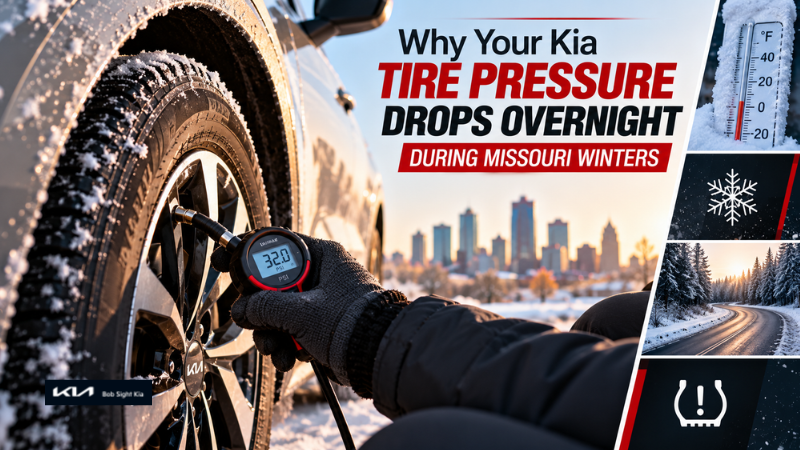
Frustrated by morning low tire pressure alerts? Learn the science behind cold weather PSI drops and how to keep your Kia safe in Jackson County.

Why Your Kia Tire Pressure Drops Overnight During Missouri Winters

Why Your Kia Tire Pressure Drops Overnight During Missouri Winters If you have ever started your Kia on a cold Missouri morning and noticed the tire pressure warning light on your dashboard, you are not alone. Falling overnight temperatures can cause tire pressure to decrease, even when your tires do not have a puncture or other mechanical problem. For drivers in Independence, Blue Springs, Lee's Summit, Raytown, and the greater Kansas City metro, changing temperatures are a familiar part of fall and winter driving. A warm afternoon can quickly turn into a freezing night, leaving your tires with less pressure than they had the day before. Understanding why this happens, how your Kia's Tire Pressure Monitoring System (TPMS) works, and when to have your tires inspected can help you maintain proper inflation throughout the winter. At Bob Sight Kia in Independence, Missouri, our service department helps drivers with tire maintenance, inspections, and other seasonal vehicle care needs. Schedule Kia Tire Service in Independence, MO What You'll Learn About Winter Tire Pressure Why tire pressure decreases when temperatures fall How your Kia's tire pressure warning system works How to check and adjust tire pressure correctly When low pressure may indicate a puncture or slow leak How underinflation affects tire wear and vehicle handling What Kia AWD owners should know about tire maintenance When to schedule a professional tire inspection Why Does Tire Pressure Drop When It Gets Cold? Tire pressure changes with temperature because the gas inside a tire responds to changes in heat. As temperatures decrease, the gas molecules move more slowly, reducing the pressure they exert inside the tire. A commonly used automotive guideline is that tire pressure changes by approximately 1 PSI for every 10-degree Fahrenheit change in temperature. The actual change depends on the tire's starting pressure and other conditions. For example, if your Kia's tires measure 35 PSI during a 50-degree afternoon in Independence, a drop to 20 degrees overnight could lower the pressure by approximately 3 PSI. This does not necessarily mean air escaped from the tires. The pressure may have changed because the tires and the gas inside them became colder. Why Missouri Temperature Changes Make TPMS Warnings Common During fall and winter, the Kansas City metro can experience significant temperature differences between daytime and overnight conditions. These changes can affect tire pressure while your Kia is parked in a driveway, garage, or outdoor parking lot. If the tires were already slightly below their recommended cold inflation pressure, a sudden temperature drop may be enough to activate the dashboard warning light. Even when the warning disappears later in the day, checking the tires with an accurate pressure gauge remains important. How Your Kia Tire Pressure Monitoring System Works Your Kia's Tire Pressure Monitoring System is designed to alert you when tire pressure becomes significantly low. Depending on the model and model year, the system may use sensors that measure pressure at individual wheels. Some Kia vehicles also provide individual tire pressure readings through the instrument cluster. When the system detects pressure below its warning threshold, a yellow tire-shaped symbol with an exclamation point may illuminate on the dashboard. Federal TPMS requirements use a threshold based on pressure being 25 percent below the manufacturer's recommended cold inflation pressure or a specified minimum pressure, whichever is higher. The actual warning behavior can vary by vehicle and system design. Because TPMS is intended to warn drivers about significantly low pressure, it should not replace routine checks with a tire pressure gauge. Why Your TPMS Light May Turn Off After Driving As your Kia moves, normal tire flexing generates heat. This causes the gas inside the tires to warm, which can increase the measured pressure. If the pressure rises above the warning threshold, the TPMS light may turn off. However, this does not necessarily mean the tires have returned to the correct cold inflation pressure. Once the vehicle is parked and the tires cool again, pressure may decrease and the warning may return. The best solution is to check the pressure when the tires are cold and adjust it according to your Kia's recommended specifications. How to Check Your Kia Tire Pressure Correctly Checking tire pressure regularly is one of the simplest ways to maintain your tires and recognize potential problems before they become more serious. The National Highway Traffic Safety Administration recommends checking tire pressure at least once a month when the tires are cold. A tire is generally considered cold when the vehicle has not been driven for at least three hours. Always consult your owner's manual for model-specific instructions. Step 1: Find Your Kia's Recommended Tire Pressure Open the driver's door and locate the Tire and Loading Information label, typically found on the driver's doorjamb or nearby pillar. This label provides the manufacturer's recommended cold inflation pressure for your vehicle. The recommended pressure may differ between the front and rear tires, depending on the model. Do not use the maximum pressure molded into the tire sidewall as your normal inflation target. That number is not the same as the vehicle manufacturer's recommended operating pressure. Step 2: Measure Pressure With an Accurate Gauge Remove the valve stem cap and press a tire pressure gauge firmly against the valve. Read the pressure and compare it with the recommended cold PSI listed on your vehicle's tire information label. Repeat the process for each tire. If your Kia has a spare tire that requires inflation, check its pressure according to the owner's manual as well. Step 3: Add Air When Needed If a tire is below the recommended pressure, use an air compressor to add air gradually. Check the pressure again after adding air to avoid overinflation. If the tires are warm because you have already driven, follow the owner's manual guidance and recheck the pressure when the tires are cold. Do not release air from a warm tire simply because its pressure is higher than the cold inflation recommendation. Tire pressure normally increases as tires warm during driving. Step 4: Replace the Valve Stem Caps After checking the pressure, reinstall the valve stem caps. Valve caps help protect the valve opening from dirt, road debris, and moisture. Keeping the valves clean is a simple part of maintaining your tires during Missouri's winter months. Step 5: Check Whether the Warning Light Clears After correcting tire pressure, the TPMS warning may clear once the system recognizes the updated readings. Some Kia models may require driving for the system to update, while other vehicles have different procedures. Consult your Kia owner's manual rather than relying on a universal driving speed or reset time. If the warning remains illuminated after proper inflation, or if it flashes and then stays on, arrange a professional inspection. How to Tell the Difference Between Cold Weather Pressure Loss and a Tire Leak Cold temperatures can reduce pressure in all four tires, but a puncture or other mechanical problem can also cause pressure loss. One way to identify a possible issue is to compare the pressure readings across your tires. Signs of Normal Temperature-Related Pressure Changes Several tires show similar pressure reductions after a temperature drop. Pressure changes correspond with colder outdoor conditions. The tires maintain pressure after being adjusted to the recommended cold PSI. No visible damage or repeated pressure loss is present. These signs may suggest that the change is temperature-related, although they do not completely rule out a leak. Signs Your Kia May Have a Slow Tire Leak One tire repeatedly loses more pressure than the others. You need to add air to the same tire every few days. A nail, screw, or other object is visible in the tread. The tire has visible sidewall damage, bulging, or an unusual shape. Pressure continues decreasing even after proper inflation. Possible causes include tread punctures, valve problems, wheel damage, or leakage around the tire bead where the tire meets the wheel. Winter potholes and road debris around Independence and the Kansas City metro can contribute to these problems. If one tire consistently loses pressure, a professional inspection can help determine whether it can be repaired or needs replacement. Why Driving With Low Tire Pressure Can Be Dangerous Proper tire inflation supports vehicle handling, tire durability, and fuel efficiency. When a tire is underinflated, its sidewall can flex more than intended during driving. Excessive flexing can increase internal heat buildup and contribute to premature tire damage. Underinflation can also affect steering response, tire wear patterns, and vehicle stability. These concerns become more important during winter when drivers may already be dealing with snow, slush, ice, and reduced traction. Uneven Tire Wear Underinflated tires may experience increased wear near the outer shoulders of the tread. Over time, uneven wear can shorten the useful life of the tires and reduce their ability to perform as intended. Maintaining proper inflation helps support more consistent tread contact and wear. Changes in Handling and Braking Incorrect tire pressure can affect how a vehicle responds to steering and braking inputs. However, tire pressure is only one factor in winter traction. Tire condition, tread depth, tire design, road surface, and driving speed also play important roles. Proper inflation does not eliminate the risks associated with icy or snow-covered roads. Reduced Fuel Efficiency Underinflated tires can increase rolling resistance, which may require the vehicle to use more energy while driving. Maintaining the manufacturer's recommended pressure helps support efficient vehicle operation. For Kia drivers commuting between Independence, Blue Springs, and Kansas City, routine tire checks are a practical part of maintaining the vehicle throughout the year. Should You Add Extra Tire Pressure During Winter? In normal circumstances, the goal is to maintain the manufacturer's recommended cold tire pressure listed on your Kia's tire information placard. It is not necessary to automatically add several extra PSI simply because winter is approaching. If you check your tires outdoors after they have been parked long enough to cool, adjust them to the recommended cold inflation pressure. There is one important distinction: if you inflate tires inside a warm garage before driving into much colder outdoor temperatures, the pressure may decrease as the tires cool. Your owner's manual may provide guidance for accounting for that temperature difference. Avoid guessing at an extra inflation amount. Use the instructions appropriate for your vehicle and recheck the tires under cold outdoor conditions. Does Nitrogen Prevent Tire Pressure Drops in Winter? Some tire shops offer nitrogen inflation as an alternative to conventional compressed air. Nitrogen can reduce the rate of gradual pressure loss through tire materials under certain conditions. However, nitrogen-filled tires still experience pressure changes when temperatures rise or fall. Research from Consumer Reports has found that the practical difference in pressure retention between nitrogen and conventional air is relatively small for everyday passenger vehicle use. Regular compressed air is suitable for normal tire maintenance when used according to the vehicle manufacturer's recommendations. Whether your tires contain nitrogen or compressed air, you should continue checking their pressure regularly. Proper inflation matters more than the choice between these two inflation gases for most everyday Kia drivers. Kia All-Wheel Drive and Proper Tire Pressure If your Kia is equipped with all-wheel drive, maintaining the correct tire pressure and monitoring tread wear are important parts of routine maintenance. Models such as the Kia Sportage AWD and Sorento AWD use systems that distribute driving power based on vehicle operating conditions. Incorrect tire pressure can affect tire rolling characteristics and vehicle handling. Significant differences in tire size or tread wear may also create concerns for certain AWD systems. However, minor tire pressure differences do not automatically mean the AWD system will engage incorrectly or experience mechanical damage. The most practical approach is to follow the recommended cold inflation pressures for each axle and maintain tires according to the vehicle manufacturer's instructions. Why Tire Rotation Matters for AWD Kia Vehicles Regular tire rotation helps distribute wear across the tires. Depending on driving conditions and vehicle design, front and rear tires may wear at different rates. Rotating the tires at the intervals specified in your Kia maintenance schedule can help promote more even tread wear. The correct rotation pattern and service interval may vary by model, tire configuration, and drivetrain. If you are unsure when your tires were last rotated, a service appointment is a good opportunity to review their condition. How Often Should You Check Tire Pressure During Missouri Winters? NHTSA recommends checking tire pressure at least once a month. During periods of significant temperature changes, checking more frequently can help you identify pressure reductions before the dashboard warning activates. Consider checking your tires after a substantial overnight temperature drop, before a longer road trip, or whenever the TPMS warning appears. A reliable tire pressure gauge is a useful item to keep in your vehicle. Even if your Kia displays individual tire pressure readings, checking the tires with a gauge provides an additional way to monitor inflation. Don't Forget Tire Tread Depth Before Winter Tire pressure is important, but it is not the only factor affecting winter driving performance. Tread depth plays a major role in how effectively tires move water and slush away from the contact area. As tires wear, their ability to maintain traction in wet and snowy conditions can decline. The federal minimum tread depth for many passenger vehicle tires is 2/32 of an inch. However, winter traction can become less effective before tires reach that minimum. Drivers who frequently encounter snow or slush may benefit from discussing tire replacement before tread depth becomes critically low. Also inspect tires for cracking, bulges, uneven wear, and other visible damage. A professional tire inspection can help you understand whether your current tires are suitable for the conditions you expect to encounter. Frequently Asked Questions About Kia Tire Pressure in Winter Why does my Kia tire pressure light come on every cold morning? Cold overnight temperatures can reduce the pressure inside your tires. If the tires were already near the TPMS warning threshold, a temperature drop may cause the warning light to illuminate. Check all tires when cold and inflate them to the recommended pressure listed on the driver's doorjamb label. If the warning continues returning after proper inflation, have the tires inspected for leaks or other problems. Why does my tire pressure light turn off after driving? As your tires warm during driving, the internal pressure can increase. That increase may cause the warning light to turn off if the pressure rises above the system's warning threshold. However, the tires may still be underinflated when cold. Check and adjust their cold pressure rather than relying on the warning light disappearing. Can I drive my Kia with the low tire pressure light on? A low tire pressure warning should be addressed promptly. If the tire is visibly flat, severely underinflated, damaged, or causing unusual vehicle handling, do not continue driving. Stop in a safe location and arrange appropriate assistance. If the tires appear normal, check their pressure as soon as it is safe to do so. Do not assume that a tire is safe simply because it does not look flat. Whether continued driving is appropriate depends on the actual pressure, tire condition, and vehicle behavior. Should all four Kia tires have the same PSI? Not necessarily. Some vehicles have different recommended pressures for front and rear tires. Always follow the specifications listed on your Kia's Tire and Loading Information label. Do not assume that every Kia model uses the same pressure or that all four tires must always have identical readings. Why does only one of my Kia tires keep losing air? If one tire repeatedly loses pressure while the others remain stable, a slow leak may be present. Possible causes include a puncture, valve stem issue, wheel damage, or leakage around the tire bead. Have the tire inspected to determine whether it can be repaired safely. Does nitrogen keep Kia tires from losing pressure in cold weather? No. Nitrogen-filled tires still experience temperature-related pressure changes. Nitrogen may reduce gradual pressure loss through tire materials, but it does not eliminate the need for regular inflation checks. Conventional compressed air is suitable for normal tire maintenance when used correctly. How long should I drive to reset my Kia TPMS light? The procedure depends on the Kia model and model year. Some systems recognize corrected pressure after driving, while others may require different steps. Consult your owner's manual for the correct procedure. If the warning remains active after proper inflation, schedule a tire or TPMS inspection. Can potholes cause slow tire leaks? Yes. Hitting a pothole can damage a tire, wheel, or the sealing area between the tire and wheel. Damage may result in immediate pressure loss or a slower leak that becomes noticeable over time. If your Kia begins losing pressure after hitting a pothole, have the affected tire and wheel inspected. Schedule Kia Tire Service in Independence, MO Cold weather tire pressure changes are common throughout Missouri, but recurring warnings should not be ignored. Checking your tires regularly, following the recommended cold inflation pressure, and addressing possible leaks can help maintain your Kia's tire condition throughout winter. Bob Sight Kia serves drivers from Independence, Blue Springs, Lee's Summit, Raytown, Sugar Creek, Grain Valley, and the greater Kansas City metro. If your Kia's TPMS warning keeps returning, one tire repeatedly loses pressure, or you have questions about tire maintenance, our service department can help you determine the next steps. Visit Bob Sight Kia at 1700 S Noland Road, Independence, MO 64055, or schedule your service appointment online. Schedule Tire Service at Bob Sight Kia Helpful Kia Service and Shopping Links Schedule Kia Service in Independence, MO Explore Kia Service Specials Browse New Kia Inventory Shop Used Vehicles Value Your Trade at Bob Sight Kia Explore the Bob Sight Auto Group Bob Sight Kia is part of the Bob Sight Auto Group, serving drivers throughout the Kansas City metro and northeast Kansas with automotive sales and service resources. Bob Sight Kia | Independence, MO Bob Sight Ford | Lee's Summit, MO Bob Sight Honda | Lawrence, KS Bob Sight CDJR | Lawrence, KS Trust Is Our Tradition.

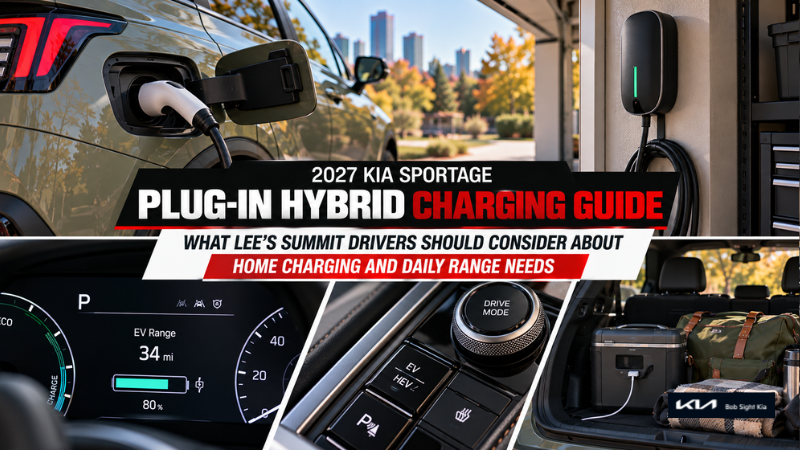
Learn how to charge the 2027 Kia Sportage Plug-In Hybrid at home in Lee's Summit, MO. Compare Level 1 vs Level 2 charging speeds and 34-mile electric range.

2027 Kia Sportage Plug-In Hybrid Charging Guide: What Lee’s Summit Drivers Should Consider About Home Charging and Daily Range Needs

2027 Kia Sportage Plug-In Hybrid Charging Guide: What Lee’s Summit Drivers Should Consider About Home Charging and Daily Range Needs For drivers in Lee's Summit and Jackson County, the 2027 Kia Sportage Plug-In Hybrid (PHEV) delivers an ideal mix of all-electric daily commuting and gas-hybrid highway freedom. Featuring a Kia-estimated 34 miles of pure electric driving range, standard Active All-Wheel Drive, and 268 combined horsepower, the Sportage PHEV allows local commuters to handle weekly errands, school drop-offs, and daily drives along I-470 or US-50 without using a drop of gasoline. At Bob Sight Kia in Independence, MO, we help local drivers evaluate home charging logistics, Level 1 versus Level 2 charging speeds, and daily range requirements so you can seamlessly integrate plug-in electric driving into your suburban Missouri routine. Explore our current inventory of new Kia PHEV crossovers and schedule your test drive today at Bob Sight Kia Sportage Inventory. In This Guide You'll Learn Here is what you will discover in this comprehensive plug-in hybrid charging guide: How the 13.8-kWh battery and 34-mile electric range meet daily commuting habits across Lee's Summit. The practical differences between standard 120V Level 1 wall-outlet charging and 240V Level 2 charger installations. Step-by-step home charging setup instructions for suburban garages and driveways. How cold midwestern winters affect lithium-ion battery range and how cabin pre-conditioning preserves charge. Public charging options across Jackson County and seamless transitions to gas-hybrid operation on long trips. A structured technical comparison matrix detailing charging speeds, battery capacity, and electrical specs. Long-term hybrid battery warranty coverage, routine maintenance guidelines, and local buying advice at Bob Sight Kia. Understanding the 2027 Sportage PHEV Battery and Powertrain Architecture The 2027 Kia Sportage Plug-In Hybrid combines a high-capacity 13.8-kWh lithium-ion battery pack with a 1.6-liter Turbocharged Gasoline Direct Injection engine to deliver efficient performance. Rated at 268 horsepower and 271 lb-ft of torque, the Sportage PHEV is the most powerful variant in the Sportage lineup. Electric propulsion is delivered via a 66.9-kW electric drive motor mounted directly between the engine and the 6-speed automatic transmission, supplying immediate low-end torque for quick acceleration onto local highways. The core advantage of the PHEV setup lies in its dual-personality operation. During short suburban trips, the vehicle draws power exclusively from the high-voltage battery pack, providing whisper-quiet electric driving up to a Kia-estimated 34 miles. Once the battery charge drops to its minimum threshold, the vehicle seamlessly engages its 1.6-liter turbocharged gas engine, operating as a high-efficiency hybrid that achieves up to 84 MPGe combined and an EPA-estimated 35 MPG in standard hybrid mode. Standard Active All-Wheel Drive with an electro-hydraulic locking center differential equips the Sportage PHEV for all-weather driving across Jackson County. Whether navigating rain-slick pavement along Highway 290 or snow ruts in residential Lee's Summit neighborhoods, the system continuously distributes power between front and rear axles to maintain stability. Daily Range Requirements: Mapping 34 Electric Miles in Lee's Summit A Kia-estimated 34 miles of pure electric range fits typical suburban commuting distances across Lee's Summit and surrounding communities. Most daily driving across Jackson County involves short, repeated trips to local schools, grocery stores, fitness centers, and office parks along major thoroughfares like Chipman Road, Lakewood Way, and Todd George Parkway. For example, a typical daily round trip from a residence in Lee's Summit to an office near Summit Fair or downtown Independence falls well within 20 to 28 miles. By charging overnight in your garage, you can complete your entire weekday commute without using gas or visiting a gas station. Over a month of typical driving, this creates significant savings in fuel costs while reducing tailpipe emissions. When weekend plans take you farther across the Kansas City Metro or down to the Lake of the Ozarks, the Sportage PHEV removes all electric range anxiety. With its 11.1-gallon gas tank working alongside the electric motor, the vehicle provides over 430 miles of total combined driving range, filling up at standard gas stations just like a conventional vehicle. Level 1 vs. Level 2 Home Charging: Choosing the Right Charger for Your Garage Replenishing the 13.8-kWh battery in the 2027 Sportage PHEV can be handled via standard 120-volt household wall outlets (Level 1) or dedicated 240-volt wall stations (Level 2). Because the PHEV battery is smaller than those found in pure battery-electric vehicles (EVs), charging times are fast and manageable without requiring expensive electrical service upgrades for most homes. Level 1 charging utilizes the standard 120-volt charging cable included with the vehicle. When plugged into a dedicated, grounded 120V household outlet in your garage or driveway, Level 1 charging fully replenishes an empty battery in approximately 10 to 12 hours. For drivers who return home from work at 6:00 PM and leave at 7:00 AM, overnight Level 1 charging easily provides 100% electric range every morning. For faster turnaround times between daytime errands, installing a 240-volt Level 2 home charger is the ultimate convenience upgrade. Utilizing the Sportage PHEV's 7.2-kW onboard charger, a Level 2 wall box fully recharges the battery from empty in roughly 2 hours and 15 minutes. This fast recharge time allows Lee's Summit drivers to top off their electric battery completely during lunch breaks or short afternoon downtime at home. Cold Weather Charging Strategy and Cabin Pre-Conditioning Midwestern winter freezes impact lithium-ion battery chemistry, but utilizing smart climate pre-conditioning features preserves your electric range during Missouri winters. Cold ambient temperatures temporarily slow chemical reactions inside high-voltage batteries, which can reduce pure electric driving range by 20% to 30% during bitter January cold snaps in Lee's Summit. To combat winter range loss, the 2027 Sportage PHEV includes cabin pre-conditioning features accessible via the Kia Connect smartphone app. While the vehicle remains plugged into your home charger, you can schedule climate pre-conditioning to heat the interior cabin, defrost the windshield, and warm the high-voltage battery to optimal operating temperature before unplugging. Because the electricity used for pre-heating comes directly from your home power supply rather than the onboard battery, you step into a warm, defrosted vehicle with 100% of your electric range intact for your morning commute. Combined with standard heated front seats, cabin pre-conditioning ensures cozy winter driving without draining driving range. Public Charging Infrastructure and On-the-Go Convenience in Jackson County While home charging provides the most convenient refueling method, public charging infrastructure across Lee's Summit and Jackson County provides additional topping-off options. Public Level 2 charging stations are located near popular retail centers, municipal buildings, medical offices, and community parks throughout the Kansas City region. Utilizing public Level 2 chargers while shopping at local plazas or dining out allows you to add 15 to 20 miles of electric range in about an hour. Popular smartphone apps like PlugShare or ChargePoint integrate directly with Apple CarPlay and Android Auto on the Sportage's 12.3-inch central touchscreen, displaying nearby available charging stations in real time. However, unlike pure battery-electric vehicles, the Sportage PHEV never forces you to alter travel plans to locate open chargers. If a public charging station is occupied or unavailable, the vehicle operates automatically as a high-efficiency gas-electric hybrid, allowing you to continue driving without interruption. Step-by-Step Guide: Setting Up Home Charging for Your Sportage PHEV Preparing your home garage or driveway for daily plug-in hybrid charging is straightforward when following this step-by-step installation process: Inspect Garage Electrical Outlets for Level 1 Use: Locate a dedicated, grounded 120-volt electrical outlet near your vehicle parking position. Ensure the circuit is clear of other high-draw appliances to support continuous charging overnight. Evaluate Household Electrical Capacity for Level 2 Upgrades: If you want fast 2-hour charging, consult a licensed electrical contractor in Lee's Summit or Independence to evaluate your home breaker panel and install a dedicated 240V/40-amp circuit. Select a Compatible Level 2 Wall Box: Choose a J1772-compatible Level 2 home wall box charger. Many popular smart chargers include Wi-Fi connectivity, allowing you to track charging costs and schedule off-peak charging hours via your smartphone. Set Up Scheduled Off-Peak Charging in Kia Connect: Access the vehicle setup menu on your Sportage touchscreen or use the Kia Connect app to program charging schedules that align with local utility off-peak electricity discount rates. Practice Proper Cable Management: Mount your charging cable hanger near the driver-side rear port location on the vehicle, keeping the charging cord off the garage floor to prevent tripping hazards and cable wear. Side-by-Side Charging Specifications: Level 1 vs. Level 2 Home Setup To help you compare charging speeds, electrical requirements, and setup details for the 2027 Sportage PHEV, review our direct breakdown below. Specification Feature Level 1 Home Charging (120V) Level 2 Home Charging (240V) Voltage & Circuit Requirement Standard 120-Volt Grounded Outlet Dedicated 240-Volt / 40-Amp Circuit Onboard Charger Rating 1.4 kW Maximum Draw 7.2 kW Maximum Onboard Acceptance Charge Time (0% to 100%) Approx. 10 to 12 Hours Approx. 2 Hours and 15 Minutes Electric Range Added Per Hour 3 to 4 Miles of EV Range / Hour 15 to 16 Miles of EV Range / Hour Equipment Included Factory 120V Portable Cable Included Requires Hardwired or NEMA 14-50 Wall Box Installation Cost $0 (Uses Existing Home Outlets) Varies Based on Home Electrical Work Ideal Daily Routine Use Overnight Charging in Garage Quick Daytime Topping-Off & Overnight This comparison shows how both home charging methods fit different driver lifestyles. Level 1 charging offers zero setup cost for overnight charging, while Level 2 delivers rapid turnaround times for busy families running multiple daily trips across Lee's Summit. Step-by-Step Guide: Optimizing Electric Driving Modes in the Sportage PHEV Learning how to toggle between energy modes on the center console allows you to maximize electric efficiency and preserve battery charge for specific driving conditions: Use "EV Mode" for Suburban Neighborhood Driving: Press the HEV/EV mode toggle switch near the shift dial to lock the vehicle in "EV Mode." This forces the crossover to run exclusively on electric power for daily suburban commutes across Lee's Summit. Switch to "HEV Mode" on High-Speed Interstate Highways: When merging onto I-70 or I-470 for long highway stretches at 70 MPH, select "HEV Mode." This engages the gasoline engine, preserving battery power for low-speed city driving where electric efficiency is highest. Engage "Auto Mode" for Intelligent Energy Management: In "Auto Mode," the vehicle computer automatically selects the most efficient power source based on real-time speed, throttle demand, and navigation route topology. Utilize Regenerative Braking during Coasting: When coasting down hill descents or slowing for traffic lights along US-50, release the accelerator to allow regenerative braking to capture kinetic energy and send power back into the battery. Monitor EV Range on Digital Instruments: Keep track of remaining pure electric mileage and battery percentage through the 12.3-inch digital instrument display or central navigation screen. Quick Facts: 2027 Kia Sportage Plug-In Hybrid Here are the essential key facts regarding the 2027 Kia Sportage PHEV: 34 Miles Pure Electric Range: Offers a Kia-estimated 34 miles of zero-emission electric driving per full charge. 268 Combined Horsepower: Features a 1.6L Turbo engine and 66.9-kW electric motor generating 268 total hp. Standard Active AWD: Includes Active All-Wheel Drive with a locking center differential standard on all PHEV trims. Fast Level 2 Charging: Fully recharges in approximately 2 hours and 15 minutes using a 240V Level 2 charger. 84 MPGe Combined Efficiency: Delivers an EPA-estimated 84 MPGe combined gas and electric rating. Generous Rear Legroom: Preserves an impressive 39.5 inches of second-row legroom for family passenger comfort. 10-Year Battery Warranty: Backed by Kia's 10-Year/100,000-Mile Hybrid/EV System Warranty. Ownership Strategy: Maintenance, Warranty Protection, and Battery Longevity Long-term ownership of the 2027 Kia Sportage PHEV is supported by Kia's comprehensive warranty package and straightforward service requirements. Every new Sportage PHEV purchased at Bob Sight Kia includes a dedicated 10-Year/100,000-Mile Hybrid/EV System Warranty alongside Kia's famed 10-Year/100,000-Mile Powertrain Limited Warranty. This covers all major high-voltage components, including the 13.8-kWh lithium-ion battery, electric drive motor, power control unit, and onboard charger against manufacturing defects. Routine service for the 1.6-liter turbocharged gasoline engine follows standard maintenance intervals, with synthetic oil and filter changes required every 7,500 miles or 12 months. Because the electric drive motor handles a large portion of daily deceleration via regenerative braking, brake pad and rotor wear is significantly reduced compared to traditional gas vehicles. Service visits at Bob Sight Kia include rotating tires every 7,500 miles, inspecting high-voltage cooling loops, and running factory software updates. To maximize lithium-ion battery longevity, Kia recommends avoiding leaving the vehicle parked in direct, extreme summer heat for extended periods with a 0% battery charge. Following standard home charging habits and scheduling routine multi-point inspections at Bob Sight Kia guarantees your plug-in crossover retains high battery capacity and maximum trade-in value throughout its lifetime. Frequently Asked Questions Can I drive the 2027 Kia Sportage PHEV if I never plug it in to charge? Yes, you can drive the 2027 Kia Sportage PHEV even if you never plug it into an electrical outlet, as the vehicle automatically operates as a standard gas-electric hybrid when the plug-in charge is depleted. In hybrid mode, the 1.6-liter turbocharged gas engine and regenerative braking system maintain a minimum battery reserve to power the electric motor, achieving an EPA-estimated 35 MPG combined. However, to unlock the full financial and efficiency benefits of the Sportage PHEV—including completing daily errands on 34 miles of pure electric power—plugging in regularly at home is highly recommended. If you prefer a hybrid crossover that never requires plug-in charging, you can also explore the standard Sportage Hybrid models available at Bob Sight Kia in Independence. How much does it cost to charge the 2027 Sportage PHEV at home in Lee's Summit? Charging the 13.8-kWh battery in the 2027 Sportage PHEV at home in Lee's Summit typically costs between $1.20 and $1.80 per full charge, based on average residential electricity rates in Jackson County. Because residential electricity prices across Missouri are lower than national averages, driving on grid electricity costs significantly less per mile than purchasing gasoline. Completing a full recharge overnight provides 34 miles of driving range for less than the cost of a single gallon of gas, delivering substantial monthly savings for daily commuters. Our finance team at Bob Sight Kia can help you calculate estimated monthly fuel savings based on your specific daily commute distance. Does the Sportage PHEV lose battery charge when parked in freezing winter weather? Standing in freezing weather does not cause significant overnight battery drain, but cold temperatures temporarily reduce driving efficiency while operating in winter conditions. High-voltage lithium-ion batteries hold their static charge well when parked, losing less than 1% to 2% over several days of extreme cold. However, running the interior cabin heater on cold mornings requires extra electrical energy, which temporarily reduces pure electric range. Utilizing cabin pre-conditioning via the Kia Connect app while plugged in ensures your car heats up using home wall power rather than battery charge. Equipping your vehicle with heated front seats and keeping your Sportage parked in a garage during severe cold snaps helps preserve maximum battery range across Jackson County winters. What type of home outlet is required for the included Sportage PHEV charging cable? The standard 120-volt charging cable included with the 2027 Sportage PHEV plugs directly into any standard, grounded 120-volt household wall outlet (NEMA 5-15). No specialized electrical modifications are required to begin Level 1 home charging in your garage or driveway. Kia recommends using a dedicated electrical outlet that is not shared with other high-draw household appliances to ensure steady, safe power delivery overnight. If you choose to upgrade to a 240-volt Level 2 charger for 2-hour charging, a licensed electrician can install a NEMA 14-50 outlet or hardwire a wall box station directly into your home breaker panel. How does the Sportage PHEV handle highway merging when running in pure electric mode? When running in pure "EV Mode," the Sportage PHEV's 66.9-kW electric motor provides smooth, responsive acceleration up to highway speeds along I-470 and US-50. If you suddenly floor the accelerator pedal for rapid highway merging or passing, the system automatically engages the 1.6-liter turbocharged gas engine to supply full 268-horsepower combined output. This automated power delivery ensures you always have maximum acceleration available during emergency maneuvers or steep highway merges, providing complete driving confidence. You can test the instant throttle response of the Sportage PHEV during a highway test drive at Bob Sight Kia in Independence. Why Buying Local at Bob Sight Kia Matters for Lee's Summit Drivers Purchasing your 2027 Kia Sportage PHEV locally from Bob Sight Kia guarantees personalized service, ongoing regional support, and deep community commitment that major online retailers and out-of-town dealer chains cannot match. As a family-owned dealership serving Independence, Lee's Summit, Blue Springs, Raytown, and the greater Kansas City Metro for decades, we understand the specific needs of midwestern drivers. From selecting the right plug-in hybrid configuration to navigating home charging setups, local vehicle titling, and trade-in valuations, our experienced sales and finance teams provide transparent, stress-free assistance every step of the way. When you buy local, your relationship with Bob Sight Kia extends far beyond the day you drive off our lot. Our factory-certified Kia service department utilizes state-of-the-art diagnostic equipment, specialized tools, and genuine Kia OEM parts engineered specifically for your Sportage PHEV. Whether you are coming in for routine synthetic oil changes, tire rotations, brake pad replacements, or multi-point seasonal inspections, our factory-trained technicians ensure your plug-in crossover performs at peak safety and efficiency throughout its entire lifetime. Supporting a local dealership also keeps your investment grounded within the Jackson County community. We take pride in building long-term relationships with local families across Liberty, Sugar Creek, and Grain Valley. Visit our showroom on Highway 40 in Independence today to experience our commitment to customer care, test drive the Sportage PHEV in person, and discover why Kansas City drivers trust Bob Sight Kia for all their automotive needs. Helpful Links Explore these key resources on our website to research inventory, schedule service, or start your purchasing process: New Kia Sportage Inventory in Independence, MO Value Your Trade-In Online at Bob Sight Kia Apply for Online Auto Financing and Pre-Approval Schedule Kia Service and Maintenance Online Current Kia Service and Parts Specials Proud to Be Part of the Bob Sight Auto Group Bob Sight Kia is a proud member of the Bob Sight Auto Group, a family-owned automotive network dedicated to serving drivers across Missouri and Kansas with integrity, quality vehicles, and exceptional customer service for generations. Whether you are shopping for a new Kia crossover, a reliable pre-owned car, certified service, or collision repair, our dealership family is here to support all your automotive needs across the Kansas City region. Visit any of our convenient Bob Sight Auto Group locations: Bob Sight Kia - Independence, MO Bob Sight Ford - Lee's Summit, MO Bob Sight Honda - Lawrence, KS Bob Sight CDJR - Lawrence, KS Bob Sight Collision Center - Lee's Summit, MO