

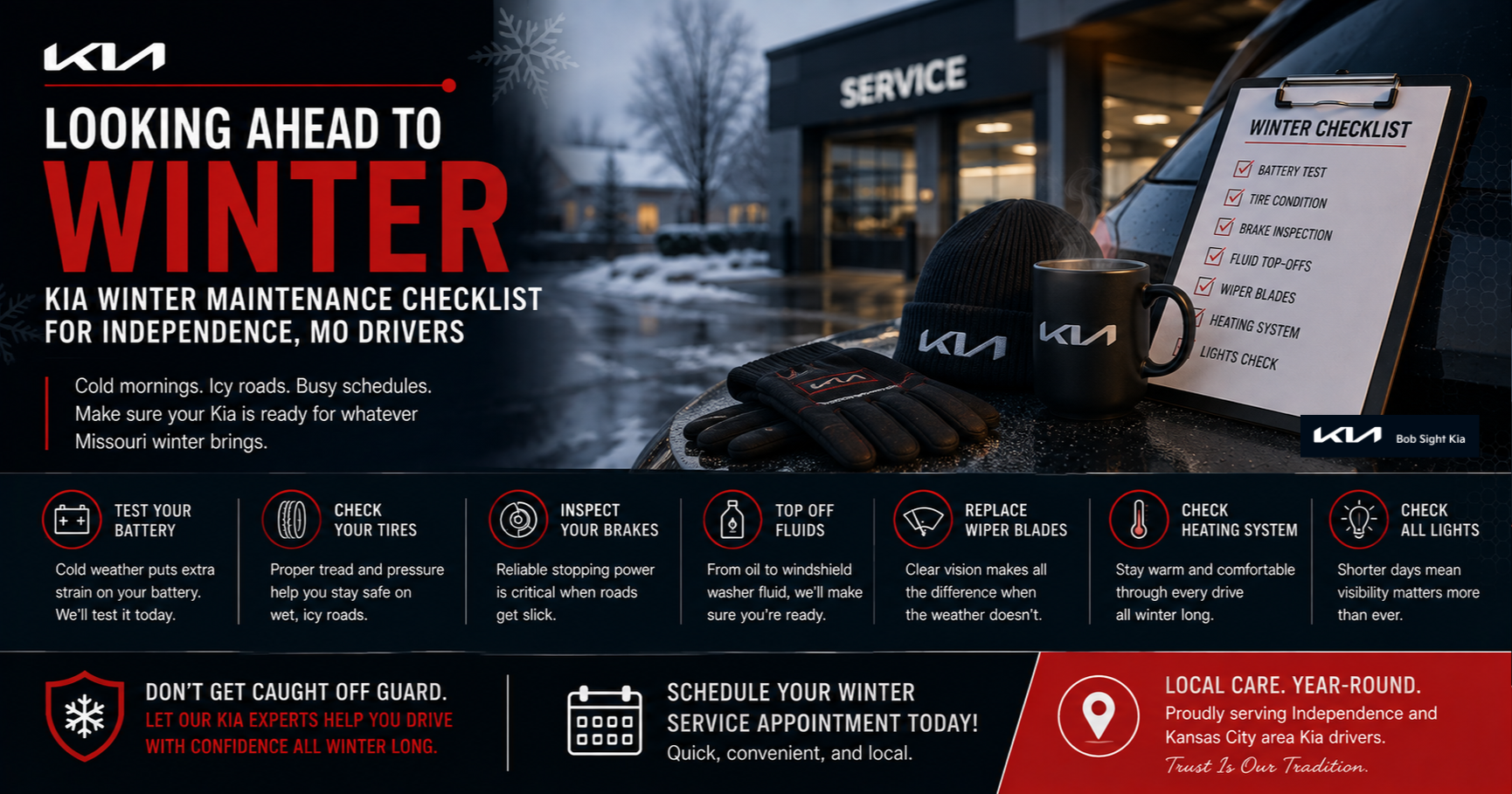
Looking Ahead to Winter: Kia Winter Maintenance Checklist for Kansas City Metro Drivers
Preparing your vehicle for freezing Midwest temperatures requires a comprehensive seasonal inspection covering battery health, tire traction, fluid viscosity, and heating systems across Jackson County. Navigating icy commutes along Interstate 70, handling winter slush near Independence Center, or driving down Highway 291 in sub-zero temperatures puts severe stress on your engine, electrical setup, and braking components. At Bob Sight Kia, our factory-trained service team is dedicated to keeping drivers in Independence, Lee's Summit, Blue Springs, Raytown, and the greater Kansas City area safe, warm, and confident on the road all winter long.
Schedule Certified Kia Winter Maintenance at Bob Sight Kia in Independence, MO
In This Guide You'll Learn
Proactive winter preparation prevents unexpected breakdowns, protects internal engine components, and maintains optimal driving safety. Here is what this detailed guide covers:
- How freezing Missouri temperatures impact cold-cranking amps, battery chemistry, and electrical reliability.
- Step-by-step methods for inspecting tire tread depth, maintaining proper tire pressure, and choosing winter tires.
- Key differences between standard oil weights and low-viscosity synthetic engine oils for sub-zero starts.
- Understanding optimal 50/50 ethylene-glycol coolant mixtures and windshield washer anti-freeze protection.
- Critical brake pad, rotor, and suspension checks required for stopping safely on icy or slushy roads.
- How to test climate control defrosters, replace cabin air filters, and install winter wiper blades.
- Step-by-step instructions for assembling a functional vehicle winter emergency kit for Midwest highways.
1. Why Early Winter Preparation Matters for Independence Drivers
Scheduling seasonal maintenance before the first hard freeze in Jackson County prevents cold-weather starting failures, preserves battery power, and ensures maximum tire traction on slick pavement. Winter weather in Eastern Jackson County brings sudden temperature drops, freezing rain, heavy snowfall, and dangerous black ice across major commuter corridors like I-70 and US-40. Waiting until a severe winter storm hits often leaves drivers stranded with dead batteries, frozen wiper lines, or inadequate tire grip when trying to get to work or school.
Sub-zero winter blasts severely test every mechanical system inside modern gas, hybrid, and electric Kia models. Cold air causes engine oil to thicken, demands higher electrical output to crank cold engines, and causes tire pressure to drop rapidly. Commuters traveling between Raytown, Sugar Creek, and downtown Kansas City face extra hazards from road salt and chemical de-icers that accelerate chassis corrosion if proper protective steps are not taken prior to winter.
Completing a thorough winter checkup early in the autumn gives local owners peace of mind and keeps service costs manageable. Addressing minor component wear before freezing weather arrives prevents minor issues from compounding into expensive winter repairs. Partnering with certified technicians ensures your vehicle receives factory-approved fluids, genuine OEM components, and specialized care tailored specifically for cold Midwest driving conditions.
2. Battery Health and Cold-Cranking Capacity Testing
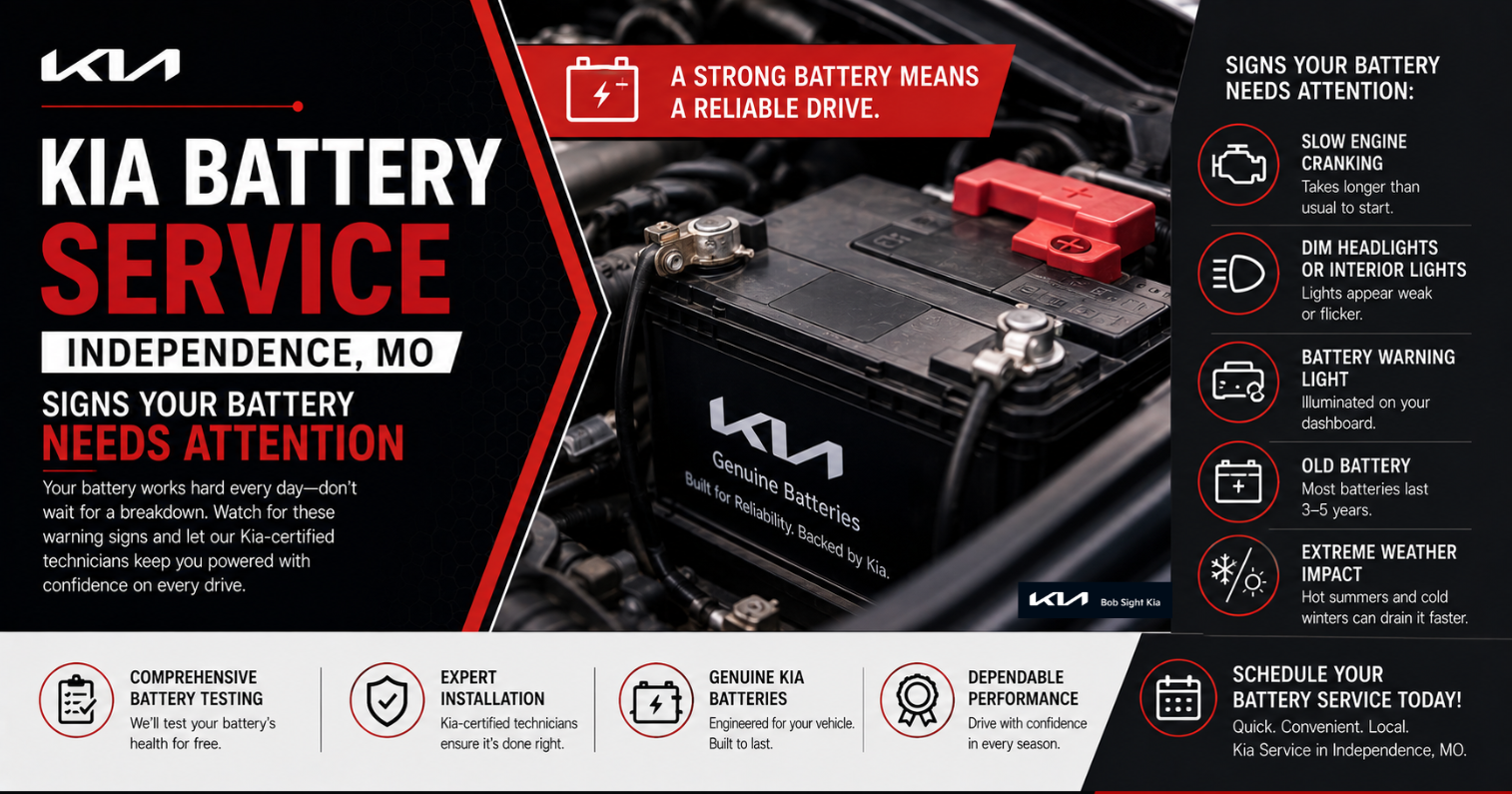
Testing your battery's cold-cranking amps (CCA) before winter is essential because freezing temperatures reduce battery chemical efficiency by up to 50 percent while demanding more starting power. A battery that performs adequately during mild summer months can fail suddenly during the first frosty morning in Independence. Engine starter motors require significantly higher electrical current to turn over cold engine oil, placing immense strain on aging battery plates and internal fluid capacity.
During a professional electrical inspection at Bob Sight Kia, certified technicians conduct a comprehensive digital load test to measure total voltage output and cold-cranking reserve capacities. They also inspect battery terminals and cable connections for white or greenish corrosion buildup, which increases electrical resistance and prevents proper charging. Cleaning terminal connections and applying protective anti-corrosion grease ensures steady voltage flow throughout the winter season.
If your battery is more than three years old, replacing it proactively before sub-zero winter temperatures arrive protects you from being stranded in icy parking lots near Independence Center. Drivers operating advanced Kia hybrids or electric vehicles like the EV6 or EV9 should also have their 12-volt auxiliary systems and high-voltage battery thermal management controls checked. Maintaining healthy battery systems guarantees instant engine starts and reliable operation for electronic safety systems during severe winter weather.
3. Tire Tread Inspection, Pressure Maintenance, and Winter Tire Selection
Maintaining proper tire inflation and ensuring a minimum tread depth of 6/32 of an inch are critical for channeling snow, slush, and water away from the contact patch on slippery Missouri roads. Ambient outdoor temperatures directly affect tire pressure, with air pressure dropping approximately one to two pounds per square inch (PSI) for every 10-degree Fahrenheit drop in outside temperature. Driving on underinflated tires reduces fuel economy, causes uneven tread wear, and severely degrades steering response on icy highway ramps along Highway 291.
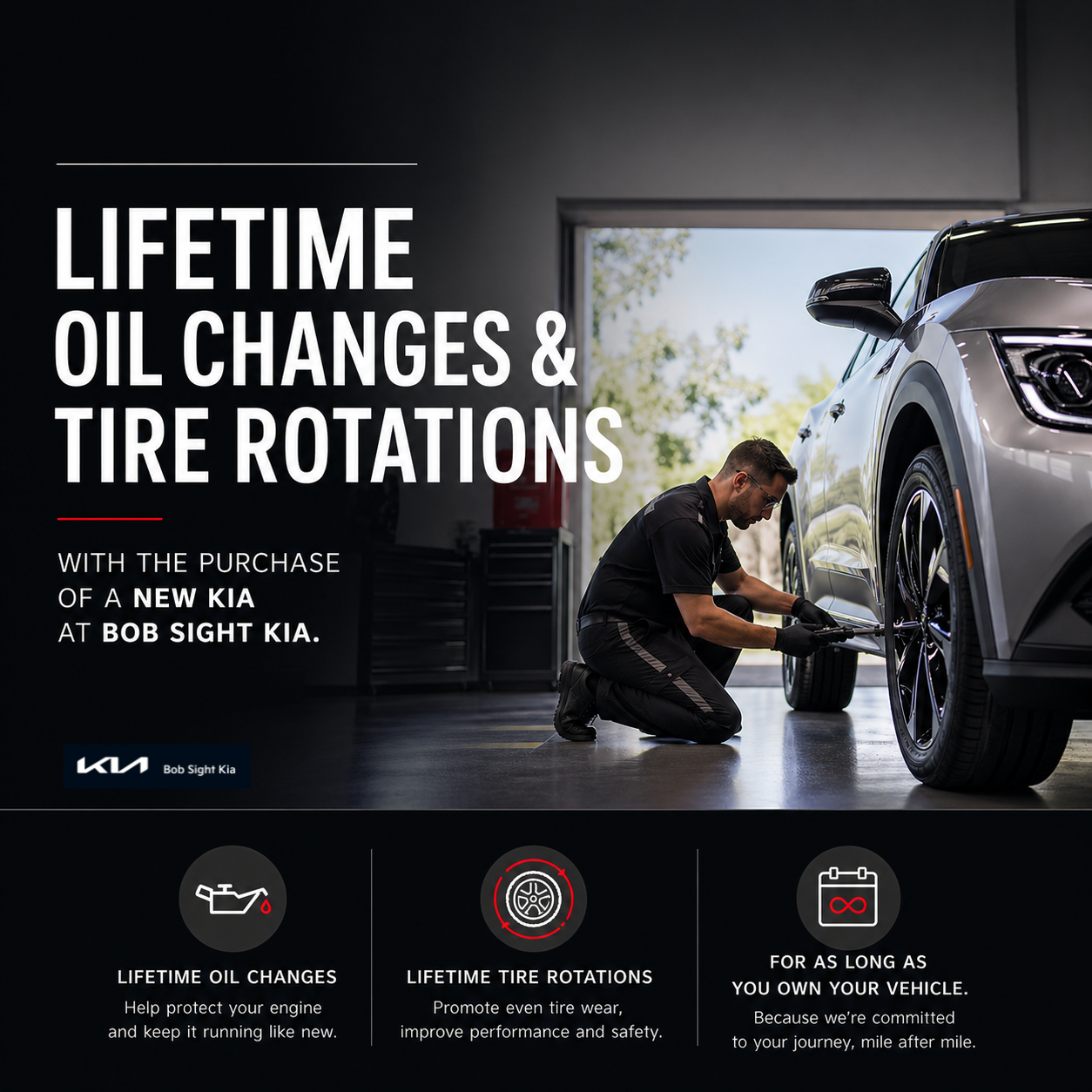
Checking tire tread depth regularly using a depth gauge ensures your tires can bite into packed snow and slush without hydroplaning. While legal minimum tread limits are set at 2/32 of an inch, winter driving demands significantly deeper tread grooves to maintain adequate traction. If your tires show uneven wear patterns or shallow tread, scheduling a tire rotation and computerized wheel alignment restores handling stability and extends overall tread life.
For drivers who commute frequently along open highway stretches in Grain Valley, Blue Springs, or Liberty, switching to dedicated winter tires offers unmatched cold-weather grip. Winter tires feature specialized soft rubber compounds that remain flexible in sub-freezing temperatures, alongside dense siping patterns designed to grip packed snow and ice. Local drivers can consult with our parts team to find OEM-recommended tire packages engineered specifically for their vehicle trim.
4. Step-by-Step Guide to Essential Winter Fluid Checks
Verifying proper engine oil viscosity, coolant concentration levels, brake fluid purity, and low-temperature washer fluid prevents severe internal engine damage and visibility loss during winter storms. Fluids act as the lifeblood of your vehicle, and each fluid type behaves differently when exposed to frigid Midwest air. Following a methodical fluid inspection process keeps your engine, braking, and visibility systems operating perfectly throughout the coldest months of the year.
- Verify Engine Oil Grade and Viscosity: Check that your engine contains full synthetic oil (such as OW-20 or 5W-30 depending on model specifications) that flows easily during cold morning starts to protect vital internal engine components immediately upon turning the key.
- Test Engine Coolant and Antifreeze Concentration: Use a refractometer or hydrometer to confirm an exact 50/50 mixture of genuine Kia long-life ethylene-glycol coolant and distilled water, protecting the radiator and engine block against freezing down to -34 degrees Fahrenheit.
- Inspect Brake Fluid for Moisture Accumulation: Test brake fluid for moisture contamination, as absorbed water can freeze inside brake lines or cause internal corrosion, leading to a spongy brake pedal or reduced stopping power on icy roads.
- Fill Washer Reservoir with Sub-Zero De-Icing Fluid: Drain summer washing fluids and completely fill the reservoir with a winter-grade washer fluid rated for -20 degrees Fahrenheit or lower to melt windshield frost and prevent frozen fluid nozzles while driving on I-70.
- Check Transmission and Differential Fluids: Inspect driveline lubricants, especially on all-wheel-drive models, to ensure proper fluid levels and viscosity for smooth power transfer through snow and ice.
Executing these vital fluid checks protects internal engine and transmission components from catastrophic cold-weather wear. Utilizing certified service facilities ensures your vehicle receives factory-specified fluids engineered to maintain exact viscosity tolerances. Keeping fluids topped off and clean guarantees optimal winter reliability across Jackson County.
5. Brake System Performance and Suspension Checks on Icy Roads
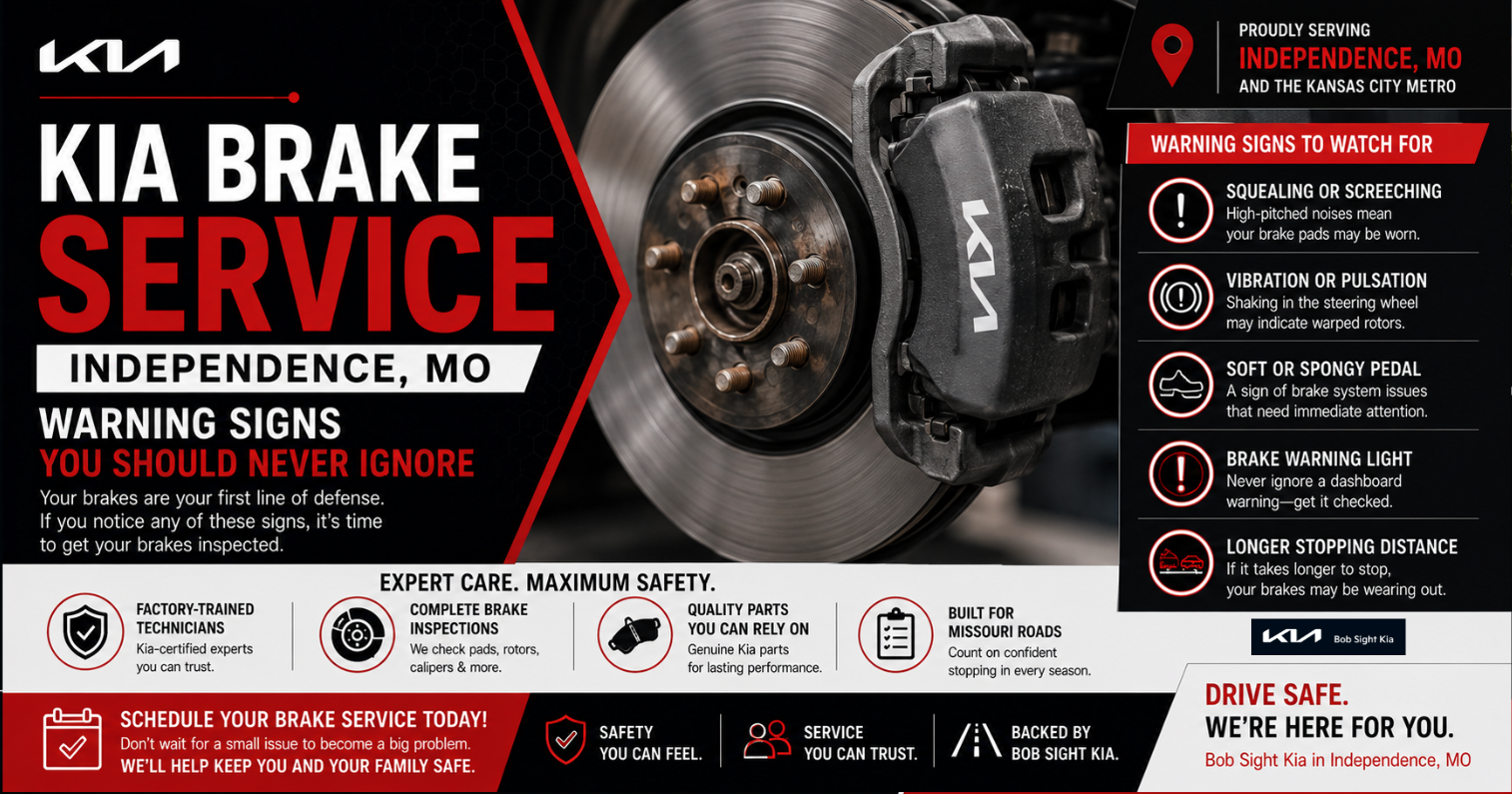
Conducting a thorough brake and suspension evaluation ensures short, controlled stopping distances and predictable chassis stability when braking on slick pavement. Winter road conditions reduce tire traction dramatically, making smooth, precise braking performance essential for avoiding rear-end collisions during heavy traffic stops along Truman Road or Noland Road. Worn brake pads, warped rotors, or sticking calipers compromise stopping control and increase braking distances on icy road surfaces.
During a comprehensive brake inspection, certified mechanics measure brake pad friction material thickness, inspect rotors for scoring or rust buildup, and verify that caliper slide pins move freely. Road salt and winter moisture can cause rust to form on brake components, leading to uneven pad wear or brake drag. Cleaning caliper slides and replacing worn pads with genuine Kia OEM brake components restores factory braking response and prevents premature rotor damage.
Suspension components also play a vital role in maintaining tire contact with uneven, pothole-marked winter roads across the Kansas City metro. Struts, shocks, sway bar links, and control arm bushings must absorb impacts while maintaining proper wheel alignment geometry. Replacing worn suspension parts eliminates unwanted body sway and helps keep your vehicle planted firmly when navigating icy curves or sudden lane adjustments on regional interstates.
6. Heating, Defroster, Cabin Air Filter, and Wiper Blade Maintenance
Inspecting climate control heating elements, rear window defrosters, cabin air filters, and heavy-duty winter wiper blades guarantees a warm cabin and clear visual awareness during snowfall. Clear visibility is your primary line of defense when navigating hazardous winter driving conditions in Eastern Jackson County. Streaking wiper blades or a slow-defrosting windshield compromise your ability to see pedestrians, brake lights, and lane markings clearly during heavy snow or freezing rain.
| Visibility & Heating System | Common Winter Failures | Recommended Preventive Maintenance |
|---|---|---|
| Windshield Wiper Blades | Streaking, Rubber Splitting, Ice Buildup on Frames | Install Heavy-Duty Beam-Style Winter Wiper Blades |
| Cabin Air Filter | Reduced Heating Airflow, Musty Odors, Foggy Windows | Replace Clogged Air Filter with Fresh OEM Filter |
| Front & Rear Defrosters | Inoperative Heating Grid Lines, Slow Moisture Clearing | Inspect Heating Grid Element Continuity & Electrical Fuses |
| HVAC Blower Motor | Squeaking Noise, Weak Fan Speed, No Air Delivery | Test Blower Motor Speeds & Climate Control Actuators |
Replacing standard windshield wipers with flexible, beam-style winter blades prevents ice and packed snow from building up inside the wiper frame. Beam-style blades apply uniform pressure across curved windshield glass, wiping away road spray and slush cleanly without leaving dangerous blind spots. Combining fresh winter blades with a clean cabin air filter ensures strong airflow through heater vents, allowing defrosters to clear glass rapidly on freezing mornings.
Checking rear window heating grids and side mirror heaters is equally important for maintaining total visual awareness when backing out of driveways or changing lanes on busy roads. If defrosters operate slowly or fail to clear fog, certified technicians can inspect electrical relays, fuse panels, and heating elements to resolve issues quickly. Maintaining a warm, clear cabin keeps you comfortable and focused during difficult winter commutes.
7. All-Wheel Drive System Checks for Winter Traction
Inspecting all-wheel-drive (AWD) coupling units, transfer cases, and rear differentials ensures instant torque distribution to wheels with traction when driving through snow. Modern Kia SUVs like the Telluride, Sorento, Sportage, and Seltos offer advanced Dynamax all-wheel-drive systems engineered to monitor road conditions and balance power between front and rear axles automatically. Proper maintenance guarantees that these sophisticated driveline components engage seamlessly on slick, snow-covered roads.
Servicing all-wheel-drive systems involves checking fluid levels and condition inside the front transfer case and rear differential assemblies. Over time, gear oil degrades and loses its protective viscosity, especially under heavy loads or severe temperature changes. Changing driveline fluids at factory-recommended service intervals protects internal gears and bearings from friction wear, ensuring long-term reliability through harsh Midwest winters.
Additionally, electronic AWD control modules rely on precise speed sensor inputs from all four wheels to detect wheel slippage instantly. Certified technicians use specialized Kia diagnostic equipment to check for stored fault codes and verify electronic sensor calibrations. Having an fully operational AWD system gives drivers total confidence when accelerating from stops or climbing steep, icy hills in suburban Independence neighborhoods.
8. Step-by-Step Guide to Assembling a Winter Emergency Kit
Packing a dedicated vehicle emergency kit ensures driver and passenger safety in the event of unexpected highway delays, mechanical breakdowns, or accidental slide-offs. Even well-maintained vehicles can experience unexpected issues during severe winter weather, or become trapped behind traffic accidents on interstate highways like I-70 or I-435. Having proper emergency supplies stored inside your trunk keeps you warm, safe, and prepared until roadside assistance arrives.
- Pack High-Thermal Insulation Items: Store heavy fleece blankets, thermal sleeping bags, insulated gloves, knit hats, extra socks, and hand warmer packets in a waterproof storage tote inside your vehicle trunk.
- Assemble Light and Signaling Tools: Include a high-lumen LED flashlight with fresh extra batteries, reflective emergency safety vests, road flares, or LED emergency beacon lights to keep your vehicle visible to other drivers at night.
- Include Traction and Excavation Equipment: Carry a compact folding snow shovel, a sturdy ice scraper with a brass or rigid plastic edge, and a bag of sand, floor dry, or non-clumping kitty litter to provide instant tire traction on icy driveways.
- Gather Essential Mechanical and Power Tools: Pack a set of heavy-duty 8-gauge jumper cables or a portable lithium-ion jump-start power bank, basic hand tools, and a roll of heavy-duty duct tape for minor roadside repairs.
- Store Non-Perishable Food and Hydration: Keep non-perishable high-protein snack bars, dried fruit, nuts, and several bottles of drinking water inside the vehicle cabin, taking care not to let plastic water bottles freeze solid.
Storing these critical safety items in an easily accessible trunk container ensures you are ready for severe weather emergencies. Reviewing kit contents annually before winter allows you to replace expired snacks, test flashlight batteries, and refresh clothing items. Preparation transforms scary winter breakdowns into manageable, safe situations for you and your family.
Quick Facts: Kia Winter Maintenance Checklist
- Battery Capacity: Freezing outdoor air reduces battery capacity by up to 50 percent; professional load testing prevents sudden winter starting failures.
- Tire Pressure Loss: Tire pressure drops 1 to 2 PSI for every 10-degree drop in outside temperature; maintain proper inflation to preserve grip and fuel economy.
- Optimal Tread Depth: Ensure tire tread depth measures at least 6/32 of an inch to clear snow and slush effectively on icy Missouri roads.
- Synthetic Engine Oil: Full synthetic OW-20 engine oil flows rapidly during sub-zero cold starts, reducing internal friction and starter wear.
- Ethylene-Glycol Coolant: A precise 50/50 coolant and water mix protects engine blocks against internal freezing down to -34 degrees Fahrenheit.
Following this seasonal checklist ensures your vehicle remains dependable, efficient, and safe through every winter storm in Eastern Jackson County.
Ownership Planning for Missouri Winter Driving
Proactive winter ownership planning protects your mechanical investment and preserves long-term vehicle trade-in equity. Missouri winters are notorious for unpredictable swings between freezing ice, heavy snowstorms, and muddy thaws. Establishing a consistent winter care routine—including frequent undercarriage car washes to remove road salt and de-icing chemicals—prevents rust formation on brake lines, exhaust pipes, and structural frame components.
Planning your service appointments well in advance of peak winter months avoids last-minute scheduling delays at local service departments. Autumn is the ideal window to schedule oil changes, tire rotations, brake checks, and battery tests before winter weather arrives. Utilizing online scheduling tools like the schedule service tool at Bob Sight Kia allows you to select convenient appointment times that fit your daily calendar.
Finally, keeping comprehensive service records and using genuine Kia OEM parts preserves factory warranty protection and enhances future vehicle value. Taking advantage of seasonal savings through service and parts specials keeps winter maintenance costs low. Thoughtful seasonal care guarantees that your Kia continues delivering comfortable, reliable performance through every Midwest winter season.
Frequently Asked Questions
Why is a battery test important before winter in Independence, MO?
A battery test before winter is critical because cold temperatures severely degrade battery chemical capacity while demanding significantly more power to crank cold engine oil. Freezing air reduces a battery's available starting power by up to 50 percent, meaning an aging battery that started fine during summer can fail completely during the first freezing morning in Jackson County.
Professional battery testing at Bob Sight Kia measures cold-cranking amps and internal resistance to determine if your battery can withstand winter starting demands. Technicians also clean battery posts and cable connections, removing corrosion that restricts electrical flow and prevents the alternator from fully charging the battery during short daily drives.
Replacing a weak battery before sub-zero winter temperatures arrive protects you from being stranded in icy parking lots near Independence Center or along highway corridors like I-70. Routine electrical checks give drivers complete confidence during cold morning commutes across the Kansas City metro area.
Should I switch to synthetic oil for winter driving in Missouri?
Yes, switching to full synthetic oil with a low cold-viscosity rating like OW-20 guarantees rapid oil circulation during sub-zero cold engine starts. Conventional motor oil thickens significantly in freezing temperatures, causing engine components to run without proper lubrication for critical seconds after startup, which accelerates internal engine wear.
Full synthetic oil remains fluid even in extreme sub-zero weather, flowing quickly to lubricate pistons, camshafts, and bearings immediately upon starting your engine. Synthetic oil also maintains its protective thermal properties longer, resisting oil breakdown and sludge formation during short winter drives where the engine may not reach full operating temperature.
Servicing your vehicle at Bob Sight Kia guarantees that certified technicians fill your engine with factory-approved synthetic oil tailored to your exact engine specifications. Maintaining clean, high-grade synthetic oil protects your engine and supports maximum fuel economy all winter long.
What tread depth do I need on my tires for winter driving on I-70?
Tires should have a minimum tread depth of 6/32 of an inch to safely maintain traction, grip packed snow, and prevent hydroplaning on slushy highways. While legal minimum tread limits are set at 2/32 of an inch, shallow tread grooves cannot effectively channel heavy snow, slush, or freezing water away from the tire contact patch on fast-moving roads like I-70.
Driving on worn tires dramatically increases braking distances and compromises steering control on icy pavement or wet highway ramps near Highway 291. Checking tread depth regularly with a depth gauge or having technicians measure tread during routine tire rotations ensures your tires offer adequate cold-weather grip.
If your current tires are worn below safe winter thresholds, the parts specialists at Bob Sight Kia can help you select replacement all-season or dedicated winter tires engineered specifically for your Kia model. Proper tire selection keeps your family safe during hazardous winter travel across Eastern Jackson County.
How does winter weather affect electric and hybrid Kia models?
Freezing winter temperatures temporarily reduce electric vehicle driving range and hybrid battery efficiency because cold air slows battery chemical reactions and requires cabin heating energy. Lithium-ion batteries operate most efficiently in moderate temperatures, so running high-voltage cabin heaters in sub-zero weather draws energy directly from the traction battery pack.
To maximize range during winter, drivers can utilize pre-conditioning features through Kia Connect while the vehicle is still plugged into a home charger, warming the battery and cabin using grid power. Utilizing heated seats and a heated steering wheel rather than blasting cabin heat also conserves battery energy for driving range during long commutes along I-435.
Bringing your hybrid or EV to Bob Sight Kia for a pre-winter inspection ensures that high-voltage coolant systems, heat pumps, and 12-volt auxiliary batteries are operating perfectly. Certified technicians verify that thermal management systems keep your electric or hybrid vehicle performing efficiently all winter long.
Why Bob Sight Kia Is Your Trusted Partner for Winter Service
Choosing Bob Sight Kia for your seasonal vehicle maintenance means partnering with a family-owned dealership deeply committed to the safety and well-being of Independence drivers. For generations, our service center has provided transparent, high-quality automotive care built on honest advice, certified technical expertise, and fair pricing. We treat every customer who visits our service drive like a valued neighbor.
Our state-of-the-art service facility features modern diagnostic technology, specialized Kia factory tools, and a complete inventory of genuine OEM parts designed specifically for your vehicle. Factory-trained Master Technicians handle every winter service procedure—from routine battery load tests and synthetic oil changes to complex brake repairs and all-wheel-drive servicing—with exact precision and care.
We are dedicated to making your service experience comfortable, convenient, and completely stress-free. From online service scheduling and comfortable waiting lounges to clear pricing disclosures and helpful service advice, our team is here to support you through every mile of winter driving. Visit Bob Sight Kia in Independence, MO today to get your vehicle fully freeze-ready for the months ahead.
Helpful Links
Explore these useful resources on our website to assist with your winter service and vehicle research needs:
- Schedule Certified Kia Winter Maintenance Online
- Browse Current Parts and Service Specials
- Order Genuine Kia OEM Parts & Winter Accessories
- Explore New All-Wheel Drive Kia SUVs
- Calculate Your Vehicle Trade-In Value
Proud to Be Part of the Bob Sight Auto Group
Bob Sight Kia is proud to be a member of the Bob Sight Auto Group, serving drivers across Missouri and Kansas for generations with commitment, integrity, and exceptional service. Whether you are looking for new vehicles, quality pre-owned models, professional service, or certified collision repair, our family of dealerships is dedicated to meeting all your automotive needs across the Kansas City metro area.
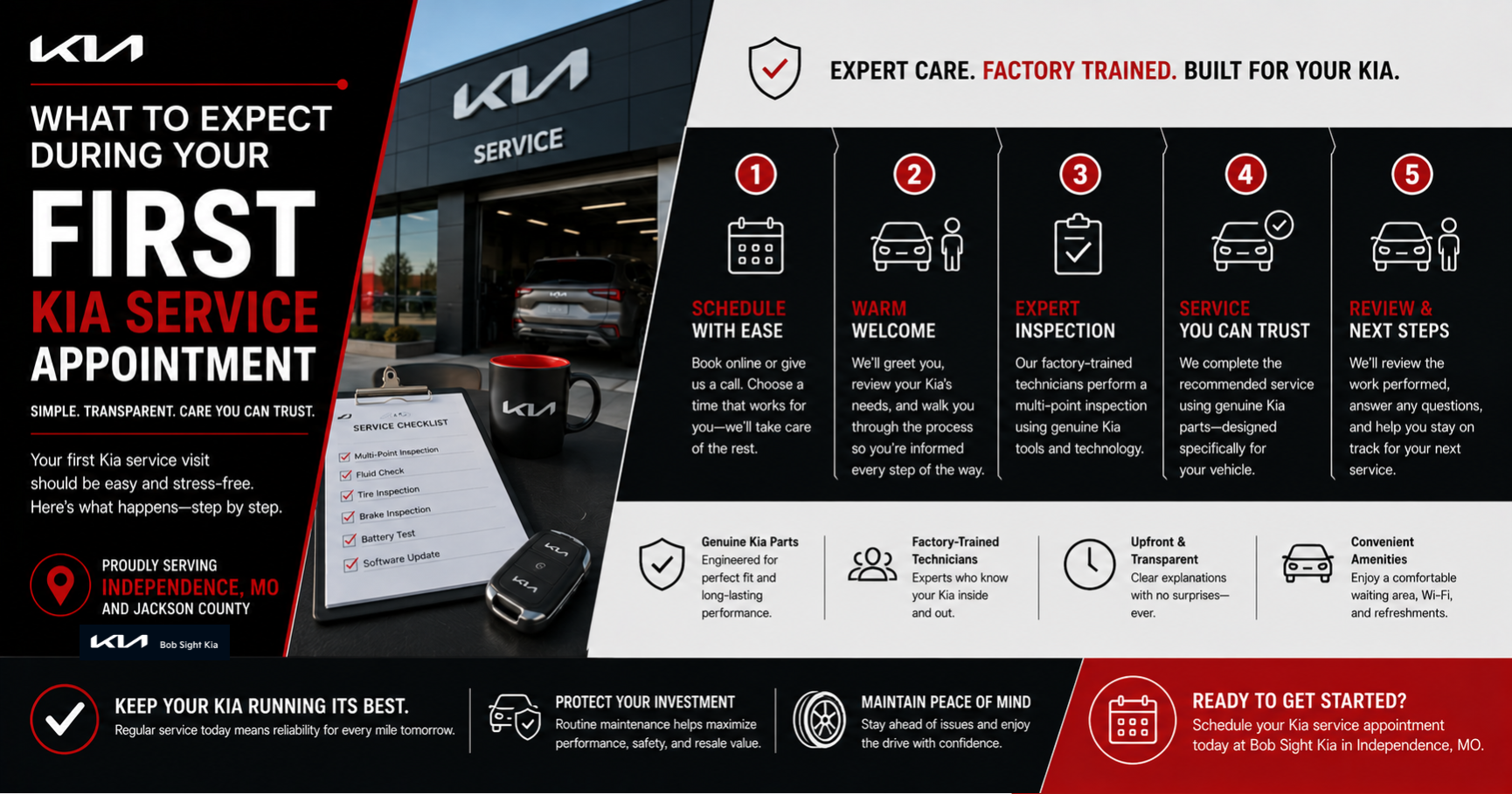
 Warranties include 10-year/100,000-mile powertrain and 5-year/60,000-mile basic. All warranties and roadside assistance are limited. See retailer for warranty details.