Today: 8:30AM - 6:00PM
Blog

Kia’s Commitment to Safety: Advanced Features in the 2025 Kia Models

Graphic showcasing Kia’s commitment to safety in the 2025 models, featuring key safety features like Kia Drive Wise, Blind-Spot Collision Avoidance, Lane Keep Assist, and Rear Cross-Traffic Collision Warning. The graphic highlights each feature with icons and descriptions, set against a dark blue backdrop.

At Bob Sight Kia, we understand that safety is one of the top priorities for our customers when selecting a new vehicle. That’s why we are excited to showcase the 2025 Kia models, which come equipped with cutting-edge safety features designed to protect you and your loved ones on the road. Whether you’re navigating the streets of Independence, Lee’s Summit, or Blue Springs, the safety and peace of mind that come with a Kia are second to none.

Kia Drive Wise Technology: Leading the Way in Safety

A dark blue square graphic with bold white text explaining Kia Drive Wise Technology, including Forward Collision Warning, Lane Departure Warning, and Smart Cruise Control, with Bob Sight Kia and Kia logos at the bottom.
Kia Drive Wise: helping drivers stay safer and more confident behind the wheel.

One of the most impressive advancements in Kia vehicles is Kia Drive Wise, a suite of advanced driver-assistance technologies designed to help prevent accidents and improve overall driving safety. With features like Forward Collision Warning (FCW), Lane Departure Warning (LDW), and Smart Cruise Control (SCC), Kia has put a focus on making your driving experience as safe as possible.

  • Forward Collision Warning (FCW): The FCW system uses radar and cameras to detect vehicles ahead. If it senses that a collision is imminent, it can warn the driver or automatically apply the brakes to prevent or reduce the severity of the collision. This is especially useful during stop-and-go traffic or when approaching vehicles too quickly.
  • Lane Departure Warning (LDW): This feature alerts you if you unintentionally drift out of your lane without signaling. If the system detects lane departure, it can provide an audio and visual alert to prevent any potential accidents.
  • Smart Cruise Control (SCC): The 2025 Kia models come with the Smart Cruise Control system that adjusts the speed based on the distance to the car in front of you. It maintains a safe driving distance, reducing the need for manual acceleration and braking on the highway.

Blind-Spot Collision Avoidance: Driving with Confidence

Changing lanes or merging onto highways can sometimes be tricky, especially when other vehicles are in your blind spots. Kia’s Blind-Spot Collision Avoidance (BCA) system is designed to help reduce the risk of accidents when changing lanes.

This system uses sensors and cameras to detect vehicles in your blind spot. If you attempt to change lanes without noticing a car in your blind spot, the system will alert you to the potential danger. In some situations, it can even apply corrective steering to help avoid a collision. This added layer of safety gives you the confidence to change lanes with peace of mind, knowing that your vehicle has your back.

A clean blue digital graphic with the headline “Kia’s Commitment to Safety,” four white safety icons (driver-assist, car, shield, and clean vehicle), and Bob Sight Auto Group and Kia logos at the bottom.
Kia’s commitment to advanced safety is why so many drivers trust Bob Sight Kia.

Rear Cross-Traffic Collision Warning (RCCW): A Smarter Way to Reverse

Reversing can be challenging, especially in crowded parking lots or tight spaces. That’s why the Rear Cross-Traffic Collision Warning system in the 2025 Kia models is a game-changer.

When you’re backing up, this system uses radar sensors to detect approaching vehicles from the side. If a vehicle is detected, the system will give you an audible warning to help prevent a collision. This feature is particularly helpful when you're reversing out of parking spaces and can’t see oncoming traffic. It’s another way Kia has ensured you stay safe in every driving scenario.

Driver Attention Warning (DAW): Stay Alert on the Road

Driver fatigue is a serious concern, and it can be easy to lose focus during long drives. To address this, the Driver Attention Warning (DAW) system in the 2025 Kia models can detect if you’re becoming drowsy or distracted while driving. If the system senses a lack of attention or erratic driving behavior, it will alert you with a visual and audible warning, encouraging you to take a break if needed. This feature helps ensure you’re always in control of your vehicle, even during extended road trips.

Rear Occupant Alert: A New Standard in Child and Pet Safety

Kia also introduces the Rear Occupant Alert in the 2025 models, which is a great safety feature for families. This system reminds you to check the back seat before leaving the vehicle, ensuring that children, pets, or valuables are not left behind. The system works by using sensors to detect movement in the back seat, providing a visual reminder if any occupants are still inside. This is a great feature to prevent accidents and keep your loved ones safe.

The Importance of Kia’s Warranty for Added Peace of Mind

A blue gradient graphic showing icons for Forward Collision Avoidance, Blind-Spot Monitoring, and Advanced Airbags, with bold white text stating “2025 Kia Models Built for Safety” and the Bob Sight Kia logo below.
The 2025 Kia lineup is engineered for safety, with features designed to help protect what matters most.

Kia’s commitment to safety goes beyond technology. Every new Kia comes with the renowned 10-year/100,000-mile powertrain warranty, which includes coverage for many of the vehicle’s safety components. This warranty ensures that your Kia will remain in top condition, providing long-term protection for you and your family.

Additionally, the 5-year/60,000-mile basic warranty and 5-year/100,000-mile anti-perforation warranty further ensure that you’re covered for years to come. This extensive coverage gives you the peace of mind to drive your Kia with confidence, knowing that you're protected by one of the best warranties in the industry.

Why Choose Bob Sight Kia for Your Next Vehicle?

At Bob Sight Kia, we are committed to providing our customers in Independence, Lee’s Summit, and Blue Springs with not only the best cars but also the best service. We pride ourselves on offering the latest Kia models, equipped with top-of-the-line safety features and innovative technology. Our expert team is ready to help you find the perfect vehicle to suit your needs, whether you’re looking for a family-friendly SUV like the Kia Telluride, the stylish and efficient Kia Niro, or the versatile Kia Sportage.

We also offer competitive pricing and promotions to make your car-buying experience even better. Visit us today at 1700 S. Noland Rd, Independence, MO, or browse our online inventory to see the latest 2025 Kia models available at Bob Sight Kia.


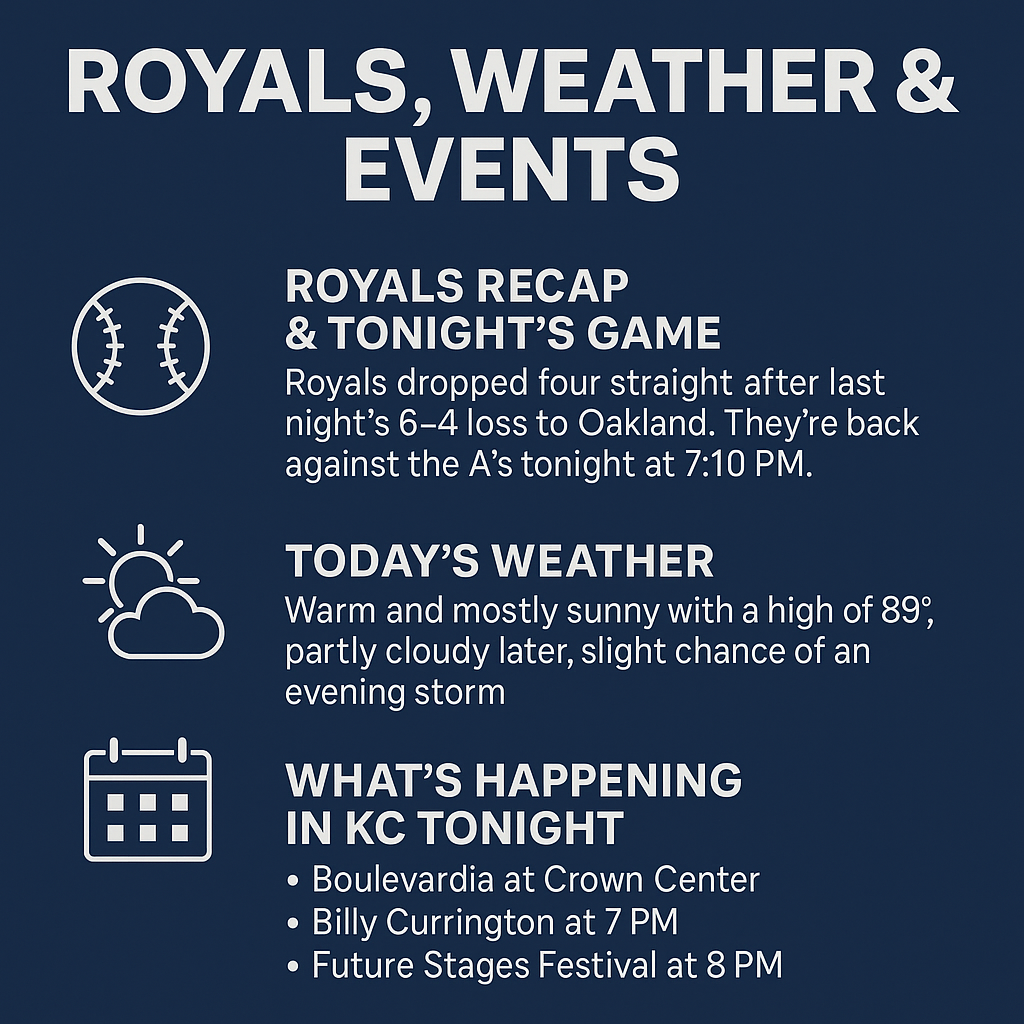
⚾ Royals Update

The Royals had a rough week, dropping four straight after a tough loss to Oakland on Friday night, 6–4. Earlier in the week, they were swept in three games by the Yankees, losing 1–0 on Thursday in a tight game decided by a chaotic play in the eighth inning that capped the sweep. Tonight, they're looking to reset with the A’s back in town—first pitch at 7:10 PM CT.

🌤️ Weather Today

Expect a classic Kansas City summer Saturday: warm and mostly sunny with highs around 89°F, with intermittent clouds moving in through the afternoon. There's a slight chance of a late-evening storm, so if you’re heading out before the sun sets—great time for errands or an evening stroll!

🎉 What’s Happening in KC Tonight – Saturday, June 14

  • Boulevardia – KC’s signature beer, food, and music festival happening all day at Crown Center.
  • Billy Currington – Country favorite hits the stage at 7 PM.
  • Future Stages Festival – A mix of electronic, indie, and youth performances kicks off at 8 PM at the Kauffman Center.
  • The Dinner Detective – An interactive comedy-mystery show with dinner included, hosted downtown.
  • Swap Con® – Buy, sell, and trade collectibles all day at Municipal Arena — a hit with families and collectors.
  • Science of Guinness World Records – Ongoing exhibit at Union Station, open during daytime hours for families.
A dark blue graphic divided into three sections with icons for baseball, sun/cloud, and a calendar. It summarizes today’s Royals game, Kansas City’s weather forecast, and local events happening tonight.
Royals game at 7:10, warm summer skies, and a full night of KC fun—here’s your Saturday snapshot.

The Bob Sight Auto Group – A Legacy of Trust and Excellence

As part of the Bob Sight Auto Group, we are proud to offer a variety of vehicles across multiple brands. Whether you’re shopping for a new Kia, Ford, Honda, or CDJR, we have something for everyone. Visit any of our locations today:

We look forward to helping you find the perfect vehicle for your lifestyle and budget.

Recommended Posts

Certified Kia technician inspecting climate control defroster system and dashboard vents in Independence MO

Kia Defroster Not Clearing Windshield Independence Drivers Check

Kia Defroster Not Clearing the Windshield? What Independence Drivers Should Check When winter temperatures drop across Jackson County, a properly working windshield defroster becomes an important part of everyday driving. Whether you are leaving home in Independence, commuting toward Kansas City on Interstate 70, or traveling through Blue Springs and Raytown, clear windshield visibility matters before you begin your drive. If your Kia defroster is blowing cold air, producing weak airflow, or struggling to clear condensation from the windshield, several different heating, ventilation, and climate control components could be involved. Sometimes the problem is as simple as an incorrect climate setting or a restricted cabin air filter. Other situations may require inspection of the blower motor, air distribution doors, heating system, or electrical controls. Understanding how your Kia's defroster works can help you recognize common symptoms, perform basic checks safely, and determine when professional service is appropriate. At Bob Sight Kia in Independence, Missouri, our service department helps drivers address heating, ventilation, air conditioning, and seasonal vehicle maintenance concerns. Knowing what to look for when your defroster stops performing normally can make it easier to explain the problem and plan the next steps. Schedule Kia Defroster and Climate Control Service in Independence, MO In This Guide You'll Learn This guide explains the major components involved in windshield defrosting and the symptoms that may indicate a maintenance or mechanical concern. How your Kia's heating and ventilation systems work together to clear the windshield Common reasons a front defroster blows cold air instead of warm air Why restricted airflow may indicate a cabin air filter, blower motor, or ventilation door problem How blend door and mode door actuators affect temperature and airflow direction What the A/C system contributes to windshield defogging during winter Which basic troubleshooting checks drivers can perform safely at home How rear-window defroster problems differ from front windshield defroster problems When a professional Kia HVAC or cooling system inspection may be needed How Your Kia Windshield Defroster System Works Your Kia's front windshield defroster uses the vehicle's climate control and ventilation system to direct air toward the interior surface of the windshield. The goal is to reduce condensation, warm the glass when appropriate, and improve forward visibility. During cold weather, warm airflow helps raise the temperature of the windshield surface. As the glass warms, moisture becomes less likely to condense on it, and existing condensation can evaporate. Fresh air ventilation and air conditioning may also help reduce moisture inside the passenger compartment, depending on outdoor conditions and the vehicle's climate control design. How Heating and Air Conditioning Work Together In many gasoline-powered Kia vehicles, cabin heat comes from a heater core that transfers heat from the engine cooling system into the ventilation air. As the engine warms, coolant circulates through the heating system. Air moving through or around the heater core can then be warmed before entering the passenger compartment. Hybrid and electric Kia models may use different heating arrangements, including electric heating components or heat pump systems, depending on the model and equipment. The air conditioning system can contribute to defogging by removing moisture from ventilation air when the system is operating under suitable conditions. However, the A/C compressor does not have to run continuously for the defroster to work. Compressor operation may be limited at low outdoor temperatures, and some vehicles automatically manage this function. What Happens When You Select Front Defrost? When you activate the front defrost setting, the climate control system directs airflow toward the windshield. Depending on your Kia's equipment, selecting defrost may also change fan speed, air intake mode, temperature settings, or air conditioning operation. Vehicles with automatic climate control may manage several of these adjustments without requiring the driver to change each setting manually. Because operation varies by model and year, your owner's manual is the best reference for the exact defrost procedure. Why Different Components Can Cause Similar Symptoms A defroster that does not clear the windshield may have a heating problem, an airflow problem, a moisture problem, or a combination of concerns. For example, the heater may produce warm air, but a malfunctioning air distribution door may prevent enough of that air from reaching the windshield. In another situation, the ventilation system may direct air correctly, but a restricted cabin air filter or weak blower motor may reduce airflow. Identifying whether the primary symptom involves air temperature, airflow strength, airflow direction, or persistent moisture is a useful first step in troubleshooting. Top Reasons Your Kia Defroster Blows Cold Air If your Kia's front defroster produces cold air when warm air is selected, the cause may involve the vehicle's heating system or climate control components. The possible causes depend on the model and the type of heating system installed. Low Engine Coolant Level In vehicles that use engine coolant to provide cabin heat, low coolant can interfere with normal heater operation. If the cooling system does not contain the proper amount of coolant, circulation through the heater core may be affected. Air trapped in the system can also interfere with heat transfer. Possible symptoms include inconsistent cabin heat, a temperature gauge that behaves unusually, visible coolant leakage, or a low coolant level in the reservoir. Low coolant should not be ignored because it may indicate a leak or another cooling system concern. Always allow the engine to cool completely before inspecting the coolant reservoir. Never remove a pressurized radiator or coolant cap while the system is hot. Engine Thermostat Problems The thermostat helps regulate engine coolant temperature in many gasoline-powered vehicles. If the thermostat becomes stuck open, the engine may take longer than normal to reach its intended operating temperature. This can result in slower cabin heating during cold weather. Possible symptoms include an engine temperature gauge that remains unusually low, reduced heater performance, or diagnostic trouble codes related to engine temperature regulation. However, slow heating does not automatically mean the thermostat has failed. Outdoor temperature, engine design, driving conditions, and vehicle operating strategy can also affect warm-up time. Restricted or Clogged Heater Core A heater core transfers heat from the engine coolant to the ventilation air in vehicles equipped with this type of heating system. If coolant flow through the heater core becomes restricted, the system may produce less heat than expected. Restrictions can develop from deposits, contamination, or other cooling system problems. Possible symptoms include weak cabin heat despite normal engine temperature or inconsistent heating performance. A professional inspection is needed to determine whether the heater core is restricted or whether another component is responsible. Faulty Temperature Blend Door Actuator Many automotive climate control systems use a blend door to regulate the temperature of air entering the passenger compartment. An actuator moves the door according to the temperature setting selected by the driver. If the actuator or door mechanism fails, the system may become stuck delivering air that is too hot or too cold. Symptoms may include: Cold air continuing to blow when heat is selected Air temperature changing unexpectedly Different temperatures coming from separate climate zones Clicking or tapping noises behind the dashboard Temperature controls that do not respond normally These symptoms can have multiple causes, so actuator replacement should follow an appropriate diagnosis. Heating Differences in Kia Hybrid and Electric Vehicles Not every Kia uses the same heating system. Hybrid and electric models may incorporate electric heaters, heat pumps, or other vehicle-specific components. Because these systems operate differently from conventional engine-coolant heating arrangements, troubleshooting procedures also differ. Drivers should consult the model-specific owner's manual and avoid attempting repairs involving high-voltage components. Diagnosing Weak or Insufficient Defroster Airflow Sometimes the defroster produces warm air but cannot move enough of it across the windshield. Weak airflow may leave sections of glass fogged or slow the removal of condensation. Several ventilation components can contribute to this problem. Air Blows Strongly From Floor Vents but Weakly From Defrost Vents If the blower seems to operate normally but most of the air comes from the floor or dashboard vents instead of the windshield openings, an air distribution problem may be present. Many climate control systems use a mode door to determine where air is directed. A faulty mode door actuator, damaged door mechanism, or climate control issue may prevent the airflow from reaching the selected vents. Before assuming a component has failed, confirm that the front defrost setting is selected correctly. Airflow Is Weak From Every Vent Weak airflow throughout the ventilation system may indicate a restricted cabin air filter, blower motor problem, blocked intake, or electrical control issue. A cabin air filter that has collected excessive dirt, leaves, or other debris can restrict the volume of air moving through the system. However, a dirty filter is not the only possible explanation. If airflow remains weak even with the fan set to high, the blower motor or another ventilation component may need inspection. Blower Motor Makes Squeaking, Rattling, or Clicking Noises Unusual noises from the ventilation system can sometimes indicate debris contacting the blower fan or wear within the blower motor assembly. Leaves and other material may enter the ventilation intake under certain conditions. Mechanical wear can also produce noises that change as fan speed increases or decreases. If the sound persists, a service inspection can help identify its source. Blower Fan Works Only at Certain Speeds If the blower operates only at its highest setting, only at certain speeds, or not at all, the problem may involve the fan control system. Depending on the vehicle, possible causes include a blower motor resistor, electronic control module, wiring problem, fuse, or blower motor failure. The correct diagnosis depends on the specific symptom and electrical design. Replacing parts without testing may not resolve the problem. When to Inspect the Cabin Air Filter Cabin air filters collect dust, pollen, and other airborne particles before they enter the passenger compartment. As debris accumulates, airflow may become restricted. If your Kia has reduced ventilation airflow or persistent odors, checking the filter is a reasonable maintenance step. The replacement interval varies by model, maintenance schedule, and driving conditions. Follow your Kia owner's manual rather than assuming every vehicle needs a replacement at the same mileage. Schedule Kia Cabin Air Filter and Defroster Service The Role of Air Conditioning in Winter Windshield Defrosting Air conditioning is commonly associated with cooling the passenger compartment during summer, but it can also assist with moisture removal. When the A/C system operates, air passing over the evaporator can lose moisture as water vapor condenses on the cold evaporator surface. That moisture can then drain outside the vehicle through the condensate drainage system. This process helps explain why some vehicles automatically select A/C operation during windshield defrosting. Does the A/C Compressor Always Run During Defrost? No. Compressor operation depends on vehicle design, temperature, and other operating conditions. Some Kia climate control systems automatically request air conditioning when front defrost is selected, but the compressor may be limited or disabled during very cold weather. The defroster can still improve windshield visibility through warm airflow and ventilation even when the compressor is not operating. An illuminated A/C indicator does not necessarily confirm that the compressor is running at that moment. Can an A/C Problem Affect Defogging? Under some conditions, an air conditioning problem may reduce the system's ability to remove moisture from ventilation air. However, slow windshield clearing does not automatically mean the A/C compressor has failed. Cabin humidity, ventilation settings, glass temperature, blower performance, and airflow direction may also contribute. If your Kia struggles to clear condensation even when the appropriate defrost settings are selected, a climate control inspection can help identify the cause. What About Musty Odors From the Defroster? A musty odor from the ventilation system may be associated with moisture, contamination, or microbial growth in parts of the HVAC system. A dirty cabin air filter can also contribute to unpleasant odors. However, an odor alone does not identify the exact component responsible. If the smell persists, have the ventilation system inspected rather than assuming refrigerant or compressor failure. Step-by-Step: Kia Defroster Troubleshooting Checklist Before scheduling a service appointment, several basic observations may help narrow down the issue. These checks are intended for drivers and do not require disassembling the dashboard, opening pressurized cooling components, or handling electrical wiring. Step 1: Confirm the Front Defrost Setting With the vehicle safely parked, activate the front windshield defrost mode. Confirm that airflow is directed toward the windshield rather than only the dashboard or floor vents. Refer to your owner's manual if you are unsure which control activates the front defroster. Step 2: Adjust the Temperature and Fan Speed Select an appropriate warm temperature and increase the fan speed. Check whether the airflow becomes stronger as the fan setting increases. Observe whether the air temperature changes when you adjust the temperature control. If the fan does not respond or the air remains cold after the heating system has had sufficient time to operate, additional inspection may be needed. Step 3: Check the Air Intake Setting During many cold-weather fogging situations, fresh air mode can help reduce moisture accumulating inside the passenger compartment. If your vehicle allows manual control, check whether recirculation is selected. Some Kia models automatically manage air intake settings during front defrost operation. Step 4: Observe the Engine Temperature if Applicable For Kia models with an engine temperature gauge, observe whether the engine warms normally during operation. There is no universal five-minute or ten-minute warm-up requirement that applies to every Kia. Warm-up time depends on outside temperature, engine design, operating conditions, and other factors. If the temperature gauge behaves unusually or a temperature warning appears, follow the owner's manual instructions. Step 5: Inspect the Coolant Reservoir Only When Safe For vehicles with an engine cooling system, a coolant level check may help identify a possible heating concern. Only inspect the reservoir when the engine and cooling system are completely cold. Check the level according to the owner's manual and look for obvious signs of leakage. Never open a hot or pressurized coolant system. If the coolant is low, avoid assuming that simply adding coolant resolves the underlying problem. The cause of the loss may need diagnosis. Step 6: Listen for Unusual HVAC Noises While the vehicle is parked, change the fan speed and airflow direction settings. Listen for persistent clicking, rattling, grinding, or other unusual sounds from behind the dashboard. These noises may help a technician identify a blower, actuator, or ventilation concern. Step 7: Determine Whether the Problem Is Temperature, Airflow, or Moisture Try to identify the main symptom before scheduling service. Cold airflow: The system moves air normally but does not produce the expected heat. Weak airflow: The fan operates, but little air reaches the vents. Wrong vent location: Air comes from the floor or dashboard instead of the windshield. Persistent condensation: Airflow and temperature seem normal, but the windshield remains fogged. No blower operation: The ventilation fan does not respond when switched on. These observations can help your service advisor understand the concern and determine which systems may need testing. Quick Facts: Kia Defroster Maintenance Essentials Front Defrost: Directs ventilation airflow toward the windshield to help remove condensation and improve visibility. Heating System: Provides warm air using the heating components appropriate for the vehicle's powertrain and design. Air Conditioning: Can assist with moisture removal when compressor operation is available under the current conditions. Fresh Air Mode: Can help reduce accumulated cabin humidity during many cold-weather conditions. Cabin Air Filter: A heavily restricted filter may reduce airflow and slow windshield clearing. Blower Motor: Moves air through the ventilation system and may cause weak or missing airflow if it malfunctions. Mode Door Actuator: Helps direct air to the selected vents on vehicles equipped with this arrangement. Automatic Defogging: Availability and operation vary by Kia model, year, and trim. Preparing Your Kia's Heating and Climate Control System for Winter Checking your Kia's climate control system before winter arrives can help identify performance concerns before they become more noticeable during freezing weather. For drivers in Independence, Raytown, Sugar Creek, Grain Valley, and the surrounding Kansas City metro, fall is a practical time to review heating and defroster operation. Test the Front Defroster Before Temperatures Drop Activate the front defroster while the vehicle is parked and confirm that air reaches the windshield. Check whether the fan responds to different speed settings and whether the temperature controls operate normally. If airflow is weak or the air does not warm as expected, consider scheduling an inspection before severe winter weather. Review Cabin Air Filter Maintenance Consult your owner's manual to determine when the cabin air filter should be inspected or replaced. Dusty driving conditions and heavy debris accumulation may require more frequent attention. A restricted filter can reduce ventilation performance, but replacing it will not correct unrelated electrical or heating system faults. Pay Attention to Cooling System Symptoms For vehicles that use engine coolant for cabin heating, unusual temperature gauge behavior, coolant loss, or inconsistent heat can indicate a concern worth investigating. Do not continue driving if the vehicle displays an overheating warning or other instruction requiring you to stop. Check for Moisture Inside the Cabin Wet carpeting, damp floor mats, and water intrusion can increase cabin humidity and make windshield clearing more difficult. Remove accumulated moisture when practical and have persistent leaks inspected. Consider Professional HVAC Diagnosis When Symptoms Continue If the defroster does not respond normally after checking the settings, a professional inspection may involve testing the blower motor, ventilation doors, climate controls, heating components, or related electrical systems. The appropriate diagnostic steps depend on the symptom and the Kia model. Addressing the underlying cause is more useful than replacing parts based on a single symptom. Frequently Asked Questions About Kia Defroster Problems Why does my Kia defroster take so long to start blowing warm air on cold mornings? In many gasoline-powered Kia vehicles, cabin heat depends on the engine cooling system reaching a temperature that allows the heater core to provide useful warmth. During cold weather, the engine and cooling system may take longer to warm up. However, the time required varies based on the vehicle, outside temperature, and operating conditions. Hybrid and electric Kia vehicles may use different heating arrangements, so their behavior can differ from conventional gasoline-powered models. If your Kia consistently produces little or no heat after normal operation, the thermostat, heating components, coolant system, or climate controls may need inspection. Do not rely on a fixed warm-up time as proof of a failed thermostat. Can a weak battery or alternator cause my Kia defroster fan to run slowly? Electrical system problems can affect components that depend on a stable power supply, including the ventilation blower motor. In a conventional gasoline-powered vehicle, the battery and charging system support the electrical equipment used during operation. If the charging system is malfunctioning, you may notice symptoms such as dashboard warnings, dimming lights, or unusual electrical behavior. However, a slow blower fan does not automatically indicate a weak battery or alternator. Blower motor wear, control modules, wiring, and other electrical components may also be responsible. If weak airflow occurs alongside other electrical symptoms, battery and charging system testing may be appropriate. Why is there a sweet smell in my Kia when I turn on the front defroster? A sweet or unusual odor when the heater operates can sometimes be associated with a coolant leak, including a possible heater core leak in vehicles that use engine coolant for cabin heating. Other possible signs include an unusual greasy film on the windshield, coolant loss, or damp carpeting. These symptoms do not confirm that the heater core has failed. A professional inspection is needed to identify the source. If you suspect a coolant leak, arrange service promptly. If the vehicle begins overheating or displays a warning requiring you to stop, pull over safely and follow the owner's manual instructions. Why does my Kia defroster turn on by itself while driving? Some Kia models have automatic defogging features that adjust climate control operation when conditions indicate that windshield condensation may develop. Depending on the model, the system may change airflow direction, fan speed, air intake mode, or other climate settings. However, not every Kia includes the same automatic defogging equipment. Consult your owner's manual to determine whether your vehicle has this feature and how it operates. If the system behaves unexpectedly, first review the operating conditions and available settings. Repeated unexplained activation or climate control warnings may warrant inspection. What should I do if my Kia rear window defroster is not working but the front defroster works? The front windshield defroster and rear-window defogger generally use different methods to clear glass. The front system typically directs conditioned air toward the windshield, while many rear-window defoggers use electrical heating elements integrated into the glass. If the rear-window defogger is not working, possible causes include damaged heating elements, wiring problems, control faults, or an electrical protection issue. Some vehicles also have operating conditions or automatic shutoff features that affect rear defogger behavior. Check your owner's manual to confirm the proper operation. If the rear glass does not clear when the system is activated under appropriate conditions, professional electrical diagnosis may be needed. Can a clogged cabin air filter make my Kia defroster stop working? A heavily clogged cabin air filter can reduce the amount of air moving through the ventilation system. This may make windshield clearing slower or cause airflow to feel weak. However, the cabin air filter does not control every part of the defroster system. If the fan does not run, the air comes from the wrong vents, or the system cannot produce heat, additional components may need testing. Check the filter according to your Kia maintenance schedule and have persistent airflow problems inspected. Why does air come out of my Kia floor vents instead of the windshield vents? If you select front defrost but most of the airflow continues coming from the floor or dashboard vents, an air distribution problem may be present. Many climate systems use mode doors and actuators to direct airflow to different locations. A problem with a door mechanism, actuator, or climate control command may prevent the selected airflow direction from operating correctly. Confirm the defrost setting first. If the problem continues, a service inspection can help determine whether a mechanical or electrical fault is present. What should I do if my windshield will not clear while driving? If windshield condensation begins limiting visibility, activate the front defroster and use the climate control settings recommended for your vehicle. During many cold-weather conditions, warm airflow and fresh air ventilation can help reduce interior fogging. If the windshield remains significantly obstructed, reduce speed as appropriate and pull over in a safe location. Do not continue driving when you cannot see the roadway clearly. Persistent defroster failure should be inspected before returning to normal driving conditions. Schedule Kia Defroster and HVAC Service in Independence, MO A windshield defroster that blows cold air, produces weak airflow, or fails to clear condensation may have several possible causes. Understanding the symptoms can help you determine whether the issue involves climate settings, ventilation airflow, heating performance, or another system. Routine maintenance and timely inspections can help identify problems before they interfere with your winter driving routine. Bob Sight Kia serves drivers from Independence, Blue Springs, Lee's Summit, Raytown, Sugar Creek, Grain Valley, Liberty, and the greater Kansas City metro. If your Kia's heating or defroster system is not working as expected, our service department can help you arrange an appointment to have the concern evaluated. Visit Bob Sight Kia at 1700 S Noland Road, Independence, MO 64055, or schedule service online. Schedule Kia Defroster Service at Bob Sight Kia Helpful Kia Service and Shopping Links Schedule Kia Service in Independence, MO Explore Kia Service Specials Browse New Kia Vehicles Shop Used Vehicles at Bob Sight Kia Value Your Trade Online Proud to Be Part of the Bob Sight Auto Group Bob Sight Kia is proud to be part of the Bob Sight Auto Group, serving drivers throughout Missouri and Kansas with automotive sales and service resources. Whether you are shopping for a new vehicle, exploring pre-owned inventory, or scheduling maintenance, our dealership family is committed to helping drivers find the information and services they need. Bob Sight Kia | Independence, MO Bob Sight Honda | Lawrence, KS Bob Sight CDJR | Lawrence, KS Bob Sight Ford | Lee's Summit, MO Trust Is Our Tradition.


Foggy vehicle windshield on cold winter morning in Independence MO showing climate control defroster clearing inner glass

Why Your Kia Windshield Keeps Fogging Up Cold Missouri Mornings

Why Your Kia Windshield Keeps Fogging Up During Cold Missouri Mornings Cold Missouri mornings can bring an unexpected problem for Kia drivers: a windshield that fogs up before the morning commute even begins. Whether you are leaving your driveway in Independence, heading toward Blue Springs, or traveling into Kansas City, interior windshield condensation can make it difficult to see the road clearly. Windshield fogging occurs when moisture in the air comes into contact with glass at a temperature low enough for condensation to form. During fall and winter, the combination of cold outdoor temperatures, warm cabin air, wet floor mats, and changing humidity levels can make this problem more noticeable. While occasional condensation is normal, a windshield that repeatedly fogs up or takes an unusually long time to clear may indicate a problem with your Kia's climate control system, cabin air filter, or moisture management. At Bob Sight Kia in Independence, Missouri, our service department helps drivers address heating, ventilation, air conditioning, and other seasonal maintenance concerns. Understanding what causes windshield fogging and how to use your Kia's defroster correctly can help you maintain better visibility throughout the colder months. Schedule Kia HVAC and Defroster Service at Bob Sight Kia In This Guide You'll Learn Understanding how moisture interacts with your vehicle's glass and climate control system can make cold-weather driving more manageable. This guide explains: Why interior and exterior windshield condensation develops during cold weather How humidity and temperature changes affect your Kia's windows Which climate control settings help clear interior windshield fog How cabin air filters and HVAC components can affect defroster performance Why clear windshield glass matters for Kia driver-assistance technology How to clean interior automotive glass without leaving residue When persistent fogging may require professional inspection Why Windshields Fog Up During Missouri Winters Windshield condensation develops when moisture in the air reaches a surface cold enough for water vapor to change into liquid droplets. This process is closely related to the dew point, which is the temperature at which air becomes saturated with water vapor under its current conditions. During winter, the windshield of a parked Kia can become very cold. When warmer, moisture-containing cabin air comes into contact with the interior glass, the air immediately next to the windshield cools. If that air reaches its dew point, water vapor condenses into tiny droplets on the glass. These droplets scatter light and create the cloudy appearance commonly described as windshield fog. Where Does the Moisture Inside Your Kia Come From? Moisture can enter or accumulate inside your vehicle in several ways. Even a properly functioning Kia can experience interior condensation under the right conditions. Common sources of cabin humidity include: Moisture released through normal breathing by drivers and passengers Wet shoes, coats, and umbrellas brought inside the vehicle Rainwater or melting snow collecting on floor mats Damp carpeting or upholstery that has not completely dried Outside humidity entering when doors or windows are opened Moisture entering through damaged weatherstripping or other water leaks For example, a Kia Sportage parked overnight in Independence may have a cold windshield by morning. When several passengers enter the vehicle with wet jackets or shoes, the additional moisture can increase cabin humidity and contribute to condensation. This is why windshield fogging may become more noticeable during school drop-offs, family trips, or commutes with multiple passengers. Why Temperature Changes Matter Missouri weather can shift considerably between afternoon and overnight temperatures. A mild afternoon may be followed by freezing conditions the next morning. These changes affect the temperature of your vehicle's glass and the amount of moisture that can remain in the air without condensing. Warm air can contain more water vapor before becoming saturated than colder air. When humid cabin air cools against the windshield, condensation becomes more likely. Understanding this relationship helps explain why your Kia may have clear windows one morning and significant interior fogging the next, even when nothing appears to have changed with the vehicle. Interior vs. Exterior Windshield Fogging: How to Tell the Difference Before adjusting your climate controls, determine whether the condensation is on the inside or outside of the windshield. The location of the moisture matters because the most effective clearing method can differ. Interior Windshield Fogging Interior condensation commonly occurs when humid cabin air meets cold windshield glass. It is frequently associated with cold mornings, wet clothing, melting snow, or inadequate cabin ventilation. Signs of interior fogging include: Cloudiness that remains after using the windshield wipers Condensation that becomes more noticeable after passengers enter Fogging that improves when the front defroster is activated Moisture collecting on other interior windows Interior fogging is generally addressed by directing appropriately conditioned air toward the windshield, increasing ventilation, and reducing cabin humidity. Exterior Windshield Fogging Exterior condensation develops when the outside surface of the windshield is cooler than the dew point of the surrounding outdoor air. This can occur during humid weather when the air conditioning system has cooled the windshield. Exterior fogging may be more noticeable during humid mornings or when outdoor temperatures change quickly. Windshield wipers can remove exterior condensation temporarily. Adjusting the climate control settings to reduce excessive windshield cooling may also help prevent it from returning. Why You Should Avoid Wiping Interior Fog With Your Hand Using your hand or sleeve to wipe interior condensation may temporarily improve visibility, but it can also leave oils and streaks on the glass. These residues can scatter sunlight and oncoming headlights, making visibility more difficult under certain lighting conditions. A clean microfiber cloth can be useful when the vehicle is safely parked, but the climate control system should be used to manage ongoing condensation. How to Defog Your Kia Windshield on a Cold Morning Your Kia's front defroster is designed to direct airflow toward the windshield to help remove condensation and improve visibility. The exact operation depends on your vehicle's model, model year, and climate control equipment. Some vehicles automatically adjust airflow, temperature, fresh air intake, and air conditioning operation when defrost mode is selected. For model-specific instructions, consult your Kia owner's manual. Step 1: Turn On the Front Windshield Defroster Start the vehicle and select the front windshield defrost setting. This directs airflow toward the windshield rather than concentrating it on the dashboard vents or floor. Depending on the vehicle, the system may automatically increase fan speed or change other climate settings to help clear the glass. Step 2: Select an Appropriate Warm Temperature During cold weather, warm air can help raise the temperature of the interior windshield surface. As the glass warms, condensation becomes less likely to remain on the surface. Using warm air with sufficient airflow is generally effective for clearing interior fog during winter conditions. You do not necessarily need to select the highest available temperature. Follow the recommended defrost settings for your vehicle and adjust them as needed. Step 3: Use Fresh Air Instead of Recirculation Air recirculation allows the climate system to reuse air already inside the passenger compartment. Although this can be useful for cooling the cabin or temporarily limiting outside odors, prolonged recirculation during cold weather may allow moisture from passengers to accumulate. Fresh air mode introduces outside air into the ventilation system. During many cold-weather conditions, bringing in outside air and warming it can help reduce interior humidity and improve windshield clearing. Some Kia models automatically switch away from recirculation when front defrost is selected. Step 4: Allow the A/C System to Assist When Available Air conditioning can help remove moisture from the air passing through the climate control system. When the A/C system operates, moisture may condense on the evaporator and drain away from the ventilation system. This can help provide drier air for windshield clearing. However, the A/C compressor does not necessarily operate under every temperature condition. Some vehicles limit compressor operation when outdoor temperatures are very low. Your Kia may automatically manage A/C operation during defrost mode. An illuminated A/C indicator does not always mean the compressor is actively running. Follow your vehicle's climate control instructions rather than assuming the compressor must operate continuously for the windshield to clear. Step 5: Increase Ventilation if Necessary If the cabin contains significant moisture, briefly opening a window may help exchange humid interior air with outside air when conditions allow. This can be useful when several passengers have entered the vehicle with wet clothing or when condensation is developing rapidly. However, opening a window is not required for every fogging situation, and its effectiveness depends on outdoor humidity and temperature. Step 6: Wait Until Visibility Is Clear Before Driving Do not begin driving with a windshield that significantly obstructs your view. Allow the defroster enough time to clear the necessary viewing area before entering traffic. The amount of time required varies based on temperature, humidity, ice accumulation, and HVAC performance. If the windshield does not clear normally, the climate control system may need inspection. How Kia Automatic Defogging Systems Work Some Kia vehicles are equipped with automatic defogging features designed to help reduce windshield condensation. Depending on the model and equipment, these systems may use sensors and climate control adjustments to respond to conditions associated with interior windshield fogging. When the system detects a need for additional defogging, it may adjust airflow direction, fan speed, fresh air intake, or air conditioning operation. The specific features and operating conditions vary by vehicle. Does Every Kia Have Automatic Defogging? No. Automatic defogging equipment and operation vary by model, year, trim level, and climate control configuration. Some Kia vehicles have automatic climate control and dedicated defogging features, while others rely primarily on manually selected defrost settings. Consult your owner's manual to determine whether your vehicle includes an automatic defogging system and how it operates. What if Automatic Defogging Is Not Working? If your Kia has an automatic defogging feature and it does not appear to respond as expected, first review the owner's manual for the system's operating conditions. Some functions may be limited under particular temperature or climate settings. If the system repeatedly fails to clear condensation or displays a warning, professional inspection may be appropriate. Possible concerns can include sensor issues, airflow restrictions, climate control faults, or other HVAC problems. Mechanical Problems That Can Cause Persistent Windshield Fogging Occasional condensation is normal, but persistent fogging that does not improve with appropriate climate settings may indicate an underlying maintenance or mechanical concern. Several different components can affect how efficiently your Kia removes moisture from the passenger compartment. Clogged Cabin Air Filter The cabin air filter helps remove dust, pollen, and other airborne particles from air entering the passenger compartment. As the filter collects debris, airflow through the ventilation system may become restricted. If the restriction becomes significant, the defroster may deliver less airflow to the windshield, slowing the clearing process. A dirty cabin air filter does not automatically cause windshield condensation, but reduced airflow can make existing fogging more difficult to clear. Blocked A/C Condensate Drain When an air conditioning system removes moisture from the air, condensation typically collects and drains outside the vehicle. If the condensate drain becomes blocked, water may accumulate where it should not. Depending on the vehicle and the severity of the problem, this may contribute to damp interior carpeting or moisture-related odors. A damp passenger-side floor is not proof of a blocked drain, but it is a symptom worth investigating. Heater Core Leak The heater core is a heat exchanger that uses engine coolant to help warm the passenger compartment in many gasoline-powered vehicles. If the heater core develops a leak, coolant may enter the HVAC housing or passenger compartment. Possible symptoms include: A sweet or unusual odor when the heater operates A greasy or persistent film forming on the inside of the windshield Unexpected coolant loss Damp carpeting near the dashboard Reduced heating performance These symptoms can have other causes, so a professional diagnosis is necessary before concluding that the heater core has failed. If you suspect a coolant leak, arrange an inspection promptly. If the engine begins overheating, stop driving safely and follow the warnings in your owner's manual. Recirculation Door or Climate Control Actuator Problems Climate control systems use doors and actuators to manage airflow direction and, on many vehicles, the balance between fresh and recirculated air. If a door or actuator becomes stuck or stops responding correctly, the ventilation system may not operate as intended. For example, a system that remains in recirculation mode may have difficulty reducing interior humidity during cold weather. Other symptoms can include airflow coming from the wrong vents, unusual clicking noises behind the dashboard, or temperature controls that do not respond normally. Damaged Door or Window Weatherstripping Weatherstripping helps prevent rainwater and outside moisture from entering the passenger compartment. Worn or damaged seals around doors, windows, or an equipped sunroof can allow water to reach interior carpeting or trim. When that moisture remains trapped, cabin humidity may stay elevated even after the vehicle has warmed up. If your Kia frequently develops interior condensation and you notice damp carpets or water stains, checking for water intrusion is an important part of the diagnosis. Why Your Kia Cabin Air Filter Matters for Defroster Performance A properly functioning cabin air filter supports the ventilation system by filtering airborne contaminants while allowing air to move through the HVAC system. Over time, dust, leaves, pollen, and road debris can accumulate in the filter. For drivers traveling throughout Independence, Blue Springs, Raytown, and the Kansas City metro, seasonal debris and everyday road conditions can contribute to filter contamination. How a Dirty Filter Affects Airflow When the cabin air filter becomes heavily restricted, the blower may have difficulty moving the expected volume of air through the ventilation system. This can affect airflow from dashboard vents, floor outlets, and windshield defroster openings. Reduced airflow may make it take longer to warm the windshield or remove condensation. However, persistent fogging can have several causes, and replacing the filter will not resolve every HVAC or moisture problem. When Should You Replace Your Kia Cabin Air Filter? The correct cabin air filter replacement interval depends on your Kia's model, model year, maintenance schedule, and operating conditions. Vehicles driven frequently in dusty environments or areas with significant airborne debris may require more frequent inspection. Signs that a cabin air filter may need attention include reduced ventilation airflow, visible contamination, or persistent odors from the vents. Follow your owner's manual for the recommended maintenance interval and have the filter inspected when airflow problems develop. Where Is the Cabin Air Filter Located? Many Kia vehicles have a cabin air filter accessible through or near the glove compartment area. However, filter location and replacement procedures vary by model. Consult your owner's manual or a service professional before attempting replacement. Schedule Kia Cabin Air Filter and HVAC Service How Windshield Fogging Can Affect Kia Drive Wise Safety Features Many Kia vehicles offer driver-assistance technologies that use cameras, radar, or other sensors to monitor driving conditions. Depending on the model and equipment, Kia Drive Wise features may include Forward Collision-Avoidance Assist, Lane Keeping Assist, Lane Following Assist, and other available systems. Some camera-based features rely on a forward-facing camera positioned near the upper windshield. Why Clear Glass Matters for Forward-Facing Cameras Cameras need an adequately clear view to interpret lane markings, vehicles, and other objects. Fog, frost, ice, dirt, or other obstructions in the camera's viewing area can affect performance. Depending on the system and conditions, your Kia may display a warning or temporarily limit certain driver-assistance functions. However, not every windshield fogging event will disable these features. The specific response depends on the vehicle, camera placement, severity of the obstruction, and system design. What Should You Do if a Camera Warning Appears? If your Kia displays a message indicating that a camera or driver-assistance feature is obstructed, follow the instructions in your owner's manual. Clear the windshield and remove any visible frost, condensation, or debris from accessible glass surfaces. Do not attempt to disassemble or clean internal camera components yourself. If the warning remains after visibility has been restored, professional diagnosis may be necessary. Driver-assistance systems are designed to support attentive driving. They do not replace the driver's responsibility to maintain visibility and control of the vehicle. How to Clean the Inside of Your Kia Windshield to Reduce Fogging Keeping the interior windshield clean can improve visibility and make condensation easier to manage. Over time, dust, fingerprints, airborne residue, and films from interior materials can accumulate on automotive glass. These contaminants can create haze and streaks that become more noticeable when sunlight or headlights shine through the windshield. Step 1: Park in a Suitable Location Choose a shaded location or garage where the glass is not excessively hot. Cleaning glass in direct sunlight can cause some products to evaporate quickly, making streaks more difficult to avoid. Step 2: Remove Loose Dust Use a clean, dry microfiber cloth to gently remove dust and loose debris from the interior windshield. Pay attention to the lower corners where dust may collect near the dashboard. Step 3: Apply an Automotive-Safe Glass Cleaner Use a glass cleaning product appropriate for automotive interior surfaces. If your vehicle has aftermarket window film or other specialized coatings, confirm that the cleaner is compatible with those materials. Applying the cleaner to a microfiber cloth rather than spraying directly onto the dashboard can help protect nearby electronics and interior trim. Step 4: Clean the Glass in Overlapping Sections Wipe the glass using overlapping strokes, working across the windshield to remove visible residue. Use a separate clean cloth when necessary to avoid spreading dirt or oily deposits. Step 5: Buff Away Remaining Streaks Finish with a clean, dry microfiber cloth to remove remaining moisture and streaks. Check the glass from different viewing angles to identify any haze that remains. Should You Use an Anti-Fog Glass Treatment? Some automotive products are designed to reduce the formation of visible condensation on interior glass. Results vary by product and conditions. Before using an anti-fog treatment, confirm that it is suitable for your vehicle's glass, coatings, and any applicable camera-related restrictions. Avoid applying products to camera housings or other sensitive components. Glass treatments should supplement proper ventilation and moisture control rather than replace them. Quick Facts About Kia Windshield Fogging in Cold Weather Condensation: Interior fog forms when humid cabin air contacts glass cold enough to reach the air's dew point. Front Defrost: Directs airflow toward the windshield to help remove condensation and improve visibility. Fresh Air Mode: Can help reduce accumulated cabin humidity during many cold-weather conditions. Air Conditioning: Can remove moisture from ventilation air when the system is operating under suitable conditions. Cabin Air Filter: A heavily restricted filter can reduce airflow and slow windshield clearing. Automatic Defogging: Available equipment and operating behavior vary by Kia model and year. Glass Cleaning: Removing interior residue can improve clarity and reduce distracting haze. Persistent Fogging: May indicate trapped interior moisture, restricted ventilation, or another HVAC-related concern. Preparing Your Kia's Climate Control System for Winter Windshield visibility is an important part of winter vehicle preparation. Before temperatures regularly fall below freezing, consider checking how your Kia's heating and defrost systems operate. A properly functioning climate control system should direct airflow to the appropriate vents and respond to temperature and fan adjustments. If the system is slow to clear the windshield, produces unusual odors, or has noticeably weak airflow, an inspection may help identify the cause. Check Your Defroster Before the First Freeze Test the front defroster before winter weather becomes severe. Make sure airflow reaches the windshield and that the climate controls respond as expected. If your vehicle has a rear-window defogger, verify that it operates according to the owner's manual. Inspect the Cabin for Trapped Moisture Look for damp carpeting, wet floor mats, water stains, or persistent musty odors. Remove accumulated water or melting snow from removable floor mats when practical. If carpeting remains damp without an obvious explanation, professional inspection may be needed to locate the source. Review Cabin Air Filter Maintenance Check your Kia maintenance schedule to determine whether the cabin air filter is due for inspection or replacement. If airflow has weakened or unusual odors have developed, ask your service advisor whether the filter or another HVAC component may need attention. Address Unusual Heating or Cooling Symptoms Changes in cabin temperature, inconsistent airflow, unusual noises, or repeated windshield fogging can sometimes indicate problems with climate control components. Having these concerns evaluated before winter can help you understand whether maintenance or repairs are needed. Drivers can also review available maintenance offers through the Bob Sight Kia Service Specials page. Frequently Asked Questions About Kia Windshield Fogging Why does my Kia turn on the A/C when I select front defrost? Some Kia climate control systems automatically select air conditioning when front defrost mode is activated because A/C operation can help remove moisture from the ventilation air. Drying the air can improve the system's ability to clear interior windshield condensation. However, the compressor may not operate under every temperature condition, even if the A/C indicator is illuminated. The vehicle's climate control system manages compressor operation according to its design and operating conditions. Consult your owner's manual for details about how your Kia handles defrost and air conditioning functions. Should I use hot or cold air to clear my Kia windshield? During cold weather, warm air directed toward the windshield generally helps clear interior condensation by warming the glass and supporting evaporation. Using fresh air and appropriate climate control settings can also help reduce interior humidity. Exterior fogging may require a different approach because it forms on the outside of the windshield. For best results, use your vehicle's front defrost setting and follow the manufacturer's instructions. Why does my Kia windshield smell sweet or develop a greasy film? A sweet odor combined with an unusual greasy film on the interior windshield can be associated with a heater core or coolant leak in vehicles that use engine coolant for cabin heating. Other sources of interior residue and odors are also possible. If these symptoms occur, arrange a professional inspection rather than assuming the heater core is the confirmed cause. If the vehicle also displays an overheating warning or experiences significant coolant loss, stop driving safely and follow the owner's manual instructions. Can a dirty cabin air filter cause my Kia windshield to fog up? A heavily clogged cabin air filter can reduce airflow through the HVAC system, potentially making it more difficult for the defroster to clear condensation. However, the filter is not the only possible cause of persistent fogging. High cabin humidity, wet carpeting, ventilation settings, and mechanical HVAC problems may also contribute. Inspecting the cabin air filter is a reasonable step when airflow becomes weak or windshield clearing takes longer than expected. Why does my Kia windshield fog up when passengers get inside? Passengers release moisture into the cabin through normal breathing. When several people enter a cold vehicle, the added humidity can condense on the windshield and other windows. Wet clothing and shoes may introduce additional moisture. Using front defrost, allowing appropriate fresh air ventilation, and removing excess moisture from the cabin can help reduce this problem. What should I do if my Kia windshield fogs up while driving? If condensation begins affecting visibility, activate the front windshield defroster and follow the climate control instructions for your vehicle. Fresh air ventilation and appropriate temperature settings may help clear interior fog. Do not attempt to wipe the windshield with your hand while driving. If your view becomes significantly obstructed or the fog does not clear promptly, slow down as appropriate and pull over in a safe location before continuing. Never continue driving when you cannot see the roadway clearly. Why does my Kia windshield keep fogging up even after I clean it? Cleaning removes surface residue, but it does not eliminate the moisture that causes condensation. If the windshield continues fogging, inspect the cabin for damp carpeting, wet floor mats, or other moisture sources. Review your ventilation settings and make sure the front defroster operates properly. Persistent fogging despite correct settings may warrant an HVAC or water-intrusion inspection. Can windshield fog affect Kia driver-assistance features? Yes. Depending on the vehicle and the location of the condensation, fog or other obstructions can interfere with camera-based driver-assistance features. Some systems may display warnings or temporarily limit functionality when the camera's view is obstructed. However, the exact response varies by model and system. Keep the windshield clear, follow any displayed warnings, and consult your owner's manual for information about the driver-assistance features installed on your Kia. Schedule Kia HVAC and Defroster Service in Independence, MO A foggy windshield is often the result of normal temperature and humidity changes, but recurring condensation can also point to a maintenance concern. If your Kia's defroster has weak airflow, the windshield repeatedly fogs despite correct climate settings, or you notice unusual odors or interior moisture, a service inspection can help identify the underlying problem. Bob Sight Kia serves drivers throughout Independence, Blue Springs, Lee's Summit, Raytown, Sugar Creek, Grain Valley, and the greater Kansas City metro. Our service department can assist with climate control concerns, cabin air filter maintenance, and other vehicle service needs. Visit Bob Sight Kia at 1700 S Noland Road, Independence, MO 64055, or schedule an appointment online. Schedule Service at Bob Sight Kia Helpful Kia Service and Shopping Links Schedule Kia Service in Independence, MO Explore Kia Service Specials Browse New Kia Vehicles Shop Used Vehicles at Bob Sight Kia Value Your Trade Online Proud to Be Part of the Bob Sight Auto Group Bob Sight Kia is proud to be part of the Bob Sight Auto Group, serving drivers across Missouri and Kansas with automotive sales, financing, and service resources. Whether you are shopping for a vehicle, exploring pre-owned inventory, or scheduling maintenance, our dealership family is committed to helping drivers find the automotive services and information they need. Bob Sight Kia | Independence, MO Bob Sight Honda | Lawrence, KS Bob Sight CDJR | Lawrence, KS Bob Sight Ford | Lee's Summit, MO Trust Is Our Tradition.

Certified Kia service technician testing 12-volt automotive battery health under hood in Independence MO

How to Tell if Your Kia Battery Is Weak Before First Kansas City Freeze

How to Tell if Your Kia Battery Is Weak Before the First Kansas City Freeze Cold mornings in Independence, Missouri, can make an aging car battery work harder than usual. If your Kia has been starting slowly, making clicking noises, or showing unusual electrical symptoms, it may be time to have the battery checked before winter temperatures arrive. Cold weather affects the amount of power a battery can deliver, while the engine may require more energy to start. A battery that performed normally throughout the summer can begin showing problems when temperatures drop. For drivers in Independence, Blue Springs, Lee's Summit, Raytown, and the greater Kansas City metro, recognizing these warning signs early can help reduce the chance of an unexpected no-start situation. At Bob Sight Kia, our service team helps local drivers maintain their vehicles throughout Missouri's changing seasons. Understanding how your battery works and when to request testing is a practical part of preparing your Kia for winter. Schedule Kia Battery Service at Bob Sight Kia What You'll Learn About Kia Battery Health How cold temperatures affect your Kia's 12-volt battery Common warning signs of a weak or discharged battery How short trips and driving habits affect battery performance What you can safely inspect at home Why choosing the correct replacement battery matters When to schedule professional battery and charging-system testing Why Cold Weather Can Make Your Kia Battery Struggle Cold weather slows the chemical reactions inside a conventional 12-volt lead-acid battery. As temperatures fall, the battery becomes less capable of delivering the electrical current needed to start the engine. According to AAA, freezing temperatures can significantly reduce a battery's available capacity. At the same time, colder engine oil can increase the amount of power needed to turn the engine over during startup. This combination creates additional strain on batteries that are already aging, undercharged, or experiencing internal wear. Why Battery Problems Often Appear After Summer Although winter is when many drivers discover battery problems, summer heat can contribute to the deterioration that causes them. High temperatures can accelerate internal corrosion and other chemical changes inside a lead-acid battery. Depending on the battery's construction, prolonged heat may also contribute to electrolyte loss. A battery weakened during a hot Kansas City summer may still provide enough power to start your Kia during mild fall weather. Once overnight temperatures begin approaching freezing, the reduced starting capacity becomes more noticeable. Cold weather does not automatically destroy a healthy battery. Instead, it can reveal weaknesses that were already developing. Five Warning Signs Your Kia Battery May Be Weak Battery problems do not always begin with a vehicle that refuses to start. Many drivers notice smaller changes in starting performance or electrical behavior first. 1. Your Kia Cranks More Slowly Than Normal One of the most recognizable signs of a weak battery is a slow engine crank. You may notice that the engine turns over more slowly than usual before starting. This can become more noticeable after your vehicle has been parked overnight during cold weather. Although a weak battery is one possible cause, starter problems, poor electrical connections, and other mechanical issues can produce similar symptoms. Testing helps identify the actual problem. 2. You Hear Clicking When Trying to Start the Engine A rapid clicking sound when attempting to start your Kia can indicate that the electrical system does not have enough available power to operate the starter properly. A discharged battery, corroded terminals, or loose electrical connections are possible causes. A single click without engine cranking can also point toward a starter-related problem. Rather than repeatedly attempting to start the vehicle, consider having the battery and starting system inspected. 3. Your Interior Lights or Electronics Behave Differently Low system voltage can sometimes cause unusual electrical behavior, including dim interior lights, unexpected infotainment resets, or other electronic interruptions during startup. However, these symptoms are not exclusive to battery problems. Wiring, charging-system, and individual component faults can also affect electrical performance. If several electrical symptoms begin appearing together, a professional inspection can help determine whether the battery is involved. 4. Your Battery or Charging-System Warning Light Appears The battery-shaped warning light on your dashboard generally relates to the vehicle's charging system. It does not automatically mean the battery itself needs replacement. If this warning light remains illuminated while driving, the alternator, charging controls, wiring, or another electrical component may not be functioning properly. A charging-system warning should be addressed promptly. If the system is not charging correctly, the vehicle may eventually lose electrical power or stop running. 5. Idle Stop and Go Stops Operating Some Kia vehicles are equipped with Idle Stop and Go technology, which can automatically shut off the engine during certain stops and restart it when needed. The system considers multiple operating conditions before activating. Battery state of charge is one factor, but cabin temperature demands, engine temperature, and other conditions can also affect operation. If Idle Stop and Go stops functioning along with slow starting or other electrical symptoms, battery testing may be worthwhile. How Short Trips Can Affect Your Kia Battery Frequent short drives can make it more difficult for a vehicle's charging system to replenish the energy used during engine startup. For example, drivers who primarily use their Kia for short trips around Independence, Raytown, or Sugar Creek may spend relatively little time driving between starts. The battery must provide power to start the engine, while the charging system works to restore that energy once the engine is running. When driving time is limited, the battery may not always return to a full state of charge. Repeated partial discharge can contribute to battery wear over time. Does Highway Driving Help Recharge a Weak Battery? Driving gives a properly functioning charging system an opportunity to replenish battery charge. However, there is no universal driving distance or time that guarantees a full recharge. Battery condition, temperature, electrical demand, and charging-system operation all affect how quickly a battery can recover. If your Kia frequently needs jump-starting or continues to crank slowly after normal driving, a longer trip is not a reliable solution. A battery test and charging-system inspection can help determine whether the battery needs charging, replacement, or further diagnosis. How to Check Your Kia Battery at Home You can look for several visible warning signs without performing complicated electrical testing. Before inspecting the battery, consult your Kia owner's manual for its location and any model-specific safety instructions. Not every Kia has a conventional 12-volt battery in the same location. Hybrid and electric models may have different battery arrangements and service procedures. Start With a Visual Inspection Park your Kia on level ground, switch the vehicle off, and engage the parking brake. Locate the 12-volt battery using your owner's manual. Look for visible damage, including cracks, swelling, or leaks. Check accessible terminals for corrosion or obvious connection problems without touching damaged components. If you notice damage, leaking fluid, or significant corrosion, arrange professional inspection rather than attempting repairs yourself. Do not attempt to open a sealed battery or handle leaking battery fluid. Battery electrolyte can be hazardous, and electrical connections should be serviced using appropriate safety procedures. Can You Test Battery Voltage With a Multimeter? A digital multimeter can provide useful information about the state of charge of a conventional 12-volt lead-acid battery when used correctly. After the battery has been at rest, a fully charged conventional lead-acid battery commonly measures approximately 12.6 volts or slightly higher, depending on its type and conditions. A substantially lower reading may indicate that the battery needs charging or further testing. However, voltage alone cannot confirm battery health. A battery can show a reasonable resting voltage while still being unable to deliver sufficient current during engine startup. For this reason, professional battery testing is more informative than relying on a single voltage measurement. Why Professional Kia Battery Testing Matters Professional battery testing helps determine whether a battery is simply undercharged or has lost enough performance to justify replacement. Depending on the vehicle and diagnostic equipment, a technician may evaluate battery voltage, state of charge, available starting performance, and the operation of the charging system. Testing can also help identify problems that resemble battery failure, including poor electrical connections or charging-system faults. Cold battery temperature can affect test results, so technicians may need to account for temperature and battery condition when evaluating performance. At Bob Sight Kia in Independence, drivers can schedule service to discuss starting problems, electrical concerns, or preventive winter battery maintenance. Schedule a Kia Battery Inspection AGM, EFB, and Conventional Batteries: Which Does Your Kia Need? Not every Kia uses the same type of 12-volt battery. The correct replacement depends on the vehicle's model, model year, engine or powertrain configuration, and original equipment requirements. Common automotive battery technologies include conventional flooded lead-acid batteries, Enhanced Flooded Batteries (EFB), and Absorbent Glass Mat (AGM) batteries. Conventional Flooded Lead-Acid Batteries Traditional flooded lead-acid batteries have been used in passenger vehicles for many years. They provide electrical energy for starting and other vehicle systems. Their suitability depends on the vehicle's electrical requirements and manufacturer specifications. Enhanced Flooded Batteries EFB batteries are designed to offer improved cycling performance compared with many conventional flooded batteries. They may be used in vehicles with increased electrical demands or certain engine stop-start systems. Absorbent Glass Mat Batteries AGM batteries use absorbent fiberglass separators to hold the electrolyte. They are designed to support demanding electrical applications and repeated charge-discharge cycles. Some Kia models may require AGM batteries, but AGM technology should not be assumed to be necessary for every Kia with Idle Stop and Go or every hybrid vehicle. Why Matching the Factory Battery Specification Matters When replacing a battery, the correct type, physical size, terminal configuration, and electrical ratings are important. Cold Cranking Amps (CCA) describe a battery's ability to provide starting current under standardized cold-temperature testing conditions. Reserve capacity is another specification that may be relevant to the vehicle's requirements. Installing a battery that does not meet the manufacturer's specifications can contribute to poor performance or compatibility problems. Consult your owner's manual or a qualified Kia service professional to identify the correct replacement battery for your vehicle. How Long Does a Kia Battery Usually Last in Missouri? Many conventional automotive 12-volt batteries last approximately three to five years, although actual service life varies. Battery quality, driving habits, climate, charging-system condition, and how often the vehicle is used can all affect longevity. In the Kansas City area, batteries experience both hot summer temperatures and freezing winter conditions. These seasonal changes can place additional demands on the battery over time. If your Kia's battery is approaching three years of service, periodic testing can provide useful information about its condition. An older battery does not automatically need replacement. Likewise, a newer battery can develop problems if it is repeatedly discharged or exposed to unfavorable conditions. Testing is the most practical way to make an informed replacement decision. How to Prepare Your Kia Battery for Winter Preparing for winter does not require complicated maintenance. A few preventive habits can help reduce unnecessary battery strain and make it easier to identify problems before cold weather arrives. Have an aging battery tested. If your battery is several years old or has shown starting problems, schedule an inspection before temperatures regularly fall below freezing. Limit unnecessary electrical use while parked. Avoid leaving interior lights or accessories operating for extended periods when the vehicle is off. Pay attention to starting behavior. Slow cranking, repeated clicking, or intermittent no-start conditions deserve attention. Address charging-system warnings promptly. A charging problem can leave the battery discharged even when the battery itself is in good condition. Consider a compatible battery maintainer for extended storage. If your Kia will remain parked for several weeks, consult the owner's manual about an appropriate maintenance charger and connection procedure. Follow your Kia maintenance recommendations. Proper engine oil, regular inspections, and timely repairs support reliable cold-weather operation. Parking in a garage may also help reduce exposure to very low temperatures. However, wind chill does not make an inanimate battery colder than the actual surrounding air temperature. Should You Replace Your Kia Battery Before Winter? Replacing a battery before winter may be appropriate if testing shows that it can no longer meet the vehicle's starting requirements. Replacement may also be necessary when a battery has visible damage, repeated failures, or internal deterioration confirmed through testing. However, replacing a battery solely because it is a certain age may not always be necessary. A professional inspection can help distinguish between an aging battery that remains serviceable and one that is likely to create starting problems. If the battery is healthy but frequently discharged, the underlying issue may involve driving habits, electrical draw, or the charging system. Other Winter Maintenance Items Worth Checking Your battery is only one part of preparing your Kia for Missouri winter driving. Before colder weather arrives, consider reviewing the condition of your tires, windshield wipers, engine oil, coolant, and other important maintenance items. Using the engine oil grade specified for your particular Kia helps support proper lubrication during cold starts. Tire pressure should also be checked regularly because pressure changes with temperature. Windshield wipers and washer fluid are important for maintaining visibility during snow, sleet, and freezing precipitation. Drivers commuting along Interstate 70, Highway 291, and other Kansas City-area roads can benefit from addressing these maintenance concerns before severe weather makes travel more difficult. For additional maintenance needs, visit the Bob Sight Kia Service Specials page to review available offers. Frequently Asked Questions About Kia Batteries Why does my Kia struggle to start when it's cold outside? Cold temperatures reduce the available starting performance of a conventional lead-acid battery while increasing the amount of power an engine may require to start. If the battery is aging, discharged, or experiencing internal wear, the reduced performance may become noticeable during freezing weather. However, starter problems, electrical connections, and other mechanical issues can also cause difficult starting. Testing is recommended when the problem continues. Does a clicking sound mean my Kia battery is dead? Not necessarily. Rapid clicking can occur when there is insufficient electrical power available to operate the starter properly. A weak or discharged battery is a common possibility, but poor cable connections and starter-related problems can produce similar symptoms. A battery and starting-system inspection can help identify the cause. Can I safely jump-start my Kia? Many conventional gasoline-powered Kia vehicles can be jump-started when the correct procedures are followed. However, jump-starting instructions vary by model and powertrain. Some hybrid and electric vehicles have special 12-volt battery procedures or designated jump-start terminals. Always consult your vehicle's owner's manual before attempting a jump-start. Never attempt to jump-start a battery that appears frozen, leaking, or physically damaged. If you are uncertain about the procedure, roadside assistance is a safer option. Will replacing my Kia battery reset my vehicle settings? Disconnecting a 12-volt battery can reset certain electronic settings on some vehicles. Depending on the Kia model and model year, this may affect clock settings, window functions, stored information, or other electronic features. Some vehicles also have battery replacement or initialization procedures that should be followed. Consult your owner's manual or a qualified service professional for instructions specific to your Kia. Can a completely discharged Kia battery freeze? Yes. A severely discharged conventional lead-acid battery can become more vulnerable to freezing because the electrolyte's composition changes as the battery loses charge. Freezing can damage internal components or the battery case. If you suspect a battery is frozen, do not attempt to charge or jump-start it. Have the battery inspected and follow appropriate safety procedures. How often should I have my Kia battery tested? Testing becomes increasingly useful as a battery ages or begins showing symptoms such as slow cranking, intermittent starting problems, or repeated discharge. Many drivers choose to include battery testing in their regular maintenance routine, particularly before winter. The appropriate testing interval depends on the battery's condition, age, and operating history. Can I replace my Kia battery myself? Battery replacement procedures vary by vehicle. Some conventional Kia models have relatively accessible 12-volt batteries, while others may require additional precautions, equipment, or initialization procedures. Hybrid and electric vehicles can have more specialized electrical systems. Before attempting replacement, consult the owner's manual and confirm the correct battery specification. Professional replacement is a practical option when the procedure is unfamiliar or the battery is difficult to access. Schedule Kia Battery Service in Independence, MO If your Kia has been slow to start, has needed repeated jump-starts, or is showing unusual electrical symptoms, having the battery checked before winter can help you understand what your vehicle needs. Bob Sight Kia serves drivers throughout Independence, Blue Springs, Lee's Summit, Raytown, Sugar Creek, Grain Valley, and the greater Kansas City metro. Our service department can assist with battery concerns and other maintenance needs to help you prepare for changing Missouri weather. Visit Bob Sight Kia at 1700 S Noland Road, Independence, MO 64055, or use our online scheduling tool to request a service appointment. Schedule Service at Bob Sight Kia Helpful Kia Service and Shopping Links Schedule Kia Service in Independence, MO View Kia Service Specials Browse New Kia Inventory Shop Used Vehicles at Bob Sight Kia Value Your Trade Explore the Bob Sight Auto Group Bob Sight Kia is part of the Bob Sight Auto Group, serving drivers across the Kansas City metro and northeast Kansas. Our dealership locations offer vehicle sales, service, and automotive resources for drivers throughout the region. Bob Sight Kia | Independence, MO Bob Sight Ford | Lee's Summit, MO Bob Sight Honda | Lawrence, KS Bob Sight CDJR | Lawrence, KS Trust Is Our Tradition.