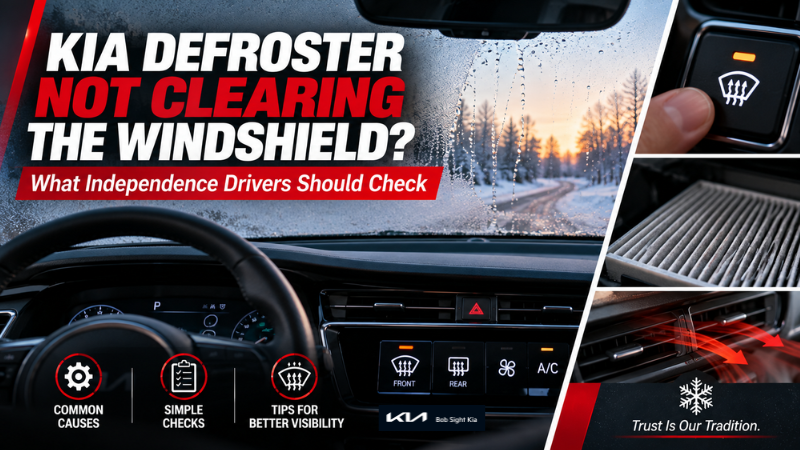
Kia Defroster Not Clearing the Windshield? What Independence Drivers Should Check When winter temperatures drop across Jackson County, a properly working windshield defroster becomes an important part of everyday driving. Whether you are leaving home in Independence, commuting toward Kansas City on Interstate 70, or traveling through Blue Springs and Raytown, clear windshield visibility matters before you begin your drive. If your Kia defroster is blowing cold air, producing weak airflow, or struggling to clear condensation from the windshield, several different heating, ventilation, and climate control components could be involved. Sometimes the problem is as simple as an incorrect climate setting or a restricted cabin air filter. Other situations may require inspection of the blower motor, air distribution doors, heating system, or electrical controls. Understanding how your Kia's defroster works can help you recognize common symptoms, perform basic checks safely, and determine when professional service is appropriate. At Bob Sight Kia in Independence, Missouri, our service department helps drivers address heating, ventilation, air conditioning, and seasonal vehicle maintenance concerns. Knowing what to look for when your defroster stops performing normally can make it easier to explain the problem and plan the next steps. Schedule Kia Defroster and Climate Control Service in Independence, MO In This Guide You'll Learn This guide explains the major components involved in windshield defrosting and the symptoms that may indicate a maintenance or mechanical concern. How your Kia's heating and ventilation systems work together to clear the windshield Common reasons a front defroster blows cold air instead of warm air Why restricted airflow may indicate a cabin air filter, blower motor, or ventilation door problem How blend door and mode door actuators affect temperature and airflow direction What the A/C system contributes to windshield defogging during winter Which basic troubleshooting checks drivers can perform safely at home How rear-window defroster problems differ from front windshield defroster problems When a professional Kia HVAC or cooling system inspection may be needed How Your Kia Windshield Defroster System Works Your Kia's front windshield defroster uses the vehicle's climate control and ventilation system to direct air toward the interior surface of the windshield. The goal is to reduce condensation, warm the glass when appropriate, and improve forward visibility. During cold weather, warm airflow helps raise the temperature of the windshield surface. As the glass warms, moisture becomes less likely to condense on it, and existing condensation can evaporate. Fresh air ventilation and air conditioning may also help reduce moisture inside the passenger compartment, depending on outdoor conditions and the vehicle's climate control design. How Heating and Air Conditioning Work Together In many gasoline-powered Kia vehicles, cabin heat comes from a heater core that transfers heat from the engine cooling system into the ventilation air. As the engine warms, coolant circulates through the heating system. Air moving through or around the heater core can then be warmed before entering the passenger compartment. Hybrid and electric Kia models may use different heating arrangements, including electric heating components or heat pump systems, depending on the model and equipment. The air conditioning system can contribute to defogging by removing moisture from ventilation air when the system is operating under suitable conditions. However, the A/C compressor does not have to run continuously for the defroster to work. Compressor operation may be limited at low outdoor temperatures, and some vehicles automatically manage this function. What Happens When You Select Front Defrost? When you activate the front defrost setting, the climate control system directs airflow toward the windshield. Depending on your Kia's equipment, selecting defrost may also change fan speed, air intake mode, temperature settings, or air conditioning operation. Vehicles with automatic climate control may manage several of these adjustments without requiring the driver to change each setting manually. Because operation varies by model and year, your owner's manual is the best reference for the exact defrost procedure. Why Different Components Can Cause Similar Symptoms A defroster that does not clear the windshield may have a heating problem, an airflow problem, a moisture problem, or a combination of concerns. For example, the heater may produce warm air, but a malfunctioning air distribution door may prevent enough of that air from reaching the windshield. In another situation, the ventilation system may direct air correctly, but a restricted cabin air filter or weak blower motor may reduce airflow. Identifying whether the primary symptom involves air temperature, airflow strength, airflow direction, or persistent moisture is a useful first step in troubleshooting. Top Reasons Your Kia Defroster Blows Cold Air If your Kia's front defroster produces cold air when warm air is selected, the cause may involve the vehicle's heating system or climate control components. The possible causes depend on the model and the type of heating system installed. Low Engine Coolant Level In vehicles that use engine coolant to provide cabin heat, low coolant can interfere with normal heater operation. If the cooling system does not contain the proper amount of coolant, circulation through the heater core may be affected. Air trapped in the system can also interfere with heat transfer. Possible symptoms include inconsistent cabin heat, a temperature gauge that behaves unusually, visible coolant leakage, or a low coolant level in the reservoir. Low coolant should not be ignored because it may indicate a leak or another cooling system concern. Always allow the engine to cool completely before inspecting the coolant reservoir. Never remove a pressurized radiator or coolant cap while the system is hot. Engine Thermostat Problems The thermostat helps regulate engine coolant temperature in many gasoline-powered vehicles. If the thermostat becomes stuck open, the engine may take longer than normal to reach its intended operating temperature. This can result in slower cabin heating during cold weather. Possible symptoms include an engine temperature gauge that remains unusually low, reduced heater performance, or diagnostic trouble codes related to engine temperature regulation. However, slow heating does not automatically mean the thermostat has failed. Outdoor temperature, engine design, driving conditions, and vehicle operating strategy can also affect warm-up time. Restricted or Clogged Heater Core A heater core transfers heat from the engine coolant to the ventilation air in vehicles equipped with this type of heating system. If coolant flow through the heater core becomes restricted, the system may produce less heat than expected. Restrictions can develop from deposits, contamination, or other cooling system problems. Possible symptoms include weak cabin heat despite normal engine temperature or inconsistent heating performance. A professional inspection is needed to determine whether the heater core is restricted or whether another component is responsible. Faulty Temperature Blend Door Actuator Many automotive climate control systems use a blend door to regulate the temperature of air entering the passenger compartment. An actuator moves the door according to the temperature setting selected by the driver. If the actuator or door mechanism fails, the system may become stuck delivering air that is too hot or too cold. Symptoms may include: Cold air continuing to blow when heat is selected Air temperature changing unexpectedly Different temperatures coming from separate climate zones Clicking or tapping noises behind the dashboard Temperature controls that do not respond normally These symptoms can have multiple causes, so actuator replacement should follow an appropriate diagnosis. Heating Differences in Kia Hybrid and Electric Vehicles Not every Kia uses the same heating system. Hybrid and electric models may incorporate electric heaters, heat pumps, or other vehicle-specific components. Because these systems operate differently from conventional engine-coolant heating arrangements, troubleshooting procedures also differ. Drivers should consult the model-specific owner's manual and avoid attempting repairs involving high-voltage components. Diagnosing Weak or Insufficient Defroster Airflow Sometimes the defroster produces warm air but cannot move enough of it across the windshield. Weak airflow may leave sections of glass fogged or slow the removal of condensation. Several ventilation components can contribute to this problem. Air Blows Strongly From Floor Vents but Weakly From Defrost Vents If the blower seems to operate normally but most of the air comes from the floor or dashboard vents instead of the windshield openings, an air distribution problem may be present. Many climate control systems use a mode door to determine where air is directed. A faulty mode door actuator, damaged door mechanism, or climate control issue may prevent the airflow from reaching the selected vents. Before assuming a component has failed, confirm that the front defrost setting is selected correctly. Airflow Is Weak From Every Vent Weak airflow throughout the ventilation system may indicate a restricted cabin air filter, blower motor problem, blocked intake, or electrical control issue. A cabin air filter that has collected excessive dirt, leaves, or other debris can restrict the volume of air moving through the system. However, a dirty filter is not the only possible explanation. If airflow remains weak even with the fan set to high, the blower motor or another ventilation component may need inspection. Blower Motor Makes Squeaking, Rattling, or Clicking Noises Unusual noises from the ventilation system can sometimes indicate debris contacting the blower fan or wear within the blower motor assembly. Leaves and other material may enter the ventilation intake under certain conditions. Mechanical wear can also produce noises that change as fan speed increases or decreases. If the sound persists, a service inspection can help identify its source. Blower Fan Works Only at Certain Speeds If the blower operates only at its highest setting, only at certain speeds, or not at all, the problem may involve the fan control system. Depending on the vehicle, possible causes include a blower motor resistor, electronic control module, wiring problem, fuse, or blower motor failure. The correct diagnosis depends on the specific symptom and electrical design. Replacing parts without testing may not resolve the problem. When to Inspect the Cabin Air Filter Cabin air filters collect dust, pollen, and other airborne particles before they enter the passenger compartment. As debris accumulates, airflow may become restricted. If your Kia has reduced ventilation airflow or persistent odors, checking the filter is a reasonable maintenance step. The replacement interval varies by model, maintenance schedule, and driving conditions. Follow your Kia owner's manual rather than assuming every vehicle needs a replacement at the same mileage. Schedule Kia Cabin Air Filter and Defroster Service The Role of Air Conditioning in Winter Windshield Defrosting Air conditioning is commonly associated with cooling the passenger compartment during summer, but it can also assist with moisture removal. When the A/C system operates, air passing over the evaporator can lose moisture as water vapor condenses on the cold evaporator surface. That moisture can then drain outside the vehicle through the condensate drainage system. This process helps explain why some vehicles automatically select A/C operation during windshield defrosting. Does the A/C Compressor Always Run During Defrost? No. Compressor operation depends on vehicle design, temperature, and other operating conditions. Some Kia climate control systems automatically request air conditioning when front defrost is selected, but the compressor may be limited or disabled during very cold weather. The defroster can still improve windshield visibility through warm airflow and ventilation even when the compressor is not operating. An illuminated A/C indicator does not necessarily confirm that the compressor is running at that moment. Can an A/C Problem Affect Defogging? Under some conditions, an air conditioning problem may reduce the system's ability to remove moisture from ventilation air. However, slow windshield clearing does not automatically mean the A/C compressor has failed. Cabin humidity, ventilation settings, glass temperature, blower performance, and airflow direction may also contribute. If your Kia struggles to clear condensation even when the appropriate defrost settings are selected, a climate control inspection can help identify the cause. What About Musty Odors From the Defroster? A musty odor from the ventilation system may be associated with moisture, contamination, or microbial growth in parts of the HVAC system. A dirty cabin air filter can also contribute to unpleasant odors. However, an odor alone does not identify the exact component responsible. If the smell persists, have the ventilation system inspected rather than assuming refrigerant or compressor failure. Step-by-Step: Kia Defroster Troubleshooting Checklist Before scheduling a service appointment, several basic observations may help narrow down the issue. These checks are intended for drivers and do not require disassembling the dashboard, opening pressurized cooling components, or handling electrical wiring. Step 1: Confirm the Front Defrost Setting With the vehicle safely parked, activate the front windshield defrost mode. Confirm that airflow is directed toward the windshield rather than only the dashboard or floor vents. Refer to your owner's manual if you are unsure which control activates the front defroster. Step 2: Adjust the Temperature and Fan Speed Select an appropriate warm temperature and increase the fan speed. Check whether the airflow becomes stronger as the fan setting increases. Observe whether the air temperature changes when you adjust the temperature control. If the fan does not respond or the air remains cold after the heating system has had sufficient time to operate, additional inspection may be needed. Step 3: Check the Air Intake Setting During many cold-weather fogging situations, fresh air mode can help reduce moisture accumulating inside the passenger compartment. If your vehicle allows manual control, check whether recirculation is selected. Some Kia models automatically manage air intake settings during front defrost operation. Step 4: Observe the Engine Temperature if Applicable For Kia models with an engine temperature gauge, observe whether the engine warms normally during operation. There is no universal five-minute or ten-minute warm-up requirement that applies to every Kia. Warm-up time depends on outside temperature, engine design, operating conditions, and other factors. If the temperature gauge behaves unusually or a temperature warning appears, follow the owner's manual instructions. Step 5: Inspect the Coolant Reservoir Only When Safe For vehicles with an engine cooling system, a coolant level check may help identify a possible heating concern. Only inspect the reservoir when the engine and cooling system are completely cold. Check the level according to the owner's manual and look for obvious signs of leakage. Never open a hot or pressurized coolant system. If the coolant is low, avoid assuming that simply adding coolant resolves the underlying problem. The cause of the loss may need diagnosis. Step 6: Listen for Unusual HVAC Noises While the vehicle is parked, change the fan speed and airflow direction settings. Listen for persistent clicking, rattling, grinding, or other unusual sounds from behind the dashboard. These noises may help a technician identify a blower, actuator, or ventilation concern. Step 7: Determine Whether the Problem Is Temperature, Airflow, or Moisture Try to identify the main symptom before scheduling service. Cold airflow: The system moves air normally but does not produce the expected heat. Weak airflow: The fan operates, but little air reaches the vents. Wrong vent location: Air comes from the floor or dashboard instead of the windshield. Persistent condensation: Airflow and temperature seem normal, but the windshield remains fogged. No blower operation: The ventilation fan does not respond when switched on. These observations can help your service advisor understand the concern and determine which systems may need testing. Quick Facts: Kia Defroster Maintenance Essentials Front Defrost: Directs ventilation airflow toward the windshield to help remove condensation and improve visibility. Heating System: Provides warm air using the heating components appropriate for the vehicle's powertrain and design. Air Conditioning: Can assist with moisture removal when compressor operation is available under the current conditions. Fresh Air Mode: Can help reduce accumulated cabin humidity during many cold-weather conditions. Cabin Air Filter: A heavily restricted filter may reduce airflow and slow windshield clearing. Blower Motor: Moves air through the ventilation system and may cause weak or missing airflow if it malfunctions. Mode Door Actuator: Helps direct air to the selected vents on vehicles equipped with this arrangement. Automatic Defogging: Availability and operation vary by Kia model, year, and trim. Preparing Your Kia's Heating and Climate Control System for Winter Checking your Kia's climate control system before winter arrives can help identify performance concerns before they become more noticeable during freezing weather. For drivers in Independence, Raytown, Sugar Creek, Grain Valley, and the surrounding Kansas City metro, fall is a practical time to review heating and defroster operation. Test the Front Defroster Before Temperatures Drop Activate the front defroster while the vehicle is parked and confirm that air reaches the windshield. Check whether the fan responds to different speed settings and whether the temperature controls operate normally. If airflow is weak or the air does not warm as expected, consider scheduling an inspection before severe winter weather. Review Cabin Air Filter Maintenance Consult your owner's manual to determine when the cabin air filter should be inspected or replaced. Dusty driving conditions and heavy debris accumulation may require more frequent attention. A restricted filter can reduce ventilation performance, but replacing it will not correct unrelated electrical or heating system faults. Pay Attention to Cooling System Symptoms For vehicles that use engine coolant for cabin heating, unusual temperature gauge behavior, coolant loss, or inconsistent heat can indicate a concern worth investigating. Do not continue driving if the vehicle displays an overheating warning or other instruction requiring you to stop. Check for Moisture Inside the Cabin Wet carpeting, damp floor mats, and water intrusion can increase cabin humidity and make windshield clearing more difficult. Remove accumulated moisture when practical and have persistent leaks inspected. Consider Professional HVAC Diagnosis When Symptoms Continue If the defroster does not respond normally after checking the settings, a professional inspection may involve testing the blower motor, ventilation doors, climate controls, heating components, or related electrical systems. The appropriate diagnostic steps depend on the symptom and the Kia model. Addressing the underlying cause is more useful than replacing parts based on a single symptom. Frequently Asked Questions About Kia Defroster Problems Why does my Kia defroster take so long to start blowing warm air on cold mornings? In many gasoline-powered Kia vehicles, cabin heat depends on the engine cooling system reaching a temperature that allows the heater core to provide useful warmth. During cold weather, the engine and cooling system may take longer to warm up. However, the time required varies based on the vehicle, outside temperature, and operating conditions. Hybrid and electric Kia vehicles may use different heating arrangements, so their behavior can differ from conventional gasoline-powered models. If your Kia consistently produces little or no heat after normal operation, the thermostat, heating components, coolant system, or climate controls may need inspection. Do not rely on a fixed warm-up time as proof of a failed thermostat. Can a weak battery or alternator cause my Kia defroster fan to run slowly? Electrical system problems can affect components that depend on a stable power supply, including the ventilation blower motor. In a conventional gasoline-powered vehicle, the battery and charging system support the electrical equipment used during operation. If the charging system is malfunctioning, you may notice symptoms such as dashboard warnings, dimming lights, or unusual electrical behavior. However, a slow blower fan does not automatically indicate a weak battery or alternator. Blower motor wear, control modules, wiring, and other electrical components may also be responsible. If weak airflow occurs alongside other electrical symptoms, battery and charging system testing may be appropriate. Why is there a sweet smell in my Kia when I turn on the front defroster? A sweet or unusual odor when the heater operates can sometimes be associated with a coolant leak, including a possible heater core leak in vehicles that use engine coolant for cabin heating. Other possible signs include an unusual greasy film on the windshield, coolant loss, or damp carpeting. These symptoms do not confirm that the heater core has failed. A professional inspection is needed to identify the source. If you suspect a coolant leak, arrange service promptly. If the vehicle begins overheating or displays a warning requiring you to stop, pull over safely and follow the owner's manual instructions. Why does my Kia defroster turn on by itself while driving? Some Kia models have automatic defogging features that adjust climate control operation when conditions indicate that windshield condensation may develop. Depending on the model, the system may change airflow direction, fan speed, air intake mode, or other climate settings. However, not every Kia includes the same automatic defogging equipment. Consult your owner's manual to determine whether your vehicle has this feature and how it operates. If the system behaves unexpectedly, first review the operating conditions and available settings. Repeated unexplained activation or climate control warnings may warrant inspection. What should I do if my Kia rear window defroster is not working but the front defroster works? The front windshield defroster and rear-window defogger generally use different methods to clear glass. The front system typically directs conditioned air toward the windshield, while many rear-window defoggers use electrical heating elements integrated into the glass. If the rear-window defogger is not working, possible causes include damaged heating elements, wiring problems, control faults, or an electrical protection issue. Some vehicles also have operating conditions or automatic shutoff features that affect rear defogger behavior. Check your owner's manual to confirm the proper operation. If the rear glass does not clear when the system is activated under appropriate conditions, professional electrical diagnosis may be needed. Can a clogged cabin air filter make my Kia defroster stop working? A heavily clogged cabin air filter can reduce the amount of air moving through the ventilation system. This may make windshield clearing slower or cause airflow to feel weak. However, the cabin air filter does not control every part of the defroster system. If the fan does not run, the air comes from the wrong vents, or the system cannot produce heat, additional components may need testing. Check the filter according to your Kia maintenance schedule and have persistent airflow problems inspected. Why does air come out of my Kia floor vents instead of the windshield vents? If you select front defrost but most of the airflow continues coming from the floor or dashboard vents, an air distribution problem may be present. Many climate systems use mode doors and actuators to direct airflow to different locations. A problem with a door mechanism, actuator, or climate control command may prevent the selected airflow direction from operating correctly. Confirm the defrost setting first. If the problem continues, a service inspection can help determine whether a mechanical or electrical fault is present. What should I do if my windshield will not clear while driving? If windshield condensation begins limiting visibility, activate the front defroster and use the climate control settings recommended for your vehicle. During many cold-weather conditions, warm airflow and fresh air ventilation can help reduce interior fogging. If the windshield remains significantly obstructed, reduce speed as appropriate and pull over in a safe location. Do not continue driving when you cannot see the roadway clearly. Persistent defroster failure should be inspected before returning to normal driving conditions. Schedule Kia Defroster and HVAC Service in Independence, MO A windshield defroster that blows cold air, produces weak airflow, or fails to clear condensation may have several possible causes. Understanding the symptoms can help you determine whether the issue involves climate settings, ventilation airflow, heating performance, or another system. Routine maintenance and timely inspections can help identify problems before they interfere with your winter driving routine. Bob Sight Kia serves drivers from Independence, Blue Springs, Lee's Summit, Raytown, Sugar Creek, Grain Valley, Liberty, and the greater Kansas City metro. If your Kia's heating or defroster system is not working as expected, our service department can help you arrange an appointment to have the concern evaluated. Visit Bob Sight Kia at 1700 S Noland Road, Independence, MO 64055, or schedule service online. Schedule Kia Defroster Service at Bob Sight Kia Helpful Kia Service and Shopping Links Schedule Kia Service in Independence, MO Explore Kia Service Specials Browse New Kia Vehicles Shop Used Vehicles at Bob Sight Kia Value Your Trade Online Proud to Be Part of the Bob Sight Auto Group Bob Sight Kia is proud to be part of the Bob Sight Auto Group, serving drivers throughout Missouri and Kansas with automotive sales and service resources. Whether you are shopping for a new vehicle, exploring pre-owned inventory, or scheduling maintenance, our dealership family is committed to helping drivers find the information and services they need. Bob Sight Kia | Independence, MO Bob Sight Honda | Lawrence, KS Bob Sight CDJR | Lawrence, KS Bob Sight Ford | Lee's Summit, MO Trust Is Our Tradition.



 Warranties include 10-year/100,000-mile powertrain and 5-year/60,000-mile basic. All warranties and roadside assistance are limited. See retailer for warranty details.