Today: 8:30AM - 6:00PM
Blog / Compra de Autos

¿Qué Concesionario Kia es el Mejor para los Conductores de Independence?

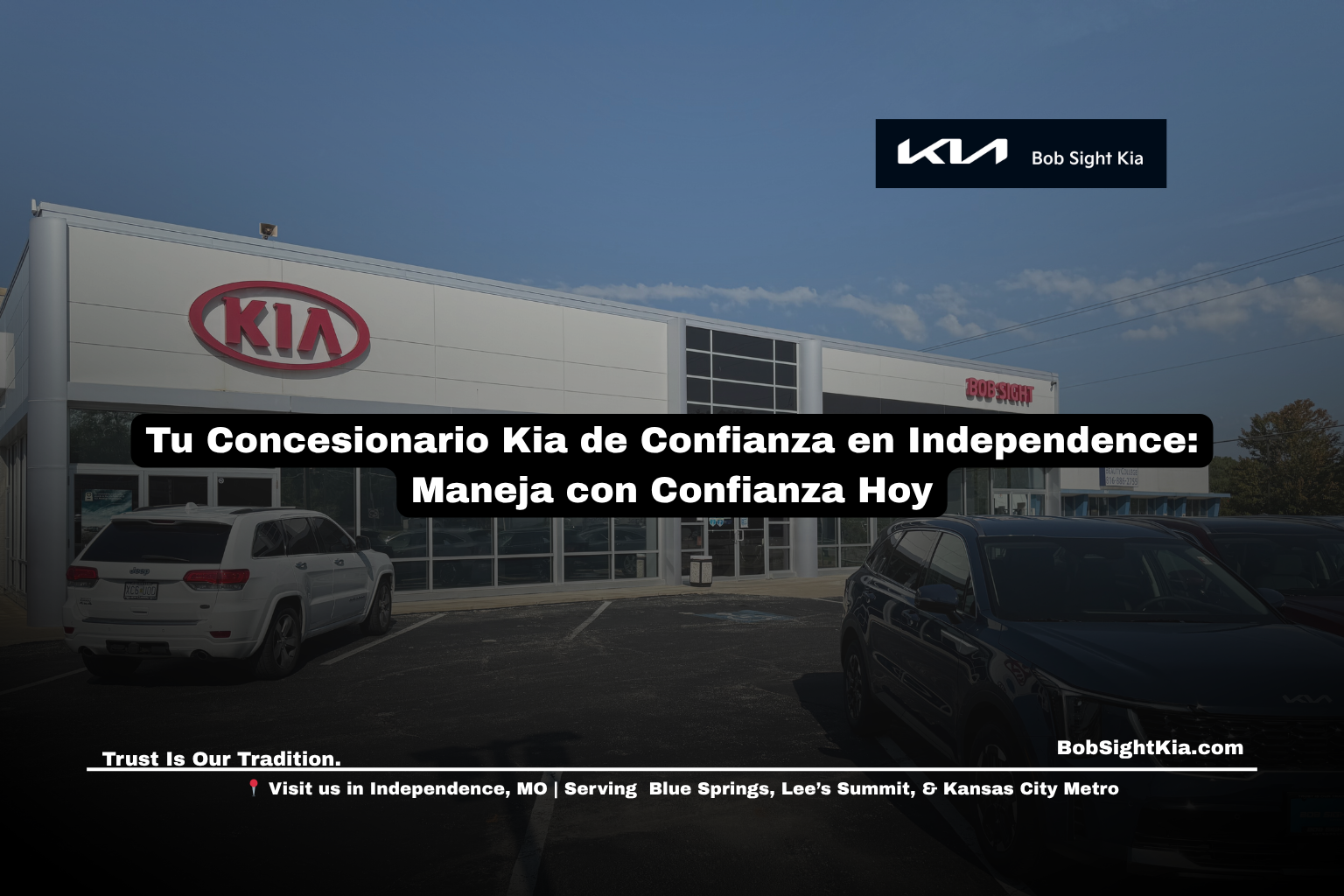
Concesionario Bob Sight Kia en Noland Road en Independence, Missouri, con vehículos Kia estacionados afuera.

Para los conductores en Independence, MO que buscan un concesionario Kia de confianza, hay un destino que siempre destaca: Bob Sight Kia. Ubicado convenientemente en 1700 S Noland Road, al norte de Blue Springs y Lee’s Summit, nuestro concesionario atiende con orgullo a toda el área metropolitana de Kansas City con honestidad y transparencia. Ya sea que estés buscando un nuevo SUV Kia, necesites servicio automotriz profesional o quieras explorar opciones de financiamiento y canje, Bob Sight Kia hace que el proceso sea simple y sin estrés. Nuestro equipo amable y capacitado está comprometido en ayudar a cada conductor a encontrar un vehículo que se adapte a su estilo de vida, presupuesto y necesidades.

Los conductores de Independence y sus alrededores aprecian que Bob Sight Kia sea mucho más que un concesionario. Somos parte de la comunidad local y estamos dedicados a construir relaciones a largo plazo con cada cliente que visita nuestro showroom. Desde el momento en que llegas, serás recibido por un equipo que escucha, apoya y ofrece respuestas claras a tus preguntas. Por eso, tantos compradores del área de Kansas City confían en Bob Sight Kia para sus compras de vehículos y su mantenimiento continuo.

Si estás listo para experimentar un concesionario que realmente valora tu tiempo y tu negocio, comienza tu camino hoy con Bob Sight Kia. Explora nuestro inventario de Kia nuevos o programa tu prueba de manejo en línea y descubre por qué somos el concesionario Kia preferido por los conductores de Independence.

Explora Vehículos Kia Nuevos y Usados en Independence

En Bob Sight Kia, nuestra amplia selección de modelos Kia nuevos está diseñada para satisfacer todas las preferencias y necesidades de manejo. Puedes explorar opciones destacadas como el Kia Telluride, Kia Sorento, Kia Sportage y Kia K5, todos diseñados para ofrecer comodidad, rendimiento y tecnología avanzada. Con características actualizadas y garantías impresionantes, estos modelos brindan valor y confianza a los conductores de todo Missouri. Ya sea que manejes a diario o planees escapadas de fin de semana, Bob Sight Kia tiene un modelo que se adapta a tu estilo de vida.

Si estás comprando con un presupuesto ajustado o simplemente buscando una gran oferta, nuestro inventario de vehículos usados incluye una variedad de opciones confiables. Cada vehículo pasa por una inspección detallada para garantizar que cumpla con nuestros altos estándares de calidad. Además, nuestros modelos Kia certificados combinan la fiabilidad de un vehículo casi nuevo con cobertura de garantía para mayor tranquilidad. También puedes usar nuestra herramienta de oferta instantánea para obtener una estimación justa y rápida por tu intercambio.

Los conductores en el área metropolitana de Kansas City disfrutan de un concesionario que facilita comparar y comprar. Desde precios transparentes en línea hasta pruebas de manejo personalizadas, estamos aquí para hacer que comprar un auto sea una experiencia clara y agradable. Explora nuestro showroom en línea hoy y permítenos ayudarte a encontrar el Kia que se adapte a las necesidades y presupuesto de tu familia.

Modelos Kia Populares Disponibles en Bob Sight Kia:

  • Kia Telluride: SUV espacioso y lujoso diseñado para familias.
  • Kia Sorento: SUV mediano versátil con tecnología avanzada.
  • Kia Sportage: SUV compacto y moderno para conductores urbanos.
  • Kia K5: Sedán mediano deportivo con excelente desempeño.
  • Kia Carnival: La minivan familiar ideal con asientos flexibles y amplio espacio.

Servicio Certificado Kia y Repuestos Originales

Mantener tu Kia en óptimas condiciones es sencillo cuando lo llevas a nuestro departamento de servicio certificado. Nuestros técnicos capacitados de fábrica brindan atención experta utilizando las herramientas y tecnología más avanzadas para garantizar que cada vehículo salga de nuestro taller en perfectas condiciones. Desde cambios de aceite y rotación de llantas hasta inspecciones de frenos y reparaciones de motor, estamos equipados para manejar todo tipo de mantenimiento. Los conductores de Independence y Kansas City confían en nuestro centro de servicio por su eficiencia y confiabilidad.

Cuando se trata de repuestos, Bob Sight Kia utiliza exclusivamente repuestos originales Kia diseñados específicamente para tu vehículo. Esto asegura un ajuste perfecto, rendimiento óptimo y durabilidad. También ofrecemos la Promesa de Igualación de Precios Kia para garantizar que siempre obtengas el mejor valor en servicio y reparaciones. Si estás planeando tu próxima visita de mantenimiento, puedes programar tu cita en línea fácilmente en el horario que más te convenga.

Para mayor conveniencia, Bob Sight Kia colabora con el Centro de Colisiones Bob Sight en Lee’s Summit para ofrecer reparaciones profesionales de carrocería y pintura. Ya sea un pequeño rasguño o una reparación mayor, nuestros técnicos garantizan que tu Kia luzca y funcione como nuevo. Los conductores de Independence pueden contar con nosotros para el cuidado completo de su vehículo bajo un grupo automotriz confiable.

Financiamiento y Apoyo del Grupo Automotriz Bob Sight

En Bob Sight Kia, facilitamos el financiamiento de tu próximo vehículo de forma simple y transparente. Nuestro departamento de financiamiento trabaja con una red de prestamistas confiables en Missouri y Kansas para asegurar tasas competitivas para cada cliente. Ya sea que estés comprando o arrendando, nuestro equipo adapta las opciones de pago a tus metas financieras. Puedes obtener la preaprobación en línea o usar nuestra calculadora de pagos para planificar tu presupuesto mensual antes de visitar el concesionario.

Nos enorgullece ser parte del Grupo Automotriz Bob Sight, una familia de concesionarios dedicada a servir comunidades en todo el área de Kansas City. Cada ubicación comparte los mismos valores de honestidad, fiabilidad y atención al cliente que los conductores de Bob Sight han confiado durante generaciones. Juntos, ofrecemos acceso a una amplia gama de marcas automotrices y servicios profesionales.

Nuestro grupo incluye:

Desde ventas hasta servicio, nuestros concesionarios están unidos por un solo objetivo: ayudar a cada conductor a encontrar y mantener el vehículo que mejor se adapte a su estilo de vida.

Enlaces Útiles para Conductores de Independence

Visita Bob Sight Kia en Independence, Missouri

¿Aún estás decidiendo qué Kia es el ideal para ti? El amable equipo de Bob Sight Kia está listo para ayudarte a comparar modelos, explorar opciones de financiamiento y mantener tu vehículo en óptimas condiciones por muchos años. Atendemos con orgullo a Independence, Blue Springs, Lee’s Summit y Kansas City con un servicio excepcional y un compromiso total con la satisfacción del cliente. Cada visita a nuestro concesionario está diseñada para ser cómoda, informativa y personalizada.

Visítanos en Noland Road, al norte de Blue Springs y Lee’s Summit, o comunícate en línea para comenzar. Ya sea que estés realizando una prueba de manejo o trayendo tu vehículo para mantenimiento, nuestro equipo siempre está listo para ayudarte. Tu próximo vehículo te espera en el mejor concesionario Kia de Independence.

Programa Tu Prueba de Manejo Hoy

Posted in:

Related Posts

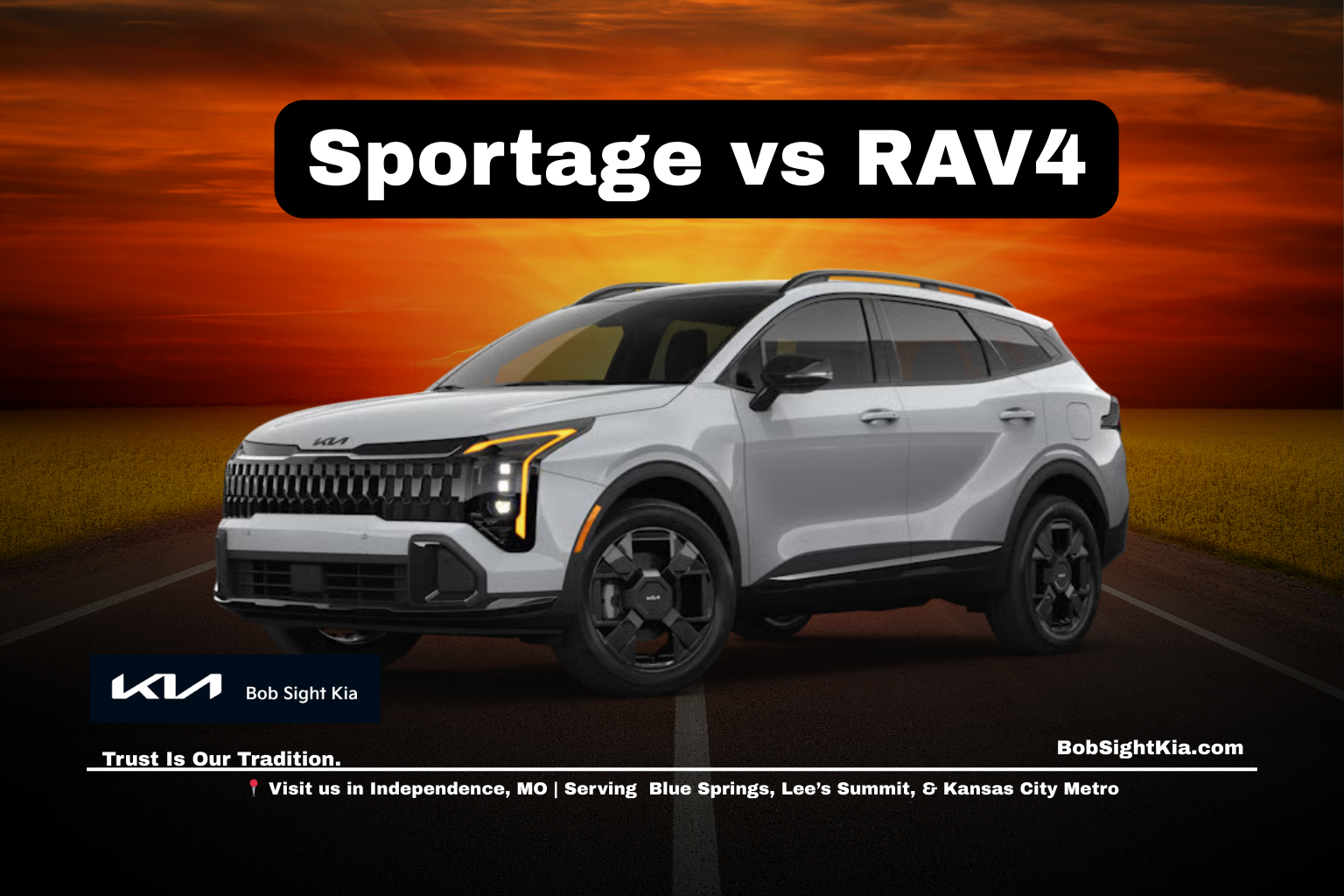
Kia Sportage compared to Toyota RAV4 at Bob Sight Kia in Independence Missouri serving the Kansas City Metro

Kia Sportage vs Toyota RAV4: A Smart SUV Comparison for Kansas City Metro Driving

If you are comparing the Kia Sportage vs Toyota RAV4, you are already looking at two of the most popular compact SUVs for Kansas City Metro driving. Both are known for everyday practicality, commuter-friendly comfort, and the kind of versatility that works for everything from errands in Independence to weekend trips out of town. But the best choice depends on your priorities, like passenger space, cargo flexibility, technology, and how the SUV feels on local roads. This guide breaks down the Kia Sportage vs Toyota RAV4 in a clear, real-world way for Kansas City Metro drivers, including shoppers in Independence, Blue Springs, Lee’s Summit, Raytown, Grain Valley, Oak Grove, Sugar Creek, and Liberty. Kia Sportage vs Toyota RAV4 for Kansas City Metro Drivers Browse Kia SUVs at Bob Sight Kia in Independence, MO In this guide you’ll learn How the Kia Sportage and Toyota RAV4 compare for Kansas City Metro driving What to consider for space, comfort, and cargo in daily life How technology and driver-assist features impact the ownership experience Which SUV may be a better fit for commuting, families, and weekend plans How to plan ownership and maintenance for long-term reliability Why these two SUVs are top choices in the Kansas City Metro Compact SUVs are popular in the Kansas City Metro for a simple reason. They balance maneuverability with enough space for passengers and cargo. That makes them a smart fit for suburban errands, highway commuting, and family schedules. The Sportage and RAV4 both land in this sweet spot. They are often compared by drivers in Jackson County because they offer the kind of daily versatility most households need. If you are choosing between them, it helps to think about your real routine. Do you commute into Kansas City? Do you spend most of your week driving shorter trips in Independence and Blue Springs? Do you want a cabin that feels more open and modern, or do you prefer a straightforward traditional layout? Your answers can point you in the right direction quickly. Interior space and comfort for Independence and beyond One of the biggest reasons people compare compact SUVs is cabin space. Even within the same segment, interior layout and seat comfort can feel very different from one model to another. Kia Sportage interior feel Many drivers describe the Sportage as feeling roomy and open up front, with a layout designed around comfort and modern design. Depending on trim, you may find a more upscale look and a cabin that feels tailored for daily driving convenience. Toyota RAV4 interior feel The RAV4 cabin often feels practical and functional, with a layout geared toward everyday use. Some drivers prefer a simpler approach to controls and design, while others may want a more refined look. When you test drive, pay attention to seat comfort, visibility, and how the cabin feels during real traffic. That is often where the differences become clear. Cargo space and flexibility for family life If you are shopping in the Kansas City Metro, cargo space matters. Many households use a compact SUV for groceries, strollers, sports gear, and weekend travel. Both SUVs offer useful cargo room, but their storage layouts, seat folding systems, and overall flexibility can vary by model year and trim. The best way to compare is to bring your real life needs into the decision. Do you need room for a stroller and groceries at the same time? Do you frequently fold the rear seats for larger items? Do you travel with pets or sports gear on weekends? Try folding seats and loading the cargo area during your visit. Simple tests like this often make the best answer obvious. Technology and connectivity: what Kansas City Metro drivers notice most Tech can be a deciding factor, but it is not about having the longest feature list. It is about usability. Kansas City Metro drivers tend to care most about phone connectivity, navigation convenience, and how intuitive the controls feel on the go. When comparing Sportage vs RAV4, these are the areas to focus on during a test drive: Phone pairing: How quickly your phone connects and stays connected Screen responsiveness: Whether menus feel smooth and easy to navigate Camera views: Parking support matters in busy lots and tight spaces Sound quality: A small detail that matters on longer commutes Even if both have similar features on paper, the way the system feels in real use can be very different. Safety and driver-assist features: what to compare Both the Sportage and RAV4 are built with safety in mind, and many trims include driver-assist technology designed to support awareness and reduce stress during highway driving. For Kansas City Metro commuters, driver-assist features can be helpful on major routes and in heavy traffic. When you compare, ask what is standard versus optional on the specific trims you are considering. Then test how those features feel in motion. If you do a lot of highway miles between Independence and Kansas City, it can be worth prioritizing features that support lane awareness, following distance management, and visibility during lane changes. Ride quality and everyday driving in the KC Metro Independence and the surrounding Metro area bring a mix of road conditions. You may deal with potholes, rough winter patches, highway expansion joints, and busy traffic patterns. That makes ride quality a real factor. During your test drive, focus on how each SUV handles: Stop-and-go traffic: Smoothness at low speeds and responsiveness Highway merging: Confidence getting up to speed Rough pavement: How bumps and uneven surfaces are absorbed Steering feel: How easy it is to park and maneuver Some drivers prefer a more composed, comfort-first ride. Others want a more connected feel. Your preference matters more than general opinions. Which SUV is a better fit for different Kansas City Metro lifestyles? Instead of asking which SUV is better, ask which SUV fits your routine best. Here are a few common shopper profiles that can help you decide. If you want a modern cabin and daily comfort Many shoppers lean toward the Sportage if they prioritize a cabin that feels more modern, comfortable, and designed around everyday usability. If you want a familiar, practical setup Many drivers choose the RAV4 when they want a straightforward, functional compact SUV experience that feels predictable and simple. If your household needs flexible space Space and flexibility are often where buyers feel the difference the most. If you frequently drive with passengers, car seats, or weekend cargo, compare second-row comfort and cargo usability closely. Local note: shopping for a Kia Sportage in Independence MO If you are leaning toward the Sportage, shopping local can make your ownership experience easier. Bob Sight Kia in Independence serves drivers across Jackson County, including Blue Springs, Lee’s Summit, Raytown, Grain Valley, Oak Grove, Sugar Creek, and Liberty. Starting your search online is a simple way to narrow trims and features before you visit in person. View New Kia Inventory Directions to Bob Sight Kia in Independence MO Bob Sight Kia is located at 1700 S Noland Rd, Independence, MO 64055. If you are coming from Blue Springs or areas south of Independence, remember this key detail: drivers travel NORTH on Noland Road to reach the dealership. Quick facts: Kia Sportage vs Toyota RAV4 Category: Compact SUVs designed for daily driving and flexible cargo needs Best for: Commuters, small families, and Kansas City Metro households What to compare: Cabin comfort, cargo flexibility, tech usability, and ride feel Local shopping option: Bob Sight Kia in Independence serves Jackson County and the KC Metro Ownership planning: keeping your SUV ready for Metro driving without prices Whichever SUV you choose, the ownership experience is better when maintenance is consistent. Kansas City Metro weather shifts can impact tires, brakes, batteries, and fluid performance. Building a basic plan helps you stay ahead of surprises. Oil changes: Stay aligned with your recommended service schedule Tire rotations: Helps maintain traction and even wear Brake inspections: Useful for commuting and stop-and-go traffic Battery checks: Helpful before winter cold and summer heat Seasonal inspections: Great before long road trips or major weather changes Schedule Kia Service in Independence, MO FAQ: Kia Sportage vs Toyota RAV4 near me in the Kansas City Metro Is the Kia Sportage or Toyota RAV4 better for Kansas City Metro driving? Both can be great choices. The better fit depends on what you value most, such as cabin feel, technology usability, ride comfort, and cargo flexibility. A test drive on local roads around Independence can help you decide quickly. Which SUV has more usable interior space for families? Usable space depends on the exact trim and seating layout, but many shoppers compare second-row comfort and cargo flexibility to decide. Bring your real needs, like car seats or sports gear, and test the fit in person. Where can I find a Kia Sportage for sale near me? If you are in Independence, Blue Springs, Lee’s Summit, or anywhere in the Kansas City Metro, you can browse available Kia SUVs at Bob Sight Kia in Independence. Browse New Kia Inventory Should I choose AWD for the Kansas City Metro? Many Kansas City Metro drivers like AWD for added traction confidence in rain and snow. If you mostly drive on clear roads, FWD may still be a practical option. Your driving routine should guide the decision. Can I service my Kia Sportage in Independence MO? Yes. If you buy a Sportage or already own one, you can schedule Kia service at Bob Sight Kia in Independence. Schedule Service Near Me Test drive the Kia Sportage at Bob Sight Kia in Independence MO If you are comparing the Kia Sportage vs Toyota RAV4 for Kansas City Metro driving, a test drive is the fastest way to make the right call. Bob Sight Kia serves drivers across Jackson County and the Kansas City Metro, including Blue Springs, Lee’s Summit, Raytown, Grain Valley, Oak Grove, Sugar Creek, and Liberty. Visit us at 1700 S Noland Rd, Independence, MO 64055. If you are coming from the south, remember you will travel NORTH on Noland Road to reach us. Visit Bob Sight Kia in Independence, MO Helpful links Bob Sight Kia Home New Kia Inventory Used Vehicle Inventory Schedule Service Service and Parts Specials Finance Center Order Kia Parts Kia Price Match Promise New Vehicle Specials Proud to be part of the Bob Sight Auto Group Bob Sight Kia is proud to be part of the Bob Sight Auto Group, serving drivers across Independence, Grain Valley, and the greater Kansas City Metro. Our family of dealerships is committed to long term ownership support, transparent service, and dependable vehicles. Bob Sight Honda Bob Sight CDJR Bob Sight Ford Bob Sight Kia Bob Sight Collision Center

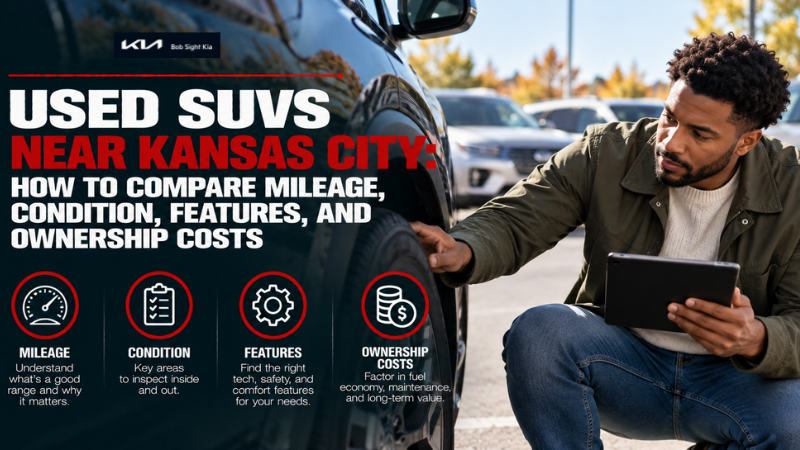
Compare used SUVs near Kansas City by mileage, condition, features, space, and ownership costs. Shop confidently at Bob Sight Kia in Independence.

Used SUVs Near Kansas City: How to Compare Mileage, Condition, Features, and Ownership Costs

Used SUVs Near Kansas City: How to Compare Mileage, Condition, Features, and Ownership Costs Browse Used SUVs Near Kansas City at Bob Sight Kia Shopping for used SUVs near Kansas City requires comparing mileage, physical condition, maintenance history, features, and expected ownership costs together. Bob Sight Kia in Independence helps drivers from Blue Springs, Lee's Summit, Sugar Creek, Raytown, Liberty, Grain Valley, Oak Grove, and communities across Jackson County explore used SUVs for commuting, family travel, cargo needs, and everyday Missouri driving. An odometer reading cannot tell you everything about a pre-owned SUV. A well-maintained vehicle with higher mileage may be a stronger candidate than a lower-mileage SUV that missed important services or experienced excessive wear. The most useful comparison combines the vehicle's age, documented history, present condition, equipment, upcoming maintenance needs, and performance during a thorough test drive. This guide walks through the process step by step. It can help you prepare before browsing online inventory, comparing vehicles at a dealership, requesting an appraisal for your trade, or searching for used SUVs for sale near me in the Greater Kansas City Metro. In This Guide You'll Learn This guide explains the major factors Kansas City shoppers should evaluate before choosing a used SUV. Each factor provides a different piece of the ownership picture, so the strongest decision comes from reviewing them together instead of relying on one number or feature. How to choose the right used SUV size for your household How to compare mileage with vehicle age and maintenance history What to inspect inside, outside, and beneath a used SUV How to review vehicle-history and service records Which safety, comfort, and technology features to test How to estimate fuel, insurance, maintenance, and repair needs What to evaluate during a used SUV test drive near Kansas City A shopper commuting from Blue Springs to Independence may prioritize fuel use, seat comfort, and highway technology. A family driving between Lee's Summit and Kansas City may place more value on rear-seat access, cargo flexibility, and available all-wheel drive. Starting with your real routine makes it easier to identify which specifications and features deserve the most attention. Quick Facts About Comparing Used SUVs Near Kansas City The best used SUV is not automatically the newest vehicle or the one with the fewest miles. The right choice is the SUV whose size, condition, history, equipment, and anticipated ownership requirements align with your daily driving and long-term plans. Mileage needs context: Vehicle age, service records, driving environment, and current condition help explain an odometer reading. Condition matters: Tires, brakes, suspension, interior wear, electronics, glass, body panels, and visible leaks should be reviewed. History reports are useful but not complete: A report should support a physical inspection and test drive rather than replace them. Trim levels can change the experience: Two SUVs from the same model year may include different safety, comfort, and connectivity equipment. Ownership costs extend beyond financing: Fuel, insurance, tires, scheduled maintenance, registration, and repairs affect the long-term budget. Space should be tested: Published cargo volume does not show how well strollers, pet carriers, sports equipment, or work gear will fit. All-wheel drive is not required for everyone: Your roads, schedule, tires, winter travel, and traction needs should guide the decision. A test drive should reflect daily use: Include parking, low-speed roads, highway merging, braking, and uneven pavement when possible. Local driving conditions add another layer to the comparison. Stop-and-go traffic near Independence Center, highway travel on I-70, winter weather across Jackson County, and potholes after freeze-and-thaw cycles can expose different strengths and weaknesses. A used SUV that feels comfortable during those situations is more likely to support your actual routine. Choose the Right Used SUV Size for Your Routine Choose a used SUV category by evaluating passenger capacity, cargo requirements, parking conditions, and the roads you drive most often. Subcompact, compact, midsize, and three-row SUVs offer different balances of maneuverability, seating, storage, fuel use, and capability. A subcompact SUV may suit a driver who wants a higher seating position and flexible cargo room without giving up easy parking. This category can work well for commuting through Independence, navigating shopping areas near Noland Road, or finding space in downtown Kansas City parking structures. Rear-seat and cargo dimensions vary, so shoppers should test whether the vehicle can carry their normal passengers and equipment. Compact SUVs generally add passenger and cargo room while remaining manageable for daily use. These vehicles can fit households that carry children, pets, groceries, sports bags, or luggage but do not need a third row. A compact SUV may also provide available all-wheel drive, roof-rack capability, and driver-assistance technology without the exterior dimensions of a larger model. Midsize and three-row SUVs serve drivers who need more seating flexibility or frequently carry additional passengers. The presence of a third row does not guarantee that it will fit every adult comfortably. Shoppers should test access, legroom, headroom, child-seat positioning, and cargo space with all seats upright because some three-row SUVs have limited storage behind the last row. Use this process to identify the right SUV size: Count regular passengers. Focus on the people you carry weekly, not only occasional trips. List routine cargo. Include strollers, pet carriers, sports gear, work equipment, groceries, or mobility devices. Measure large items. Record height, width, and length rather than relying only on published cargo volume. Review parking conditions. Consider your garage, driveway, workplace, and common shopping destinations. Evaluate road use. Compare city traffic, highway travel, gravel roads, hills, and winter driving. Confirm capability. If towing is planned, verify the exact vehicle's engine, drivetrain, equipment, and rated capacity. This process prevents a common shopping mistake: choosing an SUV that is larger or smaller than the household truly needs. A Sugar Creek commuter may prefer easier maneuverability, while a growing family traveling between Liberty and Kansas City may value additional passenger space. The correct category creates a stronger starting point for every comparison that follows. How to Compare Used SUV Mileage and Vehicle Age Used SUV mileage should be evaluated alongside age, maintenance history, driving patterns, and current mechanical condition. No single odometer reading automatically makes a vehicle dependable or unsuitable, because the way those miles were accumulated can influence wear. A newer SUV with higher mileage may have spent much of its life on highways, where steady-speed travel can produce a different wear pattern than repeated short trips. An older SUV with unusually low mileage may have experienced long storage periods, limited maintenance, or repeated cold starts. Neither situation is automatically positive or negative without additional information. Average annual mileage can provide a reference, but it should not become a pass-or-fail rule. Divide the odometer reading by the vehicle's approximate age to understand its annual use, then compare that result with the available service records and physical condition. Look for a logical relationship among mileage, pedal wear, seat condition, steering-wheel wear, tire history, and recorded maintenance. Higher mileage can also mean that certain scheduled services are approaching or have recently been completed. Depending on the model, those services may involve fluids, spark plugs, filters, belts, brakes, or other components. Review the manufacturer's maintenance schedule for the exact model year, engine, and drivetrain rather than applying one universal interval to every used SUV. Follow these steps when evaluating mileage: Confirm the odometer reading. Compare it with the listing, vehicle-history report, and service records. Calculate approximate annual mileage. Use it as context rather than an automatic judgment. Review documented maintenance. Look for regular oil changes, tire rotations, inspections, and model-specific services. Compare physical wear. Interior and exterior condition should make reasonable sense for the recorded mileage. Identify upcoming maintenance. Determine whether a major service interval is approaching. Estimate your future use. A long-distance Kansas City commuter may add mileage more quickly than a local Independence driver. A Blue Springs driver using I-70 five days a week may add substantially more annual mileage than someone making short trips near Independence. That future usage affects how current mileage should be viewed. The most helpful question is not simply, "Is this mileage too high?" It is, "Does this vehicle's history and condition support the mileage, and does it fit the amount I expect to drive?" Inspect the Condition of a Used SUV Carefully A complete used SUV inspection should cover the exterior, interior, tires, glass, technology, cargo area, and visible mechanical components. Condition can reveal maintenance needs, previous damage, or wear that an online listing and odometer reading cannot fully explain. Begin with the exterior in natural or bright lighting. View the SUV from several angles and look for inconsistent paint, unusual reflections, uneven panel gaps, damaged trim, cracked lenses, windshield chips, and corrosion. Minor cosmetic wear may be normal for a used vehicle, but larger inconsistencies deserve questions about previous repairs. Tires provide valuable information about how the SUV has been maintained. Check tread depth, age, cracking, sidewall damage, and wear across the full width of each tire. Uneven wear may be related to alignment, tire pressure, suspension condition, driving habits, or missed rotations. On an all-wheel-drive SUV, compatible tires and similar tread depths can be important to drivetrain operation. Inside the cabin, test every control you expect to use. Operate the windows, locks, mirrors, seat adjustments, climate system, infotainment screen, charging ports, liftgate, cameras, and interior lights. Look at seat bolsters, carpeting, headliner, door panels, storage areas, and cargo trim for wear that may not appear in listing photos. Use this inspection checklist: Body panels, paint consistency, trim, and corrosion Headlights, taillights, turn signals, and exterior lenses Windshield, windows, mirrors, and camera lenses Tire tread, age, size, type, and wear pattern Seat condition, carpeting, headliner, and interior odors Climate controls, heated features, and defrosters Infotainment, Bluetooth, smartphone integration, and charging ports Rear-seat access, child-seat anchors, and seat-folding functions Cargo floor, liftgate, spare tire, and included accessories Visible fluid leaks, damaged panels, or unusual corrosion beneath the vehicle Missouri's weather makes this review important. Summer heat, winter road treatments, heavy rain, and repeated freeze-and-thaw cycles can affect tires, batteries, wipers, paint, suspension components, and exposed metal. A vehicle driven around Grain Valley or Oak Grove may also have encountered gravel or rural roads, while a Kansas City commuter may show more parking and traffic-related wear. A visual inspection does not replace professional evaluation. If you have concerns about a vehicle's condition, ask whether it can be inspected by a qualified technician. A pre-purchase inspection can provide additional information about the brakes, suspension, leaks, diagnostic systems, and components that are difficult to assess during a walkaround. Review Vehicle History, Maintenance Records, and Features A vehicle-history report, service documentation, and equipment review provide the context needed to compare similar used SUVs accurately. These records can reveal ownership changes, mileage entries, reported damage, maintenance patterns, and differences between trim levels. Start by confirming that the vehicle identification number on the report matches the SUV. Review the recorded mileage chronologically and look for inconsistencies. Examine title information, ownership periods, registration history, reported accidents, and available service entries. A report without a damage record does not guarantee that damage never occurred, so the physical inspection remains necessary. Maintenance records can help explain how the SUV was cared for. Regular oil changes, tire rotations, brake inspections, battery replacement, and fluid services may show consistent attention. Missing records do not automatically prove that maintenance was neglected, but they create uncertainty that should be considered when comparing otherwise similar vehicles. Reported damage also needs context. Ask which areas were affected, what repairs were completed, and whether documentation is available. The quality of a repair and the SUV's current structural, mechanical, and cosmetic condition matter more than a vague assumption based on a single report entry. Features should be verified on the exact vehicle because trim levels and option packages can vary. Depending on the model and year, a used SUV may include: Blind-spot monitoring or collision assistance Rear cross-traffic warning or intervention Forward collision warning and automatic emergency braking Lane-departure or lane-keeping technology Adaptive cruise control Parking sensors and multi-angle cameras Apple CarPlay, Android Auto, navigation, or wireless charging Heated or ventilated seats Remote start or connected-vehicle services Power liftgate, roof rails, or towing equipment Bring your phone and cable to confirm connectivity. Pair the device, make a call, play audio, and test charging. A touchscreen may be present without supporting every smartphone feature a shopper expects, and some connected services may require enrollment or an active subscription. Safety technology supports an attentive driver but does not replace observation or control. Ask for a demonstration of unfamiliar systems and learn where alerts appear. This can be valuable when driving through busy areas near Independence Center, merging onto I-435, or navigating crowded parking areas across the Kansas City Metro. Compare Fuel, Insurance, Maintenance, and Repair Considerations Used SUV ownership costs include fuel, insurance, registration, tires, scheduled maintenance, and potential repairs in addition to the vehicle transaction. Comparing these factors before choosing an SUV can reveal meaningful differences between vehicles that initially look similar. Fuel use depends on the engine, drivetrain, vehicle size, aerodynamics, traffic, weather, cargo load, and driving style. A larger engine or AWD system may support a household's capability needs but may use more fuel than a smaller front-wheel-drive configuration. Compare information for the exact model year, engine, and drivetrain rather than relying on a general figure for the model name. Insurance should be estimated using the specific vehicle identification number when possible. Premiums can vary based on safety equipment, repair costs, theft data, driver history, coverage selections, and location. A newer vehicle with more advanced technology may offer useful safety features while also carrying different sensor or component replacement considerations. Tires can create another substantial difference. Larger wheels often use different tire sizes than entry-level trims, and performance-oriented or specialized tires may have distinct replacement needs. Ask about tread depth, tire age, brand, matching sets, and whether replacement is expected soon. For AWD vehicles, maintaining compatible tires can be particularly important. Compare ownership factors using the same assumptions: Estimate annual mileage. Use your actual commute and regular travel. Compare fuel requirements. Review the correct engine and drivetrain. Request insurance estimates. Use the VIN for each finalist when possible. Review the maintenance schedule. Identify services approaching by mileage or age. Inspect tires and brakes. Consider their current condition and remaining useful life. Review warranty coverage. Confirm whether any original or additional coverage applies. Create an ownership reserve. Plan for routine maintenance and unexpected repairs. Ownership cost does not mean predicting every future expense with perfect accuracy. It means comparing likely needs consistently so one vehicle does not appear stronger simply because upcoming maintenance was overlooked. A used SUV with recently replaced tires and completed scheduled service may present a different near-term ownership picture than one approaching those needs. Local conditions matter here as well. Stop-and-go traffic through Kansas City can affect fuel use and brake wear. Winter potholes and road treatments across Jackson County may increase the importance of tire, alignment, suspension, and underbody inspections. Understanding these factors helps shoppers choose a vehicle that fits both their transportation needs and ownership strategy. How to Conduct a Useful Used SUV Test Drive A useful used SUV test drive should evaluate comfort, visibility, power delivery, braking, steering, ride quality, technology, and cargo usability. The route should include driving conditions similar to those you encounter around Independence and the Greater Kansas City Metro. Before moving, adjust the seat, steering wheel, mirrors, and climate controls. Confirm that you can see clearly, reach common controls, and find a comfortable position. Sit in the second row behind your normal driving position to evaluate realistic passenger space rather than viewing the rear seat with the front seat pushed forward. Start with low-speed driving and parking. Notice steering effort, turning radius, brake response, camera clarity, blind spots, and how easily the SUV fits into a normal parking space. Drivers who frequently visit downtown Kansas City, shopping centers, or school pickup areas should not overlook maneuverability. Include a road with uneven pavement to listen for suspension noises and evaluate ride comfort. When safe, include a highway segment to assess merging, passing response, transmission operation, wind noise, and straight-line tracking. A vehicle that feels acceptable at neighborhood speeds may reveal different characteristics on I-70 or Highway 40. Follow this test-drive sequence: Start the SUV while it is cool when possible. Listen for unusual sounds and watch the instrument panel. Test low-speed controls. Evaluate steering, braking, cameras, and parking visibility. Accelerate normally. Notice engine response, transmission shifts, and hesitation. Drive over varied pavement. Listen for rattles, clunks, or excessive tire noise. Include highway travel. Assess merging, tracking, passing, and cabin comfort. Test technology. Connect your phone and operate important controls. Inspect the SUV again. Look for warning messages, odors, or fresh fluid beneath the vehicle. Bring items that affect the decision. A stroller, child seat, pet carrier, sports bag, mobility device, or work equipment can show whether the cargo area is genuinely useful. Published volume cannot fully communicate the height of the floor, width of the opening, angle of the rear seats, or ease of loading. Use the same route and checklist for every finalist. Consistency makes comparisons easier after several test drives. Write down observations immediately because differences in ride, noise, seat comfort, and controls can become difficult to remember later. Used SUV Ownership Planning for Kansas City Drivers Long-term ownership planning begins with understanding the SUV's maintenance schedule, present condition, expected annual mileage, and service needs. A strong plan can help Kansas City drivers protect reliability, prepare for routine maintenance, and recognize concerns before they become larger problems. Request the maintenance schedule for the exact model year and powertrain. Modern SUVs may use different engine oils, transmission fluids, coolant specifications, spark-plug intervals, or drivetrain maintenance requirements. AWD systems, hybrid powertrains, turbocharged engines, and towing use may also affect service considerations. Create a baseline after purchase when service history is incomplete. A qualified technician can inspect the oil, filters, tires, brakes, battery, fluids, belts, hoses, suspension, lights, and wipers. This does not mean every component needs replacement. It means establishing a clear picture of the vehicle's current needs. Seasonal planning is useful in Missouri. Before winter, check battery strength, tire tread, tire pressure, coolant freeze protection, wipers, washer fluid, exterior lights, and cabin heat. Before summer, inspect air-conditioning performance, tires, coolant, and other heat-sensitive components. These checks can be valuable for drivers commuting between Lee's Summit and Kansas City or traveling beyond the metro. Keep records of every service and repair. Documentation helps you follow the maintenance schedule, understand recurring concerns, and provide useful information if you later trade or sell the SUV. Records may also help a technician avoid duplicating recently completed work. Bob Sight Kia provides online service scheduling in Independence for drivers who need routine maintenance or an inspection. Even when a used SUV is from another manufacturer, maintaining a consistent service history and addressing warning lights promptly remain important ownership practices. Plan for tires and brakes based on condition rather than waiting for a convenient calendar date. Tire pressure can change as temperatures fall across Jackson County, and freeze-and-thaw cycles can create rough pavement that affects alignment and suspension. Regular inspections help drivers identify wear before a commute on I-70 or a winter trip becomes more difficult. Ownership planning also includes understanding the vehicle's features. Review the owner's manual, learn how driver-assistance systems work, locate the spare tire or mobility kit, and understand dashboard warnings. Familiarity can make daily driving easier and help you respond more confidently when the SUV communicates a maintenance or safety concern. Frequently Asked Questions About Used SUVs Near Kansas City What mileage is too high for a used SUV? There is no universal mileage limit that automatically makes a used SUV unsuitable. Mileage should be compared with the vehicle's age, maintenance history, mechanical condition, previous use, and the amount you expect to drive. A higher-mileage SUV with consistent service may be a stronger candidate than a lower-mileage vehicle with neglected maintenance. Review the maintenance schedule to determine which services should already have been completed and which may be approaching. Compare recorded mileage entries on the vehicle-history report with the odometer and available service documentation. Interior wear, pedal condition, tires, and other physical details should also make reasonable sense for the mileage. A Blue Springs commuter traveling on I-70 every weekday may add miles more quickly than a driver making short trips around Independence. Consider how the current mileage will combine with your future use. The better question is whether the SUV's condition and history support continued ownership for your expected driving. Is vehicle age or mileage more important when buying a used SUV? Vehicle age and mileage should be evaluated together because each describes a different type of exposure. Mileage reflects how much the SUV has been driven, while age can affect rubber components, fluids, seals, electronics, corrosion, paint, and other materials. Neither measurement tells the complete story independently. An older, low-mileage SUV may have spent long periods parked or completed many short trips that did not fully warm the engine. A newer, higher-mileage vehicle may have accumulated steady highway miles and received regular maintenance. Service documentation, inspection findings, and the test drive help explain which history is more favorable. Missouri conditions make age-related inspection important. Heat, freezing temperatures, moisture, road treatments, and potholes can affect batteries, hoses, tires, suspension components, and exposed metal. Kansas City shoppers should compare chronological age, mileage, and environmental wear before deciding. What should I inspect before buying a used SUV near me? Inspect the used SUV's body, tires, glass, interior, technology, cargo area, visible mechanical components, and service documentation. Complete a thorough test drive and consider a professional pre-purchase inspection when additional mechanical information is needed. Online photos and history reports should support this process, not replace it. Test every major feature, including the climate system, windows, locks, cameras, seat adjustments, infotainment, charging ports, liftgate, and driver-assistance alerts. Examine tire tread and wear patterns, look for fluid leaks, and compare interior wear with the recorded mileage. Ask about recent reconditioning, included keys, accessories, and warranty coverage. When shopping for a used SUV near Kansas City, include local driving conditions in the evaluation. Test low-speed maneuverability for crowded Independence shopping areas, highway response for I-435 travel, and ride quality over uneven pavement. A vehicle should work well where you actually drive it. Should Kansas City drivers choose a used SUV with all-wheel drive? All-wheel drive may benefit Kansas City drivers who regularly encounter snow, slush, gravel roads, hills, or changing traction conditions. It is not required for every driver, and it does not replace appropriate tires, safe speeds, or additional stopping distance. Your normal roads and travel schedule should guide the decision. AWD systems can distribute power to support traction during acceleration, but system designs vary among manufacturers and models. Maintenance requirements may also differ, and compatible tires can be important. Confirm how the exact system operates and review its service schedule. A driver leaving Oak Grove before winter roads are cleared may value AWD differently than someone commuting only on treated streets in central Independence. Compare your schedule, driveway, destinations, and willingness to travel during poor weather. Front-wheel drive with suitable tires may meet many local drivers' needs, while AWD can provide additional confidence for others. How can I compare the ownership costs of two used SUVs? Compare ownership costs by using the same annual mileage, insurance coverage, maintenance assumptions, and ownership period for each SUV. Include fuel, insurance, registration, tires, scheduled service, and anticipated repairs. A consistent method creates a fairer comparison. Request insurance estimates using each VIN and review fuel requirements for the exact engine and drivetrain. Inspect tire and brake condition and identify upcoming maintenance intervals. Also confirm whether any warranty coverage remains or whether additional protection is included. For a Kansas City commuter, fuel and tire needs may carry more weight than they would for a low-mileage local driver. Winter travel, highway mileage, cargo loads, and road conditions can also affect expenses. Compare the complete ownership picture rather than judging vehicles by one payment or one advertised feature. Why Shopping Locally Matters for Used SUV Buyers Shopping locally gives Kansas City-area drivers the opportunity to evaluate a used SUV in familiar conditions and maintain a convenient relationship with nearby dealership resources. Bob Sight Kia in Independence serves shoppers from communities across Jackson County who want to compare vehicles, value a trade, review financing, and prepare for ownership close to home. A local test drive can include the same types of roads you use regularly. Drivers can assess acceleration for I-70, maneuverability near Independence Center, ride comfort over Missouri pavement, and visibility in busy shopping areas. This provides more relevant information than evaluating a vehicle only on unfamiliar roads. Local access can also make follow-up questions, trade documentation, and service planning more convenient. Shoppers can return with another household driver, bring a child seat or cargo item, and compare additional vehicles without organizing a long-distance trip. Convenience should not replace careful research, but it can improve the quality of the process. Begin by reviewing the current used inventory at Bob Sight Kia. Inventory changes as vehicles arrive and sell, so confirm availability before planning a visit around one specific SUV. Create a short list that includes alternatives with similar size, mileage, equipment, or drivetrain. If you have a vehicle to exchange, use the online Value Your Trade tool before visiting. Bring current registration, payoff information when applicable, both keys, and available service records. Preparing these items can make the appraisal and comparison process more efficient. Drivers evaluating used SUVs can also review Bob Sight Kia's Price Match Promise while considering their options. Blue Springs, Lee's Summit, and Kansas City shoppers should review the current terms and applicable details for the vehicle they are considering. The strongest used SUV decision comes from combining research with direct evaluation. Mileage, condition, features, ownership costs, history, and test-drive performance should all support the same conclusion. When those factors align with your household's needs, the vehicle is more likely to remain useful beyond the initial purchase. Helpful Links Browse Used Vehicles at Bob Sight Kia Value Your Trade Explore Financing Resources Schedule a Used Vehicle Test Drive Visit Bob Sight Kia Proud to Be Part of the Bob Sight Auto Group Bob Sight Kia is proud to be part of the family-owned Bob Sight Auto Group, serving vehicle shoppers and owners throughout the Kansas City region and Northeast Kansas. Families researching new or used vehicles can rely on Bob Sight Auto Group for new and pre-owned vehicle sales, trade-in resources, auto financing, certified service, parts, and collision repair. Bob Sight Kia - Independence, MO Bob Sight Ford - Lee’s Summit, MO Bob Sight Honda - Lawrence, KS Bob Sight CDJR - Lawrence, KS Bob Sight Collision Center - Lee’s Summit, MO


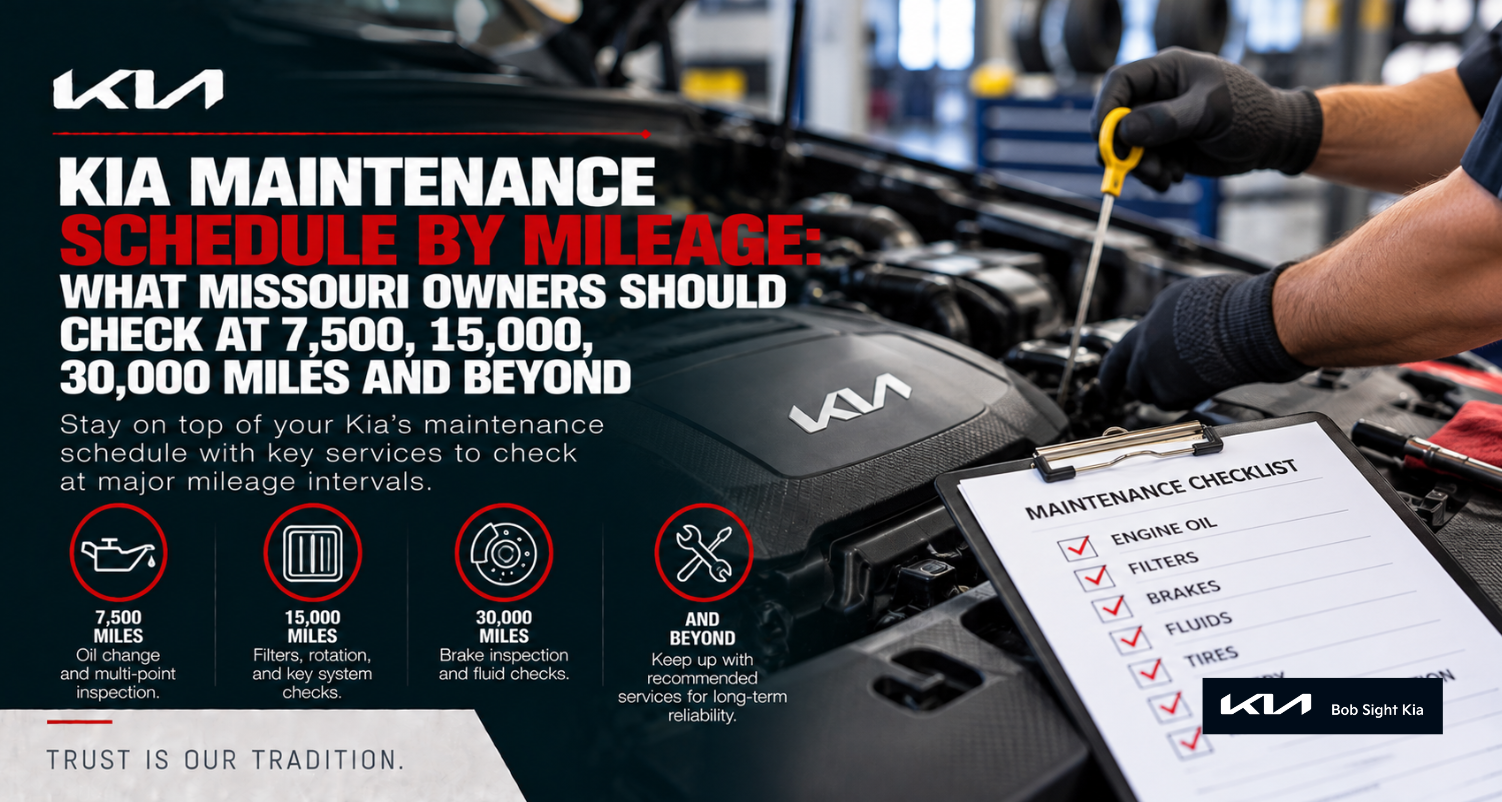
See Kia maintenance by mileage, including 7,500, 15,000, and 30,000-mile checkpoints for Independence and Missouri drivers.

Kia Maintenance Schedule by Mileage: What Missouri Owners Should Check at 7,500, 15,000, 30,000 Miles and Beyond

Kia Maintenance Schedule by Mileage: What Missouri Owners Should Check at 7,500, 15,000, 30,000 Miles and Beyond Your Kia maintenance schedule should follow the requirements for your exact vehicle, with mileage milestones helping you plan ahead. Oil changes, tire rotations, filters, brake inspections, and fluid checks all play a role in ownership, but they do not follow one universal schedule across every Kia model. For drivers in Independence, Blue Springs, Grain Valley, and throughout the Kansas City Metro, daily driving conditions also matter. Short trips, traffic on I-70, winter road treatments, and dusty construction areas can affect which maintenance schedule applies. Bob Sight Kia in Independence also offers an ownership benefit worth including in your service planning: lifetime oil changes and tire rotations every 5,000 miles with eligible new Kia purchases, performed exclusively at Bob Sight Kia. Ask our team to confirm eligibility and program terms for your vehicle. Battery-electric Kia models do not require engine oil changes. The 7,500-, 15,000-, and 30,000-mile checkpoints discussed below are planning references. They should not delay a service already due under your factory schedule, elapsed-time requirements, severe-use schedule, or applicable dealership maintenance program. Schedule Kia maintenance at Bob Sight Kia in Independence In This Guide You'll Learn Understanding the difference between factory requirements, dealership benefits, and condition-based repairs makes Kia maintenance easier to manage. This guide covers: How to identify the correct maintenance schedule for your Kia How Bob Sight Kia's 5,000-mile lifetime maintenance benefit fits into ownership What to review around 7,500, 15,000, and 30,000 miles How Missouri driving conditions can affect service timing Which items to monitor between appointments How gasoline, hybrid, plug-in hybrid, and electric maintenance differs How to plan service beyond the first 30,000 miles Does Every Kia Follow the Same Maintenance Schedule? No. Kia maintenance requirements vary by model year, engine, powertrain, drivetrain, and operating conditions. Even two vehicles with the same model name can have different service requirements when their engines or powertrains differ. A gasoline Kia Sportage and a Sportage Hybrid should each follow their own maintenance information. A battery-electric Kia has a different set of needs because it does not have a gasoline engine, engine oil filter, or spark plugs. The correct starting point is your owner's manual and its scheduled maintenance section. Kia's Owner's Portal also provides access to vehicle information and maintenance milestones. Confirm that the information matches your model year and configuration. When a maintenance item lists both mileage and time, follow whichever limit comes first as directed by the schedule. A low-mileage Kia may reach a calendar deadline before reaching the listed mileage. A frequent commuter may reach the mileage limit much sooner. Keep these three categories separate when reviewing recommendations: Factory scheduled maintenance: Inspections and replacements specified by Kia for your vehicle and operating conditions. Dealership maintenance benefits: Services available under an applicable program, including Bob Sight Kia's lifetime oil changes and tire rotations every 5,000 miles with eligible new Kia purchases. Condition-based service: Work recommended because an inspection identifies wear, damage, contamination, or a developing concern. Understanding which category applies helps you ask useful questions and maintain accurate records. How Bob Sight Kia's Lifetime Oil Changes and Tire Rotations Fit Your Plan Eligible new Kia purchases at Bob Sight Kia include lifetime oil changes and tire rotations every 5,000 miles, performed exclusively at our Independence dealership. This benefit gives qualifying owners a recurring service checkpoint to include in their ownership calendar. For an eligible gasoline or hybrid Kia, those visits provide an opportunity to keep up with covered oil and tire services while discussing other maintenance that may be due. Confirm your enrollment, vehicle eligibility, and applicable program terms with the dealership. The 5,000-mile benefit does not make every other maintenance item due at 5,000-mile intervals. Filters, coolant, spark plugs, brake fluid, and drivetrain components retain their own vehicle-specific requirements. Likewise, a factory time limit or severe-use requirement may call for attention before the next program mileage checkpoint. Do not interpret the benefit as coverage for every maintenance item or repair. Ask which services are included and which additional recommendations come from Kia's schedule or the condition of your vehicle. If you own a battery-electric Kia, engine oil changes do not apply. Ask our team which program benefits apply to your specific vehicle rather than assuming the same services apply to every powertrain. Plan your next Kia service appointment What Should Kia Owners Review Around 7,500 Miles? Around 7,500 miles, review your service history and upcoming factory requirements rather than assuming every Kia needs an identical service package. If you participate in Bob Sight Kia's applicable 5,000-mile maintenance benefit, you may already have completed an earlier oil-change and tire-rotation visit. For gasoline engines, including those in hybrids and plug-in hybrids, oil service must use the correct oil specification and filter for the vehicle. Do not select oil solely because another Kia owner uses it. Engine requirements can differ across models and years. Tire maintenance also deserves attention. Rotation requirements and patterns depend on the vehicle and tire configuration. Directional tires or differing front and rear tire sizes can affect the appropriate procedure. This checkpoint is also useful for reviewing tire pressure, tread condition, brake behavior, visible leaks, lighting, and wiper performance. An inspection may identify an issue that deserves attention, but inspection does not automatically mean replacement. Check your odometer and service date. Compare both with your vehicle's maintenance schedule. Review completed work. Include any earlier 5,000-mile program visit. Identify services actually due. Use the factory schedule and applicable driving conditions. Discuss symptoms. Mention new noises, warning lights, vibration, or changes in starting and braking. Save the service record. Record the date, mileage, and work completed. For owners making frequent short trips along Noland Road or US-40, this is also a good time to review the severe-use definitions in the owner's manual. What Changes Around 15,000 Miles? The 15,000-mile checkpoint is a useful time to review recurring maintenance, filter condition, tires, and brakes against your Kia's actual requirements. It is not a universal replacement deadline for every component. If your vehicle qualifies for Bob Sight Kia's lifetime maintenance program, 15,000 miles is also a recurring 5,000-mile program checkpoint. Confirm the appropriate timing with the service team and keep the factory schedule in view for additional requirements. The cabin air filter is one item worth reviewing. It filters air entering the passenger compartment through the climate-control system. Dust, pollen, leaves, and other debris can accumulate over time, and a restricted filter can reduce airflow. Replacement should follow the schedule and condition of the filter. Driving through construction areas or dusty environments may justify closer attention. Reduced airflow can also have causes beyond the filter, so persistent climate-control concerns deserve diagnosis. Tires should be checked for uneven wear and damage. Edge wear, center wear, or a change in steering behavior can prompt evaluation of inflation, alignment, suspension, or other contributing factors. Brake-pad replacement depends on measured wear and condition. A driver spending substantial time in Independence traffic may experience different brake wear from someone traveling mainly on uninterrupted highways. Mileage alone cannot determine how much usable brake material remains. What Should Be Reviewed Around 30,000 Miles? At approximately 30,000 miles, compare your service records with Kia's schedule to identify recurring maintenance and any additional items due. Avoid treating a generic 30,000-mile package as a factory requirement for every Kia. Engine air-filter service may be part of the discussion for a gasoline or hybrid vehicle, depending on its schedule and filter condition. This filter serves the engine and is separate from the cabin air filter. Battery-electric vehicles do not have an engine combustion-air filter. Other items may include inspections of belts, cooling-system components, steering, suspension, axle boots, or drivetrain components where specified. Their inspection and replacement requirements depend on your vehicle. Fluid service also requires a specific explanation. Ask which fluid is being recommended, whether Kia specifies the service at the current mileage or age, and whether severe-use conditions or an inspection finding affect the recommendation. At this stage, review the maintenance history as a whole: Have recurring oil and tire services been completed when applicable? Are any time-based requirements due? Were previous inspection findings resolved? Do filters need inspection or replacement under the schedule? Are tire wear and brake measurements being tracked? Does the severe-use schedule change any upcoming requirements? For eligible program participants, 30,000 miles is another 5,000-mile maintenance checkpoint. Additional work should still be matched to factory requirements and actual condition. What Counts as Severe Driving in Missouri? Severe-use conditions can include ordinary driving routines, so review Kia's definitions before assuming the normal schedule applies. The relevant conditions and affected maintenance items are listed in your vehicle's manual. Depending on the Kia, those conditions can include repeated short trips, extensive idling, heavy traffic, dusty roads, salt-treated roads, very cold weather, and towing or other demanding use. A commute through I-70 congestion can involve substantial engine-running time without many miles accumulating. Repeated short errands around Independence can create a different operating pattern from a longer trip at steady speed. Missouri winters also make the severe-use section worth reviewing. Some Kia manuals identify very cold weather and roads treated with salt or other corrosive materials among the relevant conditions. Do not assume every maintenance item changes to the same shorter interval. Severe-use tables identify which items are affected and which conditions apply to them. When discussing your maintenance plan, describe your actual routine: typical trip length, time spent idling, traffic, dusty-road use, and any towing within the vehicle's approved limits. Those details help the service team review the appropriate schedule. What Should You Check Between Service Appointments? Monitor your Kia between appointments because wear, warning lights, and vehicle symptoms do not wait for a mileage milestone. Scheduled maintenance works best alongside regular owner checks. Follow the owner-maintenance guidance in your manual. For vehicles with an engine, this can include checking engine oil as directed. Tire pressure, exterior lighting, wipers, and visible leaks also deserve attention. Check cold tire pressure. Use the vehicle's tire placard and manual rather than the maximum pressure molded into the tire sidewall. Inspect visible tire condition. Look for uneven wear, cuts, bulges, cracking, or other damage. Watch for unexplained fluid loss. Repeated topping off should not replace investigating a leak. Notice braking changes. Grinding, pulling, vibration, or altered pedal feel warrants attention. Check lights and wipers. Maintain visibility during rain, snow, and shorter winter days. Respond to warning indicators. Follow the manual's instructions for the specific warning. Record symptoms. Note when a concern occurs and the conditions surrounding it. Some warnings require stopping safely and obtaining assistance rather than continuing to drive. Do not wait for the next routine appointment when the manual calls for immediate action. How Do Gasoline, Hybrid, and Electric Kia Maintenance Needs Differ? Your powertrain determines which maintenance items apply, so a gasoline checklist should not be copied directly to every Kia. Shared model names do not guarantee shared service requirements. Gasoline Kia Vehicles Gasoline vehicles require engine-related maintenance, including oil and filter service, along with scheduled attention to items such as spark plugs and engine air filters. Exact intervals and specifications depend on the engine. Hybrid and Plug-In Hybrid Kia Vehicles Hybrids and plug-in hybrids still have gasoline engines and require applicable engine maintenance. Driving on electric power for part of a trip does not eliminate oil service or calendar-based requirements. Follow the schedule for the hybrid or plug-in hybrid configuration. Hybrid-specific components may have their own inspection or service requirements. Do not substitute the schedule from a gasoline version of the same model. Battery-Electric Kia Vehicles Battery-electric Kia vehicles do not require engine oil changes or spark plugs. They still need maintenance involving tires, brakes, cabin filters, steering, suspension, cooling systems, and other applicable components. Regenerative braking can reduce friction-brake use during some driving, but conventional brake components still require attention. Follow the EV's maintenance schedule rather than assuming reduced brake use eliminates inspection needs. Planning Maintenance Beyond 30,000 Miles Beyond 30,000 miles, continue recurring maintenance and add higher-mileage or time-based work as your Kia's schedule requires. There is no single replacement list that applies to every Kia at 60,000, 90,000, or 100,000 miles. Items such as coolant, spark plugs, belts, and drivetrain fluids can have substantially different requirements across vehicles. Check the exact schedule before assuming a service is due or can be postponed. Vehicle age matters alongside mileage. A seven-year-old Kia with relatively low mileage may need different attention from a newer Kia with the same odometer reading. Tires, batteries, rubber components, and other parts can deteriorate with time. Keep records showing the service date, mileage, work completed, and relevant inspection results. Records help prevent duplicate work and make it easier to track changes in tire wear, brake measurements, and recurring concerns. If you purchased a used Kia without complete records, discuss the missing history with the service team. The goal is to establish what can be verified and determine an appropriate maintenance plan for that vehicle. Frequently Asked Questions About Kia Maintenance Schedules Does every Kia need maintenance every 7,500 miles? No. Kia maintenance intervals vary by model year, engine, powertrain, maintenance item, and driving conditions. Use the schedule for your exact vehicle and follow mileage or time limits as specified. Does Bob Sight Kia offer lifetime oil changes and tire rotations? Bob Sight Kia in Independence advertises lifetime oil changes and tire rotations every 5,000 miles with eligible new Kia purchases, performed exclusively at the dealership. Ask the team to confirm your vehicle's eligibility and applicable program terms. Battery-electric vehicles do not require engine oil changes. What Kia maintenance should I review around 15,000 miles? Review recurring oil and filter service where applicable, tire maintenance, brake inspections, fluid checks, and any cabin air-filter service specified for your vehicle. Reaching 15,000 miles does not create the same service requirements for every Kia. What should be done to a Kia at 30,000 miles? Review your Kia's maintenance schedule and service history to identify recurring maintenance and any additional inspections or replacements due. Engine air filters, cabin filters, fluids, and other components have vehicle-specific requirements rather than one universal 30,000-mile replacement rule. What counts as severe driving for a Kia? Depending on the vehicle's manual, severe-use conditions can include repeated short trips, extensive idling, heavy traffic, dusty or salt-treated roads, very cold weather, and towing or other demanding use. Follow the definitions and maintenance requirements for your exact Kia. Schedule Kia Maintenance in Independence, Missouri Bob Sight Kia can help you review your vehicle's maintenance requirements and plan your next service visit. Have your current mileage, model year, powertrain information, and service records available when discussing what is due. If you are searching for Kia maintenance near me in Independence, Blue Springs, Grain Valley, Raytown, or the Kansas City Metro, start with a plan built around your actual vehicle and driving routine. Remember to ask about lifetime oil changes and tire rotations every 5,000 miles with eligible new Kia purchases at Bob Sight Kia. Confirm the program terms and continue following all other applicable factory maintenance requirements. Schedule your next Kia maintenance appointment Helpful Links Schedule Kia Service Kia Service Specials Kia Parts Department Explore New Kia Vehicles Bob Sight Kia Proud to Be Part of the Bob Sight Auto Group Bob Sight Kia in Independence is proud to be part of the Bob Sight Auto Group. Explore our dealerships in Missouri and Kansas for vehicle shopping, service, and ownership resources. Bob Sight Honda in Lawrence, Kansas Bob Sight Chrysler Dodge Jeep Ram in Lawrence, Kansas Bob Sight Ford in Lee's Summit, Missouri Bob Sight Kia in Independence, Missouri Trust Is Our Tradition.