

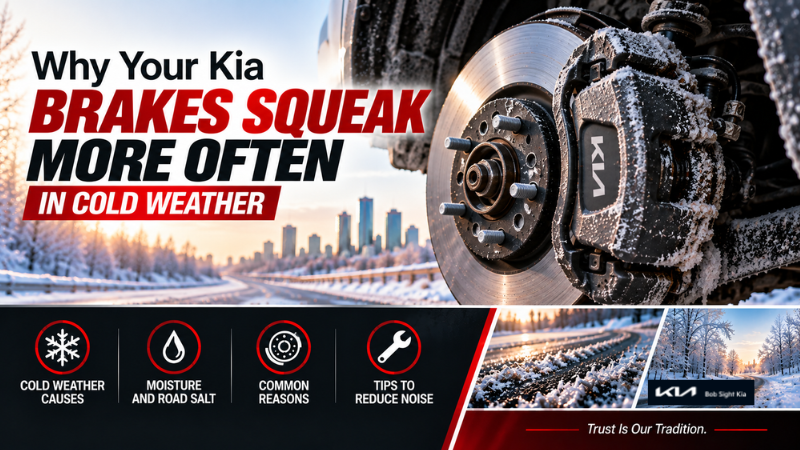
Why Your Kia Brakes Squeak More Often in Cold Weather
When winter temperatures drop across Jackson County, Kia drivers may begin noticing squeaking, squealing, or other unfamiliar brake noises during their morning commutes. Whether you are leaving your driveway in Independence, traveling through Blue Springs, or heading toward Kansas City on Interstate 70, a change in brake noise can raise questions about your vehicle's condition.
Cold weather can influence brake noise in several ways. Moisture may collect on brake rotors overnight, changes in temperature can affect how friction materials behave, and winter road treatments can contribute to corrosion around certain brake components. Some noises are temporary and may disappear as the brakes are used, while others can indicate worn brake pads, sticking hardware, or another condition that needs professional attention.
Understanding the difference matters because not every winter brake squeak indicates a mechanical failure, but unusual noises should never be dismissed without considering the circumstances.
At Bob Sight Kia in Independence, Missouri, our service department helps local drivers address brake noise, maintenance, and seasonal vehicle concerns. Knowing what causes cold-weather brake squeaking can help you recognize warning signs, communicate symptoms to your service advisor, and make informed decisions about your Kia's braking system.
Schedule Kia Brake Service at Bob Sight Kia in Independence, MO
In This Guide You'll Learn
This guide explores the mechanical and environmental factors that can contribute to brake noise during Missouri winters.
- How cold temperatures can influence brake friction and vibration
- Why moisture and overnight surface rust sometimes cause temporary morning brake noise
- How to distinguish occasional squeaking from symptoms that require inspection
- Why worn brake pads and brake wear indicators may produce persistent squealing
- How road salt and corrosion can affect caliper hardware and brake pad movement
- What Kia owners can safely check before scheduling brake service
- How ceramic and semi-metallic brake pad formulations differ
- Why brake fluid maintenance and seasonal inspections matter
- When professional brake diagnosis is the safest next step
The Physics of Cold Weather Brake Noise
Brake squeaking is often associated with vibration that develops as brake pads contact a rotating brake rotor. Under certain conditions, these vibrations can produce audible high-frequency sounds.
When you press the brake pedal in a conventional hydraulic disc brake system, the caliper applies force to the brake pads. The pads contact the rotor, creating friction that slows the wheel and converts the vehicle's motion into heat.
Although this process is straightforward in principle, the interaction between brake pads, rotors, mounting hardware, and other components is mechanically complex.
Changes in temperature, moisture, friction material condition, and component movement can all influence the sounds produced during braking.
Why Temperature Can Change Brake Noise
Materials expand and contract as temperatures change. Their mechanical properties and friction behavior can also vary with temperature.
During cold Missouri mornings, the brake pads, rotors, calipers, and mounting hardware may begin operating at temperatures significantly lower than those encountered during warmer weather.
These conditions can influence friction characteristics and vibration behavior.
However, cold weather does not automatically make every brake pad excessively hard or cause every brake system to squeal.
Brake noise depends on the specific pad formulation, rotor condition, component design, hardware condition, and operating circumstances.
How Brake Vibration Creates Squealing
High-frequency brake squeal can occur when friction-related vibrations excite components within the brake assembly.
The resulting sound may be influenced by the pad backing plate, caliper, rotor, shims, mounting hardware, and other parts of the system.
Brake manufacturers use component design, material selection, and noise-control features to manage these vibrations.
Even so, occasional brake noise can occur under certain operating conditions without automatically indicating a failed component.
Persistent or worsening noise requires a different level of attention because it may indicate wear, damage, or improper component movement.
Why Morning Braking Can Sound Different
When a Kia sits parked overnight in Independence or elsewhere in the Kansas City metro, its brake components are exposed to changing temperatures and environmental moisture.
Rain, snow, humidity, and condensation may affect the condition of the rotor surfaces before the vehicle is driven again.
As the brakes are applied, the interaction between the pad and rotor may change as surface moisture is removed and operating conditions stabilize.
This can explain why some drivers notice a temporary squeak during their first few braking events of the day.
However, the absence or disappearance of noise does not confirm that every brake component is in good condition.
Flash Rust and Overnight Humidity Buildup
One common explanation for temporary brake noise after wet weather involves light surface rust on brake rotors.
Many automotive brake rotors are made from cast iron, which can develop visible oxidation when exposed to moisture and oxygen.
During winter, rain, melting snow, frost, and road spray can leave moisture on the rotor surface while a vehicle is parked.
What Is Flash Rust?
Flash rust refers to a thin layer of oxidation that may develop relatively quickly on exposed metal surfaces.
On cast-iron brake rotors, this can appear as a light orange or brown discoloration.
It may become visible after rain, a car wash, or an overnight period of damp weather.
Because brake pads contact the rotor's friction surface during braking, light oxidation on that surface may be removed through normal brake use.
Why Surface Rust Can Produce Noise
A rotor surface covered with light oxidation may initially interact differently with the brake pads than a clean, dry rotor surface.
This can produce temporary scraping, squeaking, or a slightly rough sensation under some conditions.
As the pads contact the rotor, the friction surface may become cleaner and the noise may decrease.
There is no universal rule that the sound must disappear after two or three stops or within a particular distance.
The duration depends on the rotor condition, moisture exposure, braking conditions, and other factors.
When Surface Rust Becomes More Concerning
Light surface rust is different from substantial corrosion.
If a vehicle remains parked for an extended period in wet conditions, corrosion may become more pronounced.
Repeated exposure to moisture and road salt can also contribute to corrosion around rotor edges and other areas that do not receive regular contact from the brake pads.
More serious rotor deterioration may include pitting, scaling, flaking, or damaged friction surfaces.
If brake noise persists, braking feels uneven, or visible corrosion appears substantial, the rotor should be professionally evaluated.
Depending on the condition and manufacturer specifications, service may involve additional inspection or component replacement.
Normal Cold-Weather Squeaks vs. Mechanical Warning Signs
One of the most useful ways to evaluate brake noise is to consider when it occurs, how long it lasts, and whether it is accompanied by other symptoms.
A brief squeak after damp overnight parking may have a different explanation from continuous grinding or a noise that grows louder over several days.
However, sound alone cannot reliably determine the condition of a braking system.
Temporary Noise After Overnight Parking
Some drivers notice light squeaking or scraping during initial braking after the vehicle has been parked in wet or cold conditions.
If the sound disappears and braking performance otherwise feels normal, temporary moisture-related surface conditions may be involved.
Continue paying attention to whether the noise returns, changes, or becomes more pronounced.
If you are uncertain about the source, an inspection is appropriate.
Persistent High-Pitched Squealing
Persistent squealing may be associated with worn brake pads, brake wear indicators, friction material characteristics, or vibration involving brake hardware.
Some brake pad designs include mechanical wear indicators that produce noise when the friction material approaches a specified wear condition.
However, not every Kia brake assembly uses the same indicator arrangement or activation thickness.
It is not accurate to assume that all Kia brake pads begin squealing at exactly 2 millimeters of remaining material.
A technician can measure the friction material and determine whether replacement is needed based on the applicable specifications.
Grinding or Harsh Metal-to-Metal Sounds
Grinding can have several causes, including severe brake pad wear, damaged rotor surfaces, debris, or other mechanical problems.
While light surface oxidation may produce temporary rough sounds, loud or persistent grinding should not be treated as normal winter behavior.
If you hear harsh grinding, notice reduced braking performance, or experience other serious symptoms, stop driving as soon as it is safe and arrange professional assistance.
Brake Pedal Pulsation or Vibration
A pulsating sensation during braking may be associated with variations in rotor thickness, uneven friction deposits, rotor condition, or other braking system concerns.
Some pedal feedback can also occur during normal anti-lock braking system operation when ABS activates on slippery pavement.
These situations should not be confused.
Repeated vibration during ordinary braking on dry pavement deserves inspection.
Your Kia Pulls While Braking
If your vehicle consistently pulls toward one side when you apply the brakes, the cause may involve uneven braking force or another vehicle condition.
Possible contributors include a sticking caliper, uneven friction material condition, tire problems, or suspension concerns.
Because several systems can produce similar symptoms, professional diagnosis is important.
Changes in Brake Pedal Feel
A brake pedal that suddenly becomes unusually soft, sinks farther than normal, or produces reduced braking response is a serious warning sign.
Possible causes include hydraulic system problems or fluid leakage.
If braking performance is compromised, stop in a safe location and arrange towing or other professional assistance rather than continuing a normal drive.
The Impact of Road Salt and Winter Deicing Chemicals
Winter road treatments can create additional challenges for exposed brake components.
During snow and ice events, road crews may apply rock salt, brine, or other deicing products to help manage roadway conditions.
As vehicles travel through wet slush, salt-containing spray can reach wheel wells and parts of the braking system.
Repeated exposure can accelerate corrosion on susceptible metal components.
How Salt Contributes to Brake Hardware Corrosion
When salt dissolves in water, the resulting solution can accelerate electrochemical corrosion on exposed metal surfaces.
Over time, corrosion may develop around brake caliper brackets, mounting hardware, rotor edges, and other susceptible areas.
Protective coatings, component materials, environmental conditions, and maintenance all affect how much corrosion develops.
Why Brake Pad Hardware Can Become Restricted
Some disc brake assemblies use metal guide clips and mounting surfaces that allow brake pads to move correctly.
Corrosion beneath or around these components can reduce clearance and interfere with normal pad movement.
This may contribute to brake drag, uneven wear, or noise.
In certain situations, expanding corrosion products around mounting hardware are described as rust jacking.
Not every squeak during winter is caused by rust jacking, but it is one condition technicians may consider when inspecting sticking brake hardware.
How Caliper Slide Pins Can Be Affected
Many floating-caliper designs use slide pins to allow the caliper to move as intended.
Protective boots and appropriate lubrication help shield these components from contamination.
If a boot is damaged or contamination enters the sliding mechanism, corrosion may interfere with movement.
A sticking slide pin can contribute to uneven brake pad wear, abnormal heat, or persistent noise.
The specific symptoms depend on the brake design and the nature of the fault.
Why Washing Helps but Does Not Guarantee Protection
Removing accumulated road salt from accessible wheel wells and underbody surfaces can reduce continued exposure.
However, washing does not reverse existing corrosion or guarantee that brake components will never bind.
Cleaning habits should be combined with appropriate maintenance and inspections.
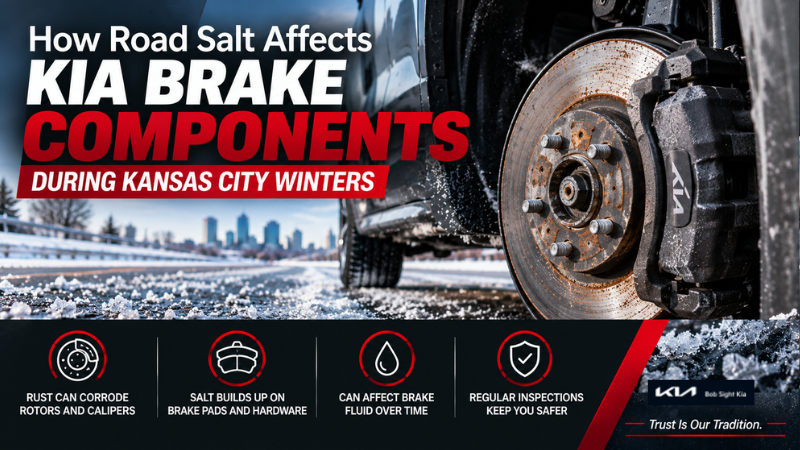
For a more detailed explanation of corrosion, brake lines, rotors, and caliper hardware, see our related guide on how road salt affects Kia brake components during Kansas City winters.
Step-by-Step: Winter Brake Inspection and Protection for Kia Owners
Kia owners can perform several basic observations without disassembling the braking system.
These checks can help identify symptoms that should be discussed with a service professional.
Do not attempt brake repairs unless you have the appropriate training, tools, and model-specific service information.
Step 1: Park Safely and Allow the Brakes to Cool
Park on a level surface and secure the vehicle according to the owner's manual.
Allow the wheels and brake assemblies to cool before performing any visual observations.
Brake rotors and calipers can become extremely hot during normal driving.
Never touch a brake component immediately after driving to determine whether it is overheating.
Step 2: Look for Obvious Rotor Damage
Where the wheel design allows visibility, look for obvious deep grooves, unusual scoring, or substantial corrosion on the visible rotor surface.
Light orange surface rust after wet weather is common on many cast-iron rotors.
However, significant pitting, flaking, or other visible deterioration may require inspection.
A visual check through wheel spokes cannot establish whether a rotor meets all service specifications.
Step 3: Pay Attention to Brake Pad Wear
Brake pad thickness is an important maintenance measurement.
However, it may be difficult or impossible to evaluate accurately through the wheel openings.
The visible portion of a pad may not represent the condition of every pad in the assembly.
Professional inspection can include measuring friction material thickness and checking for uneven wear.
Follow the applicable Kia specifications rather than assuming every model requires replacement at the same thickness.
Step 4: Observe Changes in Brake Noise
Make a note of when the noise occurs.
- Does it happen only after the vehicle has been parked overnight?
- Does it occur when the brakes are applied or while the vehicle is moving without braking?
- Does the noise decrease after normal driving?
- Does it become louder during wet weather?
- Is it accompanied by vibration, pulling, or changes in pedal feel?
These details can help a technician narrow down possible causes.
Step 5: Wash Away Accessible Winter Road Residue
After substantial road salt exposure, consider washing your Kia when weather conditions make cleaning practical.
An underbody rinse may help remove salt residue from accessible areas.
Avoid directing concentrated high-pressure spray into brake seals, electrical connectors, or other sensitive components.
Do not crawl beneath an unsupported vehicle.
Step 6: Avoid Applying Lubricants to Brake Friction Surfaces
Never spray penetrating oil, general-purpose lubricant, or grease onto brake rotors or brake pad friction material to silence a squeak.
Contaminating braking surfaces can interfere with friction performance.
Brake hardware lubrication requires the correct product and application procedure for the specific component.
Leave brake disassembly, lubrication, and adjustment to properly equipped service professionals.
Step 7: Schedule Service When Symptoms Persist
If your Kia develops recurring squealing, grinding, pulling, abnormal vibration, or unusual pedal behavior, arrange a brake inspection.
Brake noise may have several causes, and replacing parts based only on the sound may not address the underlying problem.
Schedule Kia Brake Inspection and Service
Ceramic vs. Semi-Metallic Brake Pads in Midwest Cold
Brake pad formulation can influence noise, dust production, wear characteristics, and friction behavior.
Two commonly discussed categories are ceramic and semi-metallic brake pads.
However, these categories include many different formulations, and performance varies by manufacturer and intended application.
How Ceramic Brake Pads Work
Ceramic brake pads typically use a ceramic-based friction formulation combined with other materials and reinforcing ingredients.
Depending on the product, they may be designed to provide relatively low visible dust and controlled noise characteristics.
However, not every ceramic brake pad performs identically.
Cold-weather friction behavior depends on the specific formulation and the vehicle's braking system.
It is misleading to claim that ceramic pads universally need to warm up before they can provide adequate stopping performance.
Brake pads approved for a particular vehicle are intended to operate within the conditions specified for their application.
How Semi-Metallic Brake Pads Work
Semi-metallic brake pads contain metallic materials as part of their friction formulation.
These materials can influence heat transfer, friction behavior, durability, and noise characteristics.
Some semi-metallic formulations may produce more visible brake dust or noise than certain ceramic alternatives.
However, the results depend on the specific product and operating conditions.
Semi-metallic pads are not automatically the best choice for every Kia driven in cold Missouri weather.
Does Brake Pad Material Determine Winter Squeaking?
Pad material can contribute to brake noise, but it is only one factor.
Rotor condition, hardware movement, pad installation, friction deposits, moisture, and brake design also matter.
A squeaking brake system should not automatically be treated as evidence that the wrong pad material was installed.
Choosing Replacement Brake Pads for Your Kia
Replacement brake pads should be selected based on the vehicle's specifications and the intended application.
Genuine Kia parts are one option for matching the vehicle's original equipment requirements.
Other replacement parts may also be suitable when they meet the applicable specifications and quality requirements.
Ask your service advisor about appropriate options for your specific Kia model rather than selecting pads solely on ceramic or semi-metallic labeling.
Quick Facts: Cold-Weather Brake Squeak Essentials
- Temporary Morning Noise: Moisture and light rotor surface rust may contribute to brief squeaking after overnight parking.
- Brake Vibration: Friction-related vibration is one mechanism that can produce high-pitched brake squeal.
- Brake Pad Wear: Worn friction material or a mechanical wear indicator may cause persistent noise, depending on the brake design.
- Road Salt: Salt-containing moisture can accelerate corrosion on susceptible brake hardware.
- Caliper Movement: Sticking slide pins or pad hardware can contribute to uneven wear, drag, or noise.
- Grinding Sounds: Loud or persistent grinding should be inspected promptly rather than assumed to be normal.
- Brake Lubrication: Never apply general-purpose lubricants to rotor or pad friction surfaces.
- Seasonal Maintenance: Follow the Kia maintenance schedule and address changes in braking behavior as they develop.
Winter Brake Maintenance for Long-Term Kia Reliability
Winter brake care is most effective when it combines routine maintenance, awareness of changing symptoms, and attention to the conditions your vehicle encounters.
For Kia drivers traveling through Independence, Sugar Creek, Grain Valley, Raytown, and the Kansas City metro, repeated exposure to wet pavement, road treatments, and changing temperatures can make seasonal brake maintenance worth discussing during service visits.
Review Brake Condition Before Winter
Before colder weather arrives, check whether your Kia is due for scheduled maintenance.
If you have noticed squealing, vibration, uneven braking, or unusual pedal feel, mention these symptoms when arranging service.
Depending on the concern, a brake inspection may include checking pad thickness, rotor condition, visible hardware deterioration, and other relevant components.
Understand Why Brake Fluid Maintenance Matters
Brake fluid plays an important role in transmitting hydraulic pressure through the braking system.
Many automotive brake fluids are hygroscopic, meaning they can absorb moisture over time.
Excess moisture can reduce the fluid's boiling performance and may contribute to corrosion within susceptible hydraulic components.
However, it is not accurate to assume that ordinary winter temperatures routinely cause moisture pockets in brake fluid to freeze and expand, producing a soft brake pedal.
Brake fluid maintenance should follow the schedule and specifications provided for the particular Kia model.
Do not assume that every Kia requires a brake fluid flush at the same two-year or three-year interval.
Why Professional Brake Inspections Are Useful
A professional brake inspection can help identify conditions that may not be visible during a basic driveway check.
Depending on the vehicle and symptoms, technicians may evaluate:
- Brake pad friction material thickness and wear patterns
- Brake rotor condition and measurements when appropriate
- Caliper and mounting hardware condition
- Signs of brake drag or abnormal heat
- Brake hoses and hydraulic components
- Visible corrosion or damage
- Relevant warning indicators or diagnostic information
Not every inspection involves complete brake disassembly, lubrication, or testing of every ABS component.
The scope of the service depends on the inspection requested, the vehicle, and the symptoms identified.
How Winter Driving Habits Affect Brake Safety
Proper brake maintenance is important, but stopping performance also depends on tire traction and roadway conditions.
Snow, ice, and slush can reduce available grip even when the braking system is functioning correctly.
Allow additional following distance, reduce speed when conditions warrant, and avoid abrupt driving inputs on slippery roads.
Maintaining the brakes does not eliminate the need to adjust driving behavior for winter conditions.
Keep Track of Recurring Symptoms
If your Kia squeaks only after rain or overnight parking, make a note of the conditions.
If the sound becomes persistent, occurs in dry weather, or is accompanied by vibration or pulling, arrange an inspection.
Keeping track of symptoms can make it easier to explain the concern and determine whether it is changing over time.
Drivers can also review available maintenance offers through the Bob Sight Kia Service Specials page.
Frequently Asked Questions About Kia Brake Squeaking in Cold Weather
Why do my Kia brakes squeak only in the morning when it's cold?
Temporary morning brake squeaking may be associated with moisture on the rotors, light surface rust, or changes in friction behavior during cold conditions.
When a Kia sits parked overnight, condensation, rain, or melting snow can leave moisture on exposed brake surfaces.
Many cast-iron rotors can develop a thin layer of surface oxidation in these conditions.
During subsequent braking, contact between the pads and rotors may change as the surface condition changes.
This can cause a temporary noise in some situations.
However, cold weather is not the only possible explanation. Brake pad wear, hardware movement, and other conditions can produce similar sounds.
If the noise persists, becomes more pronounced, or occurs with changes in braking performance, schedule an inspection.
Can cold weather cause my Kia brake pedal to feel soft or spongy?
Cold weather alone should not be assumed to explain a significant change in brake pedal feel.
A soft or spongy pedal may indicate air in the hydraulic system, a fluid leak, or another braking system concern.
Moisture contamination in brake fluid can affect fluid performance and contribute to certain long-term problems, but it does not provide a reliable explanation for every soft pedal during winter.
Corrosion-related brake line damage is another possible concern, although it is not the only cause.
If your brake pedal suddenly feels unusually soft, travels farther than normal, or braking response decreases, stop driving as soon as it is safe.
Arrange professional assistance or towing rather than attempting to drive carefully to the dealership with potentially compromised brakes.
Is it safe to drive my Kia if the brakes squeak continuously?
Continuous brake squeaking should not be ignored because it can indicate worn brake pads, a wear indicator contacting the rotor, hardware vibration, or another mechanical issue.
However, persistent squeaking does not always mean the friction material has reached a specific thickness or that a caliper has seized.
The sound alone cannot establish the cause.
If the noise continues during normal driving, arrange a brake inspection promptly.
If squeaking is accompanied by grinding, reduced braking response, abnormal heat, pulling, or significant pedal changes, stop driving when safe and seek professional assistance.
Will washing my Kia in cold weather stop the brakes from squeaking?
Washing can help remove accumulated dirt and road salt from accessible vehicle surfaces.
This may reduce continued exposure to corrosive residue.
However, washing does not guarantee that brake squeaking will stop.
If the noise comes from worn pads, sticking hardware, or another mechanical concern, cleaning the exterior of the vehicle will not correct the underlying problem.
Washing can also leave temporary moisture on cast-iron rotors, which may contribute to light surface rust after the vehicle is parked.
Choose washing conditions carefully during freezing weather and avoid concentrated high-pressure spray on sensitive brake components.
Why do my Kia brakes grind on cold mornings?
Moisture-related rotor surface rust may sometimes cause a temporary rough sound during initial braking.
However, grinding can also indicate significant brake pad wear, damaged rotors, trapped debris, or another mechanical problem.
It is not safe to assume that grinding is harmless simply because it happens during cold weather.
If the sound is loud, metallic, persistent, or accompanied by abnormal braking behavior, have the vehicle inspected promptly.
Severe grinding or reduced braking performance may require stopping the vehicle and arranging towing.
Can road salt cause my Kia brakes to squeak?
Road salt can contribute indirectly to brake noise by accelerating corrosion on susceptible metal components.
If corrosion interferes with brake pad guides, caliper movement, or other hardware, the braking system may develop noise, drag, or uneven wear.
However, road salt is only one possible contributor to winter brake squeaking.
A professional inspection can help distinguish corrosion-related concerns from normal surface moisture, worn friction material, or other problems.
Do ceramic brake pads squeak less in cold weather?
Some ceramic brake pad formulations are designed to provide controlled noise characteristics, but there is no universal guarantee that ceramic pads will be quieter in every cold-weather situation.
Noise depends on the complete brake system, including rotor condition, pad formulation, installation, and hardware condition.
Likewise, semi-metallic pads are not automatically louder or better suited to every winter application.
Choose replacement pads that meet the specifications for your Kia rather than relying only on friction material category.
How do I know whether my Kia brake pads need replacement?
Brake pad replacement decisions should be based on the applicable vehicle specifications, measured friction material thickness, wear patterns, and overall component condition.
Persistent squealing may indicate wear, but it is not a reliable measurement of remaining pad material.
A technician can inspect the brake pads and determine whether replacement is recommended.
Do not assume that every Kia uses the same wear indicator design or replacement threshold.
Should I replace my Kia brake pads just because they squeak in winter?
Not necessarily.
Some brake noise can occur because of temporary moisture or operating conditions without requiring immediate pad replacement.
Other noises may indicate worn friction material, damaged hardware, or a mechanical concern.
The appropriate repair depends on the diagnosis.
Replacing brake pads without identifying the cause may not resolve the squeaking if the underlying issue involves rotor condition, caliper movement, or another component.
Schedule Kia Brake Service in Independence, MO
Cold-weather brake squeaking can have several explanations, from temporary moisture-related surface conditions to worn brake pads or mechanical problems.
Understanding when the noise occurs, whether it changes during driving, and whether other symptoms are present can help you determine when a professional inspection is appropriate.
Persistent squealing, grinding, vehicle pulling, abnormal vibration, and changes in brake pedal feel should not be ignored.
Bob Sight Kia serves drivers throughout Independence, Blue Springs, Lee's Summit, Raytown, Sugar Creek, Grain Valley, Liberty, and the greater Kansas City metro.
If your Kia's brakes are making unusual noises or you have questions about seasonal brake maintenance, our service department can help you arrange an appointment to have the concern evaluated.
Visit Bob Sight Kia at 1700 S Noland Road, Independence, MO 64055, or schedule service online.
Schedule Kia Brake Service at Bob Sight Kia
Helpful Kia Service and Shopping Links
- Schedule Kia Brake Service in Independence, MO
- Explore Kia Service Specials
- Browse New Kia Vehicles
- Shop Used Vehicles at Bob Sight Kia
- Value Your Trade Online
Proud to Be Part of the Bob Sight Auto Group
Bob Sight Kia is proud to be part of the Bob Sight Auto Group, serving drivers throughout Missouri and Kansas with automotive sales and service resources.
Whether you are shopping for a new vehicle, exploring pre-owned inventory, or scheduling maintenance, our dealership family is committed to helping drivers find the information and services they need.
- Bob Sight Kia | Independence, MO
- Bob Sight Honda | Lawrence, KS
- Bob Sight CDJR | Lawrence, KS
- Bob Sight Ford | Lee's Summit, MO
Trust Is Our Tradition.

 Warranties include 10-year/100,000-mile powertrain and 5-year/60,000-mile basic. All warranties and roadside assistance are limited. See retailer for warranty details.