
Today: 8:30AM - 6:00PM
Blog / Bob Sight Kia

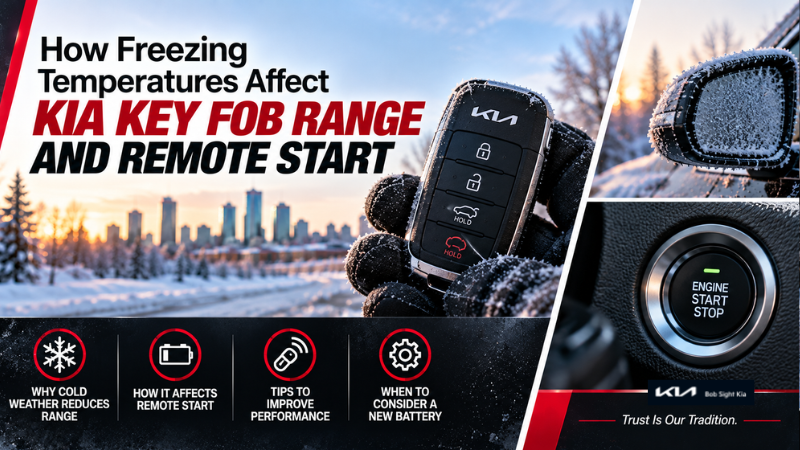
How Freezing Temperatures Affect Kia Key Fob Range Remote Start

Driver holding Kia smart key fob attempting remote start on a frosty winter morning in Independence MO

How Freezing Temperatures Affect Kia Key Fob Range and Remote Start

When winter temperatures drop across Jackson County, Kia drivers may notice that their key fob does not respond as consistently as it did during warmer weather. Perhaps the doors unlock only when you stand closer to the vehicle, remote start works intermittently, or your Kia displays a smart key battery warning on a particularly cold morning.

For drivers in Independence, Blue Springs, Lee's Summit, and the greater Kansas City metro, these situations can be frustrating when preparing for a winter commute. However, a key fob that responds poorly in freezing weather does not automatically mean the vehicle's receiver or remote-start system has failed.

Cold temperatures can affect the performance of small batteries, including the coin-cell batteries used in many Kia smart keys. Winter conditions can also reveal weaknesses in the vehicle's 12-volt battery, while distance, physical obstructions, and electronic interference may influence remote command reception.

Understanding these different factors can help you identify whether the concern involves the key fob, the vehicle's electrical system, remote-start operating conditions, or a connected service.

At Bob Sight Kia in Independence, Missouri, our service department helps drivers address battery concerns, electrical system problems, and vehicle technology questions. Whether you travel along Interstate 70, Highway 291, or neighborhood streets throughout Jackson County, knowing how your Kia's keyless entry and remote-start features operate can make winter vehicle ownership easier.

Schedule Kia Electrical System Service in Independence, MO

In This Guide You'll Learn

This guide explains the factors that can influence Kia key fob and remote-start performance during freezing weather.

  • Why cold temperatures can reduce the performance of an aging key fob battery
  • How key fob battery condition differs from radio signal transmission
  • Why distance, walls, metal structures, and interference can affect remote commands
  • Which vehicle conditions may prevent remote start from operating
  • How key fob remote start differs from Kia Connect remote services
  • How to identify the correct replacement key fob battery
  • What to do when a Kia smart key battery is depleted
  • Why the vehicle's 12-volt battery matters during winter
  • When professional electrical diagnosis may be necessary

The Electrochemistry of Cold Key Fob Batteries

One of the most common explanations for reduced key fob performance during cold weather involves the battery inside the remote.

Many Kia smart keys use a small lithium coin-cell battery to power their electronic functions. The exact battery type depends on the key design and vehicle application.

These batteries generate electrical energy through chemical reactions inside the cell.

When temperatures decrease, battery performance can change because the electrochemical processes responsible for delivering current become less effective under certain conditions.

Why Cold Temperatures Affect Coin-Cell Batteries

A battery's ability to deliver electrical current depends partly on temperature.

At lower temperatures, internal resistance may increase, limiting the current available to connected electronic components.

This effect can become more noticeable in an aging battery that already has reduced remaining capacity.

When you press a button on the key fob, the electronic circuitry requires sufficient electrical power to process the command and operate the transmitter.

If the battery cannot deliver the necessary power consistently, the fob may respond intermittently or stop functioning.

However, a cold key fob does not necessarily have a permanently damaged battery.

Battery performance may improve when the battery returns to a moderate temperature, although warming cannot restore capacity that has already been consumed through normal use.

Why an Aging Battery May Show Problems First

A relatively healthy key fob battery may continue functioning normally during winter.

An older battery with limited remaining capacity may be more sensitive to the additional performance demands associated with low temperatures.

Drivers may notice that the remote works reliably indoors but becomes inconsistent after being left in a cold coat pocket or garage.

These symptoms can suggest that the battery should be checked or replaced.

They do not prove that cold temperature is the only cause.

Does Cold Weather Actually Reduce Key Fob Signal Range?

Cold weather can indirectly reduce effective key fob range if the battery is unable to provide sufficient power for reliable operation.

However, freezing temperatures do not meaningfully slow the radio waves traveling between the key fob and vehicle.

The signal travels at essentially the same speed regardless of ordinary winter air temperatures.

What may change is the reliability of the transmitter's operation when its power source is weak.

There is no universal distance by which a Kia key fob's range decreases in freezing weather.

Actual performance depends on the vehicle, remote, battery condition, surroundings, and interference.

Should You Keep Your Kia Key Fob Indoors?

Storing your key fob in a dry indoor location can help avoid prolonged exposure to extreme temperatures and moisture.

It also reduces the chance of leaving the key inside an unattended vehicle.

However, indoor storage does not guarantee maximum signal range or eliminate the need for battery replacement.

If your key fob repeatedly becomes unreliable, checking the battery is a reasonable first troubleshooting step.

How Cold Weather Impacts Radio Frequency Transmission

Kia key fobs use wireless communication to send commands to compatible vehicle systems.

Depending on the vehicle and function, these systems may involve different radio frequencies, antennas, and communication methods.

While key fob batteries can be affected by cold, ordinary freezing weather is not itself a reliable explanation for substantial radio signal loss.

Distance Between the Key Fob and Vehicle

Remote commands become less reliable as the distance between the transmitter and receiver increases.

The maximum operating distance depends on the specific vehicle and key system.

If a key fob works near your Kia but not from farther away, distance may be contributing to the problem.

A weak battery can also make reliable operation more difficult under marginal conditions.

Buildings, Garage Doors, and Metal Structures

Physical obstructions can affect wireless communication.

Metal garage doors, reinforced building materials, parking structures, and other barriers may reduce signal strength or change how radio waves reach the vehicle.

For example, a Kia parked outside a home in Independence may respond differently when the remote is used from the driveway compared with a room separated by several walls.

This difference does not necessarily indicate a malfunction.

Electronic Interference

Wireless devices and nearby electronic equipment can sometimes interfere with keyless entry systems.

Interference may be more noticeable in certain parking areas or near equipment that operates on overlapping or related frequencies.

If your key fob works normally in most locations but becomes unreliable in one particular parking lot, the surrounding environment may be worth considering.

What About Snow and Ice on the Vehicle?

Snow, ice, and moisture can affect vehicle components in several ways.

However, it is misleading to claim that a normal layer of frost on a windshield will consistently reduce Kia key fob range by a specific amount.

Signal behavior depends on the complete environment, including nearby metal surfaces, barriers, transmitter location, and receiver design.

When troubleshooting poor range, checking the battery and reducing distance or obstructions is generally more useful than assuming frost is blocking the signal.

Practical Ways to Test Key Fob Range

If your Kia key fob appears less responsive during winter, try a few basic observations.

  • Test the remote from a shorter distance in a safe location.
  • Compare performance when fewer walls or other barriers separate you from the vehicle.
  • Check whether the problem occurs in multiple parking locations.
  • Look for a low smart key battery warning, if your model provides one.
  • Try a properly functioning spare key, if available.
  • Verify the battery type and replacement procedure in the owner's manual.

These observations may help distinguish a weak key battery from an environmental or vehicle-related issue.

If the problem continues after replacing the correct battery, further diagnosis may be needed.

Why Your Kia Remote Start Might Not Engage

A Kia remote-start system may refuse a command even when the key fob itself is functioning.

This is because remote start depends on more than wireless communication.

The vehicle must also meet the operating conditions established for its particular remote-start system.

These conditions vary by model, model year, equipment, and whether the feature uses a factory key fob or a connected service.

Low Vehicle Battery Charge

Cold weather can reduce the available performance of a vehicle's 12-volt battery.

At the same time, starting an internal combustion engine may require more electrical effort in very cold conditions.

A weak 12-volt battery can contribute to slow cranking, starting difficulty, or electrical system problems.

Some remote-start systems may restrict operation when vehicle electrical conditions do not meet their requirements.

However, there is no universal 11.8-volt remote-start cutoff that applies to every Kia.

If remote start fails and the vehicle also cranks slowly during normal starting, battery testing may be appropriate.

Doors, Hood, and Other Vehicle Conditions

Factory remote-start systems may require certain doors, the hood, or other components to be properly secured.

The exact requirements depend on the vehicle.

A hood switch or other input that reports an open condition may prevent remote-start operation on some models.

Drivers should review their owner's manual for the specific operating requirements.

Transmission and Vehicle Readiness Conditions

Remote-start systems may require the transmission to be in Park and the vehicle to meet other readiness conditions.

Some systems also have restrictions involving ignition state, security status, or previous remote-start activity.

These are vehicle-specific conditions rather than universal Kia rules.

Warning Lights and Diagnostic Faults

Certain vehicle faults may interfere with remote-start operation.

However, not every illuminated warning light automatically disables every Kia remote-start system.

The relationship between diagnostic faults and remote-start availability depends on the vehicle and system design.

If a warning light is present, address the underlying vehicle concern rather than assuming the key fob is defective.

Fuel Level and Remote-Start Duration

Some remote-start systems have fuel-level restrictions or automatic shutoff timers.

The exact conditions and duration vary.

It is not accurate to assume that every Kia remote-start cycle lasts exactly 10 minutes or that all systems permit the same number of consecutive starts.

Consult the owner's manual or the applicable Kia Connect documentation for your vehicle's operating limits.

Why Flashing Hazard Lights Are Not a Universal Error Code

Some vehicles provide exterior-light feedback when a remote command is received or processed.

However, the meaning of a particular flash pattern depends on the vehicle and system.

Two hazard-light flashes should not automatically be interpreted as proof that the vehicle rejected remote start because of a specific mechanical fault.

Use the model-specific operating instructions when interpreting remote-start feedback.

What to Check Before Scheduling Service

If your Kia remote start is not responding, consider the following:

  • Confirm that your vehicle is equipped with the remote-start feature you are attempting to use.
  • Verify that you are following the correct button sequence or app procedure.
  • Check whether the key fob operates the locks normally.
  • Confirm that the vehicle is parked and secured according to the owner's manual.
  • Review any warning messages or active vehicle concerns.
  • Check the vehicle's 12-volt battery condition if other starting symptoms are present.
  • Review Kia Connect activation and connectivity if using the app.

If the issue continues, a professional inspection can help determine whether the concern involves the remote, vehicle battery, control system, or another component.

Key Fob Remote Start vs. Kia Connect Smartphone App

Some Kia vehicles offer remote-start functionality through the factory key fob, Kia Connect, or both.

These systems use different communication methods and may have different requirements.

Availability depends on the vehicle's model, model year, equipment, market, and connected-service eligibility.

How Key Fob Remote Start Works

Factory key fob remote start sends a wireless command directly from the remote to the vehicle.

The command must be received successfully, and the vehicle must meet the conditions required for remote starting.

Because this method uses direct radio communication, operating distance and surrounding obstructions matter.

A key fob with a weak battery may also respond inconsistently.

Key fob remote start does not inherently require a smartphone or cellular service.

How Kia Connect Remote Start Works

On compatible vehicles with eligible and active Kia Connect services, a smartphone app may allow the driver to request certain remote vehicle functions.

Instead of relying on direct short-range communication from a key fob, the app sends commands through connected services and the vehicle's supported communication system.

Successful operation depends on factors such as account status, service availability, network connectivity, and vehicle readiness.

Remote commands may not work if the vehicle is outside supported coverage, has insufficient electrical power, or does not meet the required operating conditions.

Kia Connect is not universally available on every Kia model, and feature availability can change based on the vehicle and service arrangement.

Can Kia Connect Preheat the Cabin?

Some compatible Kia vehicles support remote climate-related functions through Kia Connect.

Available controls may include climate settings or other comfort features, depending on the model and equipment.

However, not every vehicle supports remote heated-seat activation, rear defroster control, or the same climate customization options.

Drivers should check the features available for their specific Kia rather than assuming all connected vehicles provide identical controls.

Which Remote-Start Method Is Better in Winter?

Neither method is universally more reliable in every situation.

Key fob remote start may be convenient when the vehicle is nearby and direct radio communication is available.

Kia Connect may offer additional convenience on supported vehicles when the connected service and network conditions are functioning.

Both methods still depend on the vehicle being capable of completing the requested operation.

A weak vehicle battery or unmet operating condition may affect either method.

Step-by-Step: Replacing a Kia Key Fob Battery and Handling a Depleted Smart Key

A weak key fob battery is often a relatively straightforward issue to investigate.

However, Kia has used different key designs across its vehicle lineup.

The correct battery, mechanical key access method, and backup starting procedure depend on the specific vehicle.

Step 1: Identify Your Kia Key Fob Design

Before opening the remote, review the owner's manual for your vehicle.

Identify whether your key is a conventional remote, a smart key, or another supported design.

Some Kia keys contain a removable mechanical key blade.

Others have different access or emergency operation procedures.

Step 2: Verify the Correct Battery Type

Many automotive smart keys use lithium coin-cell batteries, including common types such as CR2032 or CR2025.

However, these batteries are not interchangeable in every application.

Use the battery type specified for your particular key.

Do not select a replacement based only on the assumption that all Kia smart keys use the same battery.

Step 3: Open the Key Fob According to the Manual

Some key fobs have a release mechanism for the mechanical key and a designated opening point for the battery compartment.

Follow the owner's manual instructions to avoid damaging the housing, internal contacts, or seals.

Do not force the casing open or use excessive pressure against the circuit board.

Step 4: Install the New Battery Correctly

Remove the old battery according to the specified procedure.

Install the replacement with the polarity indicated by the battery holder or manufacturer's instructions.

Do not assume that the positive side faces upward in every key design.

Avoid bending the battery contacts or contaminating the interior of the remote.

Keep loose coin-cell batteries away from children and pets. Swallowed button or coin batteries can cause severe internal injuries and require immediate emergency medical attention.

Step 5: Test the Remote

After reassembling the key, test the lock and unlock functions in a safe location.

If the vehicle supports key fob remote start, test that feature according to the owner's manual.

If the key still behaves inconsistently, verify that the battery was installed correctly and that the replacement matches the required specification.

Continued problems may require further diagnosis.

Step 6: Use the Mechanical Key if Supported

Some Kia smart keys include a mechanical key blade that can be used to unlock the driver's door when the electronic remote is unavailable.

The location of the lock cylinder and the method of accessing it vary by vehicle.

Follow the model-specific instructions rather than forcing a door handle cover or lock mechanism.

Step 7: Follow the Correct Backup Starting Procedure

Some Kia push-button-start vehicles provide a backup method for recognizing a smart key with a depleted battery.

Depending on the model, this may involve positioning the smart key against the Engine Start/Stop button or following another specified procedure.

This feature should not be described as universal NFC operation across every Kia.

The vehicle's actual backup recognition method depends on its smart key system.

Follow the owner's manual for the exact procedure, including any required brake pedal or transmission conditions.

If the vehicle does not recognize the key using the documented method, professional assistance may be needed.

Quick Facts: Winter Kia Key Fob and Remote Start Essentials

  • Cold Battery Performance: Low temperatures can reduce the current available from an aging coin-cell battery.
  • Signal Speed: Freezing temperatures do not meaningfully slow the radio waves used by the key fob.
  • Operating Range: Distance, barriers, interference, and battery condition can influence remote reliability.
  • Battery Type: Verify the correct coin-cell battery for your particular Kia key.
  • Remote Start: Operating requirements and automatic shutoff behavior vary by model and system.
  • Kia Connect: Remote services require compatible equipment, eligibility, activation, and supported connectivity.
  • Backup Starting: Some Kia vehicles provide a method for recognizing a smart key with a depleted battery.
  • Vehicle Battery: Cold weather can expose weakness in the vehicle's 12-volt electrical system.
  • Professional Diagnosis: Persistent remote-start problems may require testing beyond a simple key fob battery replacement.

Winter Electrical Readiness for Kia Owners

Preparing your Kia for cold weather involves more than checking the battery inside the key fob.

The vehicle's electrical system, starting performance, and available remote features all play a role in winter convenience.

A practical maintenance approach can help you identify potential concerns before they interfere with daily transportation.

Check Your Vehicle's 12-Volt Battery Condition

Cold temperatures can reduce the available output of a vehicle's 12-volt battery.

For gasoline-powered vehicles, a weak battery may contribute to slow engine cranking or starting difficulty.

Hybrid and electric vehicles may use different electrical architectures and starting or readiness procedures, so battery concerns should be evaluated according to the specific model.

If your Kia has experienced slow starts, repeated electrical warnings, or unexplained power problems, battery and electrical system testing may be appropriate.

Understand What Battery Testing Can Reveal

Depending on the vehicle and symptoms, technicians may evaluate battery condition, charging performance, electrical connections, and relevant diagnostic information.

For applicable conventional starting batteries, testing may include an assessment of available starting capability.

The exact procedures depend on the vehicle's electrical system.

A battery test can help identify certain weaknesses, but no single test guarantees that a battery will never fail in the future.

Review Your Kia's Remote-Start Instructions

Before winter arrives, review the remote-start procedure for your particular model.

Confirm the required button sequence, vehicle conditions, and operating limits.

If you use Kia Connect, verify that your account and eligible services are active and that the app is functioning as expected.

Knowing the correct procedure can prevent unnecessary troubleshooting when a command is not accepted.

Use Remote Start Safely

When equipped and used according to the manufacturer's instructions, factory remote start is designed as a vehicle convenience feature.

However, remote starting should never be used in an enclosed garage or another poorly ventilated space where exhaust gases could accumulate.

Carbon monoxide from an internal combustion engine can be deadly.

Always follow the owner's manual and applicable local requirements for idling and remote-start use.

Do not assume that prolonged idling is necessary to protect the engine during every cold start.

Use the recommended engine oil and follow the manufacturer's operating guidance.

Inspect Key Fob Performance Before Severe Cold Arrives

If your remote has become less responsive, replacing its battery with the correct type may be a useful preventive step.

However, there is no universal requirement to replace every Kia key fob battery annually.

Battery life varies based on the key design, usage, storage conditions, and battery characteristics.

Pay attention to reduced operating range, intermittent response, or a low key battery message if your model provides one.

When to Request Professional Diagnosis

If a new, correctly installed key fob battery does not resolve the problem, the concern may involve the remote itself, vehicle receiver, electrical system, software, or remote-start operating conditions.

A service appointment can help determine which components or systems need further evaluation.

Bob Sight Kia serves drivers throughout Independence, Blue Springs, Lee's Summit, Raytown, Sugar Creek, Grain Valley, Liberty, and the greater Kansas City metro.

Drivers can review available offers through the Bob Sight Kia Service Specials page.

Frequently Asked Questions About Kia Key Fobs and Remote Start in Cold Weather

Why does my Kia key fob work up close but fail from my front porch in winter?

If your Kia key fob works only when you stand closer to the vehicle, a weak coin-cell battery is one possible explanation.

Cold temperatures can reduce the available performance of an aging battery, making intermittent operation more noticeable.

Distance, building materials, metal garage doors, and electronic interference may also affect communication.

Start by checking the correct battery type and replacement procedure for your key.

If replacing the battery does not improve operation, compare performance in different locations and consider professional diagnosis.

Do not assume that frost on the windshield is the primary reason the signal is not reaching the vehicle.

Will remote starting my Kia in winter damage the engine or battery?

Factory remote start is intended to operate within the conditions established by the vehicle manufacturer.

Using the feature according to the owner's manual does not inherently mean the engine or battery will be damaged.

However, remote start does not eliminate the importance of proper maintenance, a healthy vehicle battery, or the correct engine oil.

Repeated or prolonged idling can consume fuel and may be subject to operating restrictions or local regulations.

Follow the vehicle's instructions rather than relying on a universal three-minute or five-minute warm-up requirement.

Never remote start an internal combustion engine in an enclosed garage or poorly ventilated area.

Why do my Kia's hazard lights flash without the engine starting?

Exterior-light flashes may indicate that the vehicle received or processed a remote command.

However, the meaning of a particular flash pattern depends on the Kia model and remote-start system.

Two flashes do not universally identify a failed remote-start attempt or a specific mechanical problem.

Check that you are using the correct remote-start procedure and that the vehicle meets the operating conditions listed in the owner's manual.

If the problem continues, a service inspection may help identify whether the concern involves vehicle readiness, electrical power, or another system.

Can I leave my Kia key fob inside my cold car overnight?

Leaving a key fob inside a vehicle is generally not recommended because it can create security concerns.

Depending on the vehicle, an interior smart key may also affect locking behavior or key-detection functions.

However, it is not accurate to claim that every Kia continuously drains its 12-volt battery whenever a smart key is left inside.

Cold storage can temporarily affect coin-cell battery performance, but it does not automatically cause rapid permanent battery depletion.

Keep your key in a secure, dry location and follow the vehicle's security guidance.

How do I know if my Kia key fob battery is dying before winter arrives?

Possible signs of a weakening key fob battery include reduced operating range, inconsistent lock or unlock response, or the need to press buttons more than once.

Some Kia models may also display a low smart key battery message.

These symptoms are not exclusive to battery problems, but they provide a reason to check the battery.

Verify the correct replacement type and follow the instructions for your key design.

If the symptoms remain after a correct battery replacement, additional diagnosis may be needed.

Does my Kia key fob use a CR2032 battery?

Some Kia key fobs use CR2032 lithium coin-cell batteries, while other key designs may require a different battery.

The correct type depends on the vehicle and remote.

Consult your owner's manual or the battery identification inside the key compartment before purchasing a replacement.

Do not assume that CR2032 and CR2025 batteries are interchangeable simply because they have similar names.

Can I start my Kia if the smart key battery is completely dead?

Some Kia vehicles with push-button start provide a backup smart-key recognition procedure that can work when the key's coin-cell battery is depleted.

Depending on the model, this may involve using the smart key to press or contact the Engine Start/Stop button.

However, the exact procedure varies, and it should not be assumed to apply to every Kia.

Refer to your vehicle's owner's manual for emergency entry and starting instructions.

If the documented procedure does not work, professional assistance may be necessary.

Why does Kia Connect remote start work when my key fob remote start does not?

On a compatible vehicle, Kia Connect and key fob remote start may use different communication paths.

The key fob sends a direct wireless command to the vehicle, while Kia Connect relies on supported connected services.

If the app works but the key fob does not, the issue may involve key fob battery condition, distance, interference, or the remote itself.

However, both systems still depend on the vehicle meeting the necessary operating conditions.

Feature availability and troubleshooting procedures vary by model.

Can a weak 12-volt battery prevent Kia remote start?

A weak vehicle battery can contribute to starting difficulties and electrical system concerns.

Some remote-start systems may restrict operation when vehicle electrical conditions are outside their requirements.

However, no single voltage cutoff applies universally to every Kia remote-start system.

If remote start fails and your vehicle also has slow cranking, battery warnings, or other electrical symptoms, arrange battery and electrical system testing.

Does every Kia have remote start?

No. Remote-start availability depends on the model, model year, trim, equipment, and applicable services.

Some vehicles support factory key fob remote start, some support eligible Kia Connect functions, and others may not include the feature.

Check your owner's manual, vehicle equipment information, and applicable Kia Connect availability to determine which functions your Kia supports.

Schedule Kia Key Fob and Electrical System Service in Independence, MO

Freezing temperatures can make an aging key fob battery less reliable, but cold weather is only one possible reason for reduced remote range or remote-start problems.

Distance, electronic interference, vehicle electrical condition, operating requirements, and connected-service availability can all influence how these features perform.

Understanding the difference between key fob battery problems and vehicle-side concerns can help you avoid unnecessary repairs and identify when professional testing is appropriate.

If your Kia repeatedly fails to recognize its smart key, remote start does not operate as expected, or the vehicle shows signs of a weak 12-volt battery, Bob Sight Kia can help you schedule a service appointment.

Our dealership serves drivers from Independence, Blue Springs, Lee's Summit, Raytown, Sugar Creek, Grain Valley, Liberty, and surrounding Kansas City communities.

Visit Bob Sight Kia at 1700 S Noland Road, Independence, MO 64055, or schedule service online.

Schedule Kia Electrical System Service at Bob Sight Kia

Helpful Kia Service and Shopping Links

Proud to Be Part of the Bob Sight Auto Group

Bob Sight Kia is proud to be part of the Bob Sight Auto Group, serving drivers throughout Missouri and Kansas with automotive sales and service resources.

Whether you are shopping for a new vehicle, exploring pre-owned inventory, or scheduling maintenance, our dealership family is committed to helping drivers find the information and services they need.

Trust Is Our Tradition.

Posted in:

Related Posts

Certified Kia service technician inspecting brake rotor assembly and pads for cold weather squeaking in Independence MO

Why Your Kia Brakes Squeak More Often in Cold Weather: Fixes

Why Your Kia Brakes Squeak More Often in Cold Weather When winter temperatures drop across Jackson County, Kia drivers may begin noticing squeaking, squealing, or other unfamiliar brake noises during their morning commutes. Whether you are leaving your driveway in Independence, traveling through Blue Springs, or heading toward Kansas City on Interstate 70, a change in brake noise can raise questions about your vehicle's condition. Cold weather can influence brake noise in several ways. Moisture may collect on brake rotors overnight, changes in temperature can affect how friction materials behave, and winter road treatments can contribute to corrosion around certain brake components. Some noises are temporary and may disappear as the brakes are used, while others can indicate worn brake pads, sticking hardware, or another condition that needs professional attention. Understanding the difference matters because not every winter brake squeak indicates a mechanical failure, but unusual noises should never be dismissed without considering the circumstances. At Bob Sight Kia in Independence, Missouri, our service department helps local drivers address brake noise, maintenance, and seasonal vehicle concerns. Knowing what causes cold-weather brake squeaking can help you recognize warning signs, communicate symptoms to your service advisor, and make informed decisions about your Kia's braking system. Schedule Kia Brake Service at Bob Sight Kia in Independence, MO In This Guide You'll Learn This guide explores the mechanical and environmental factors that can contribute to brake noise during Missouri winters. How cold temperatures can influence brake friction and vibration Why moisture and overnight surface rust sometimes cause temporary morning brake noise How to distinguish occasional squeaking from symptoms that require inspection Why worn brake pads and brake wear indicators may produce persistent squealing How road salt and corrosion can affect caliper hardware and brake pad movement What Kia owners can safely check before scheduling brake service How ceramic and semi-metallic brake pad formulations differ Why brake fluid maintenance and seasonal inspections matter When professional brake diagnosis is the safest next step The Physics of Cold Weather Brake Noise Brake squeaking is often associated with vibration that develops as brake pads contact a rotating brake rotor. Under certain conditions, these vibrations can produce audible high-frequency sounds. When you press the brake pedal in a conventional hydraulic disc brake system, the caliper applies force to the brake pads. The pads contact the rotor, creating friction that slows the wheel and converts the vehicle's motion into heat. Although this process is straightforward in principle, the interaction between brake pads, rotors, mounting hardware, and other components is mechanically complex. Changes in temperature, moisture, friction material condition, and component movement can all influence the sounds produced during braking. Why Temperature Can Change Brake Noise Materials expand and contract as temperatures change. Their mechanical properties and friction behavior can also vary with temperature. During cold Missouri mornings, the brake pads, rotors, calipers, and mounting hardware may begin operating at temperatures significantly lower than those encountered during warmer weather. These conditions can influence friction characteristics and vibration behavior. However, cold weather does not automatically make every brake pad excessively hard or cause every brake system to squeal. Brake noise depends on the specific pad formulation, rotor condition, component design, hardware condition, and operating circumstances. How Brake Vibration Creates Squealing High-frequency brake squeal can occur when friction-related vibrations excite components within the brake assembly. The resulting sound may be influenced by the pad backing plate, caliper, rotor, shims, mounting hardware, and other parts of the system. Brake manufacturers use component design, material selection, and noise-control features to manage these vibrations. Even so, occasional brake noise can occur under certain operating conditions without automatically indicating a failed component. Persistent or worsening noise requires a different level of attention because it may indicate wear, damage, or improper component movement. Why Morning Braking Can Sound Different When a Kia sits parked overnight in Independence or elsewhere in the Kansas City metro, its brake components are exposed to changing temperatures and environmental moisture. Rain, snow, humidity, and condensation may affect the condition of the rotor surfaces before the vehicle is driven again. As the brakes are applied, the interaction between the pad and rotor may change as surface moisture is removed and operating conditions stabilize. This can explain why some drivers notice a temporary squeak during their first few braking events of the day. However, the absence or disappearance of noise does not confirm that every brake component is in good condition. Flash Rust and Overnight Humidity Buildup One common explanation for temporary brake noise after wet weather involves light surface rust on brake rotors. Many automotive brake rotors are made from cast iron, which can develop visible oxidation when exposed to moisture and oxygen. During winter, rain, melting snow, frost, and road spray can leave moisture on the rotor surface while a vehicle is parked. What Is Flash Rust? Flash rust refers to a thin layer of oxidation that may develop relatively quickly on exposed metal surfaces. On cast-iron brake rotors, this can appear as a light orange or brown discoloration. It may become visible after rain, a car wash, or an overnight period of damp weather. Because brake pads contact the rotor's friction surface during braking, light oxidation on that surface may be removed through normal brake use. Why Surface Rust Can Produce Noise A rotor surface covered with light oxidation may initially interact differently with the brake pads than a clean, dry rotor surface. This can produce temporary scraping, squeaking, or a slightly rough sensation under some conditions. As the pads contact the rotor, the friction surface may become cleaner and the noise may decrease. There is no universal rule that the sound must disappear after two or three stops or within a particular distance. The duration depends on the rotor condition, moisture exposure, braking conditions, and other factors. When Surface Rust Becomes More Concerning Light surface rust is different from substantial corrosion. If a vehicle remains parked for an extended period in wet conditions, corrosion may become more pronounced. Repeated exposure to moisture and road salt can also contribute to corrosion around rotor edges and other areas that do not receive regular contact from the brake pads. More serious rotor deterioration may include pitting, scaling, flaking, or damaged friction surfaces. If brake noise persists, braking feels uneven, or visible corrosion appears substantial, the rotor should be professionally evaluated. Depending on the condition and manufacturer specifications, service may involve additional inspection or component replacement. Normal Cold-Weather Squeaks vs. Mechanical Warning Signs One of the most useful ways to evaluate brake noise is to consider when it occurs, how long it lasts, and whether it is accompanied by other symptoms. A brief squeak after damp overnight parking may have a different explanation from continuous grinding or a noise that grows louder over several days. However, sound alone cannot reliably determine the condition of a braking system. Temporary Noise After Overnight Parking Some drivers notice light squeaking or scraping during initial braking after the vehicle has been parked in wet or cold conditions. If the sound disappears and braking performance otherwise feels normal, temporary moisture-related surface conditions may be involved. Continue paying attention to whether the noise returns, changes, or becomes more pronounced. If you are uncertain about the source, an inspection is appropriate. Persistent High-Pitched Squealing Persistent squealing may be associated with worn brake pads, brake wear indicators, friction material characteristics, or vibration involving brake hardware. Some brake pad designs include mechanical wear indicators that produce noise when the friction material approaches a specified wear condition. However, not every Kia brake assembly uses the same indicator arrangement or activation thickness. It is not accurate to assume that all Kia brake pads begin squealing at exactly 2 millimeters of remaining material. A technician can measure the friction material and determine whether replacement is needed based on the applicable specifications. Grinding or Harsh Metal-to-Metal Sounds Grinding can have several causes, including severe brake pad wear, damaged rotor surfaces, debris, or other mechanical problems. While light surface oxidation may produce temporary rough sounds, loud or persistent grinding should not be treated as normal winter behavior. If you hear harsh grinding, notice reduced braking performance, or experience other serious symptoms, stop driving as soon as it is safe and arrange professional assistance. Brake Pedal Pulsation or Vibration A pulsating sensation during braking may be associated with variations in rotor thickness, uneven friction deposits, rotor condition, or other braking system concerns. Some pedal feedback can also occur during normal anti-lock braking system operation when ABS activates on slippery pavement. These situations should not be confused. Repeated vibration during ordinary braking on dry pavement deserves inspection. Your Kia Pulls While Braking If your vehicle consistently pulls toward one side when you apply the brakes, the cause may involve uneven braking force or another vehicle condition. Possible contributors include a sticking caliper, uneven friction material condition, tire problems, or suspension concerns. Because several systems can produce similar symptoms, professional diagnosis is important. Changes in Brake Pedal Feel A brake pedal that suddenly becomes unusually soft, sinks farther than normal, or produces reduced braking response is a serious warning sign. Possible causes include hydraulic system problems or fluid leakage. If braking performance is compromised, stop in a safe location and arrange towing or other professional assistance rather than continuing a normal drive. The Impact of Road Salt and Winter Deicing Chemicals Winter road treatments can create additional challenges for exposed brake components. During snow and ice events, road crews may apply rock salt, brine, or other deicing products to help manage roadway conditions. As vehicles travel through wet slush, salt-containing spray can reach wheel wells and parts of the braking system. Repeated exposure can accelerate corrosion on susceptible metal components. How Salt Contributes to Brake Hardware Corrosion When salt dissolves in water, the resulting solution can accelerate electrochemical corrosion on exposed metal surfaces. Over time, corrosion may develop around brake caliper brackets, mounting hardware, rotor edges, and other susceptible areas. Protective coatings, component materials, environmental conditions, and maintenance all affect how much corrosion develops. Why Brake Pad Hardware Can Become Restricted Some disc brake assemblies use metal guide clips and mounting surfaces that allow brake pads to move correctly. Corrosion beneath or around these components can reduce clearance and interfere with normal pad movement. This may contribute to brake drag, uneven wear, or noise. In certain situations, expanding corrosion products around mounting hardware are described as rust jacking. Not every squeak during winter is caused by rust jacking, but it is one condition technicians may consider when inspecting sticking brake hardware. How Caliper Slide Pins Can Be Affected Many floating-caliper designs use slide pins to allow the caliper to move as intended. Protective boots and appropriate lubrication help shield these components from contamination. If a boot is damaged or contamination enters the sliding mechanism, corrosion may interfere with movement. A sticking slide pin can contribute to uneven brake pad wear, abnormal heat, or persistent noise. The specific symptoms depend on the brake design and the nature of the fault. Why Washing Helps but Does Not Guarantee Protection Removing accumulated road salt from accessible wheel wells and underbody surfaces can reduce continued exposure. However, washing does not reverse existing corrosion or guarantee that brake components will never bind. Cleaning habits should be combined with appropriate maintenance and inspections. For a more detailed explanation of corrosion, brake lines, rotors, and caliper hardware, see our related guide on how road salt affects Kia brake components during Kansas City winters. Step-by-Step: Winter Brake Inspection and Protection for Kia Owners Kia owners can perform several basic observations without disassembling the braking system. These checks can help identify symptoms that should be discussed with a service professional. Do not attempt brake repairs unless you have the appropriate training, tools, and model-specific service information. Step 1: Park Safely and Allow the Brakes to Cool Park on a level surface and secure the vehicle according to the owner's manual. Allow the wheels and brake assemblies to cool before performing any visual observations. Brake rotors and calipers can become extremely hot during normal driving. Never touch a brake component immediately after driving to determine whether it is overheating. Step 2: Look for Obvious Rotor Damage Where the wheel design allows visibility, look for obvious deep grooves, unusual scoring, or substantial corrosion on the visible rotor surface. Light orange surface rust after wet weather is common on many cast-iron rotors. However, significant pitting, flaking, or other visible deterioration may require inspection. A visual check through wheel spokes cannot establish whether a rotor meets all service specifications. Step 3: Pay Attention to Brake Pad Wear Brake pad thickness is an important maintenance measurement. However, it may be difficult or impossible to evaluate accurately through the wheel openings. The visible portion of a pad may not represent the condition of every pad in the assembly. Professional inspection can include measuring friction material thickness and checking for uneven wear. Follow the applicable Kia specifications rather than assuming every model requires replacement at the same thickness. Step 4: Observe Changes in Brake Noise Make a note of when the noise occurs. Does it happen only after the vehicle has been parked overnight? Does it occur when the brakes are applied or while the vehicle is moving without braking? Does the noise decrease after normal driving? Does it become louder during wet weather? Is it accompanied by vibration, pulling, or changes in pedal feel? These details can help a technician narrow down possible causes. Step 5: Wash Away Accessible Winter Road Residue After substantial road salt exposure, consider washing your Kia when weather conditions make cleaning practical. An underbody rinse may help remove salt residue from accessible areas. Avoid directing concentrated high-pressure spray into brake seals, electrical connectors, or other sensitive components. Do not crawl beneath an unsupported vehicle. Step 6: Avoid Applying Lubricants to Brake Friction Surfaces Never spray penetrating oil, general-purpose lubricant, or grease onto brake rotors or brake pad friction material to silence a squeak. Contaminating braking surfaces can interfere with friction performance. Brake hardware lubrication requires the correct product and application procedure for the specific component. Leave brake disassembly, lubrication, and adjustment to properly equipped service professionals. Step 7: Schedule Service When Symptoms Persist If your Kia develops recurring squealing, grinding, pulling, abnormal vibration, or unusual pedal behavior, arrange a brake inspection. Brake noise may have several causes, and replacing parts based only on the sound may not address the underlying problem. Schedule Kia Brake Inspection and Service Ceramic vs. Semi-Metallic Brake Pads in Midwest Cold Brake pad formulation can influence noise, dust production, wear characteristics, and friction behavior. Two commonly discussed categories are ceramic and semi-metallic brake pads. However, these categories include many different formulations, and performance varies by manufacturer and intended application. How Ceramic Brake Pads Work Ceramic brake pads typically use a ceramic-based friction formulation combined with other materials and reinforcing ingredients. Depending on the product, they may be designed to provide relatively low visible dust and controlled noise characteristics. However, not every ceramic brake pad performs identically. Cold-weather friction behavior depends on the specific formulation and the vehicle's braking system. It is misleading to claim that ceramic pads universally need to warm up before they can provide adequate stopping performance. Brake pads approved for a particular vehicle are intended to operate within the conditions specified for their application. How Semi-Metallic Brake Pads Work Semi-metallic brake pads contain metallic materials as part of their friction formulation. These materials can influence heat transfer, friction behavior, durability, and noise characteristics. Some semi-metallic formulations may produce more visible brake dust or noise than certain ceramic alternatives. However, the results depend on the specific product and operating conditions. Semi-metallic pads are not automatically the best choice for every Kia driven in cold Missouri weather. Does Brake Pad Material Determine Winter Squeaking? Pad material can contribute to brake noise, but it is only one factor. Rotor condition, hardware movement, pad installation, friction deposits, moisture, and brake design also matter. A squeaking brake system should not automatically be treated as evidence that the wrong pad material was installed. Choosing Replacement Brake Pads for Your Kia Replacement brake pads should be selected based on the vehicle's specifications and the intended application. Genuine Kia parts are one option for matching the vehicle's original equipment requirements. Other replacement parts may also be suitable when they meet the applicable specifications and quality requirements. Ask your service advisor about appropriate options for your specific Kia model rather than selecting pads solely on ceramic or semi-metallic labeling. Quick Facts: Cold-Weather Brake Squeak Essentials Temporary Morning Noise: Moisture and light rotor surface rust may contribute to brief squeaking after overnight parking. Brake Vibration: Friction-related vibration is one mechanism that can produce high-pitched brake squeal. Brake Pad Wear: Worn friction material or a mechanical wear indicator may cause persistent noise, depending on the brake design. Road Salt: Salt-containing moisture can accelerate corrosion on susceptible brake hardware. Caliper Movement: Sticking slide pins or pad hardware can contribute to uneven wear, drag, or noise. Grinding Sounds: Loud or persistent grinding should be inspected promptly rather than assumed to be normal. Brake Lubrication: Never apply general-purpose lubricants to rotor or pad friction surfaces. Seasonal Maintenance: Follow the Kia maintenance schedule and address changes in braking behavior as they develop. Winter Brake Maintenance for Long-Term Kia Reliability Winter brake care is most effective when it combines routine maintenance, awareness of changing symptoms, and attention to the conditions your vehicle encounters. For Kia drivers traveling through Independence, Sugar Creek, Grain Valley, Raytown, and the Kansas City metro, repeated exposure to wet pavement, road treatments, and changing temperatures can make seasonal brake maintenance worth discussing during service visits. Review Brake Condition Before Winter Before colder weather arrives, check whether your Kia is due for scheduled maintenance. If you have noticed squealing, vibration, uneven braking, or unusual pedal feel, mention these symptoms when arranging service. Depending on the concern, a brake inspection may include checking pad thickness, rotor condition, visible hardware deterioration, and other relevant components. Understand Why Brake Fluid Maintenance Matters Brake fluid plays an important role in transmitting hydraulic pressure through the braking system. Many automotive brake fluids are hygroscopic, meaning they can absorb moisture over time. Excess moisture can reduce the fluid's boiling performance and may contribute to corrosion within susceptible hydraulic components. However, it is not accurate to assume that ordinary winter temperatures routinely cause moisture pockets in brake fluid to freeze and expand, producing a soft brake pedal. Brake fluid maintenance should follow the schedule and specifications provided for the particular Kia model. Do not assume that every Kia requires a brake fluid flush at the same two-year or three-year interval. Why Professional Brake Inspections Are Useful A professional brake inspection can help identify conditions that may not be visible during a basic driveway check. Depending on the vehicle and symptoms, technicians may evaluate: Brake pad friction material thickness and wear patterns Brake rotor condition and measurements when appropriate Caliper and mounting hardware condition Signs of brake drag or abnormal heat Brake hoses and hydraulic components Visible corrosion or damage Relevant warning indicators or diagnostic information Not every inspection involves complete brake disassembly, lubrication, or testing of every ABS component. The scope of the service depends on the inspection requested, the vehicle, and the symptoms identified. How Winter Driving Habits Affect Brake Safety Proper brake maintenance is important, but stopping performance also depends on tire traction and roadway conditions. Snow, ice, and slush can reduce available grip even when the braking system is functioning correctly. Allow additional following distance, reduce speed when conditions warrant, and avoid abrupt driving inputs on slippery roads. Maintaining the brakes does not eliminate the need to adjust driving behavior for winter conditions. Keep Track of Recurring Symptoms If your Kia squeaks only after rain or overnight parking, make a note of the conditions. If the sound becomes persistent, occurs in dry weather, or is accompanied by vibration or pulling, arrange an inspection. Keeping track of symptoms can make it easier to explain the concern and determine whether it is changing over time. Drivers can also review available maintenance offers through the Bob Sight Kia Service Specials page. Frequently Asked Questions About Kia Brake Squeaking in Cold Weather Why do my Kia brakes squeak only in the morning when it's cold? Temporary morning brake squeaking may be associated with moisture on the rotors, light surface rust, or changes in friction behavior during cold conditions. When a Kia sits parked overnight, condensation, rain, or melting snow can leave moisture on exposed brake surfaces. Many cast-iron rotors can develop a thin layer of surface oxidation in these conditions. During subsequent braking, contact between the pads and rotors may change as the surface condition changes. This can cause a temporary noise in some situations. However, cold weather is not the only possible explanation. Brake pad wear, hardware movement, and other conditions can produce similar sounds. If the noise persists, becomes more pronounced, or occurs with changes in braking performance, schedule an inspection. Can cold weather cause my Kia brake pedal to feel soft or spongy? Cold weather alone should not be assumed to explain a significant change in brake pedal feel. A soft or spongy pedal may indicate air in the hydraulic system, a fluid leak, or another braking system concern. Moisture contamination in brake fluid can affect fluid performance and contribute to certain long-term problems, but it does not provide a reliable explanation for every soft pedal during winter. Corrosion-related brake line damage is another possible concern, although it is not the only cause. If your brake pedal suddenly feels unusually soft, travels farther than normal, or braking response decreases, stop driving as soon as it is safe. Arrange professional assistance or towing rather than attempting to drive carefully to the dealership with potentially compromised brakes. Is it safe to drive my Kia if the brakes squeak continuously? Continuous brake squeaking should not be ignored because it can indicate worn brake pads, a wear indicator contacting the rotor, hardware vibration, or another mechanical issue. However, persistent squeaking does not always mean the friction material has reached a specific thickness or that a caliper has seized. The sound alone cannot establish the cause. If the noise continues during normal driving, arrange a brake inspection promptly. If squeaking is accompanied by grinding, reduced braking response, abnormal heat, pulling, or significant pedal changes, stop driving when safe and seek professional assistance. Will washing my Kia in cold weather stop the brakes from squeaking? Washing can help remove accumulated dirt and road salt from accessible vehicle surfaces. This may reduce continued exposure to corrosive residue. However, washing does not guarantee that brake squeaking will stop. If the noise comes from worn pads, sticking hardware, or another mechanical concern, cleaning the exterior of the vehicle will not correct the underlying problem. Washing can also leave temporary moisture on cast-iron rotors, which may contribute to light surface rust after the vehicle is parked. Choose washing conditions carefully during freezing weather and avoid concentrated high-pressure spray on sensitive brake components. Why do my Kia brakes grind on cold mornings? Moisture-related rotor surface rust may sometimes cause a temporary rough sound during initial braking. However, grinding can also indicate significant brake pad wear, damaged rotors, trapped debris, or another mechanical problem. It is not safe to assume that grinding is harmless simply because it happens during cold weather. If the sound is loud, metallic, persistent, or accompanied by abnormal braking behavior, have the vehicle inspected promptly. Severe grinding or reduced braking performance may require stopping the vehicle and arranging towing. Can road salt cause my Kia brakes to squeak? Road salt can contribute indirectly to brake noise by accelerating corrosion on susceptible metal components. If corrosion interferes with brake pad guides, caliper movement, or other hardware, the braking system may develop noise, drag, or uneven wear. However, road salt is only one possible contributor to winter brake squeaking. A professional inspection can help distinguish corrosion-related concerns from normal surface moisture, worn friction material, or other problems. Do ceramic brake pads squeak less in cold weather? Some ceramic brake pad formulations are designed to provide controlled noise characteristics, but there is no universal guarantee that ceramic pads will be quieter in every cold-weather situation. Noise depends on the complete brake system, including rotor condition, pad formulation, installation, and hardware condition. Likewise, semi-metallic pads are not automatically louder or better suited to every winter application. Choose replacement pads that meet the specifications for your Kia rather than relying only on friction material category. How do I know whether my Kia brake pads need replacement? Brake pad replacement decisions should be based on the applicable vehicle specifications, measured friction material thickness, wear patterns, and overall component condition. Persistent squealing may indicate wear, but it is not a reliable measurement of remaining pad material. A technician can inspect the brake pads and determine whether replacement is recommended. Do not assume that every Kia uses the same wear indicator design or replacement threshold. Should I replace my Kia brake pads just because they squeak in winter? Not necessarily. Some brake noise can occur because of temporary moisture or operating conditions without requiring immediate pad replacement. Other noises may indicate worn friction material, damaged hardware, or a mechanical concern. The appropriate repair depends on the diagnosis. Replacing brake pads without identifying the cause may not resolve the squeaking if the underlying issue involves rotor condition, caliper movement, or another component. Schedule Kia Brake Service in Independence, MO Cold-weather brake squeaking can have several explanations, from temporary moisture-related surface conditions to worn brake pads or mechanical problems. Understanding when the noise occurs, whether it changes during driving, and whether other symptoms are present can help you determine when a professional inspection is appropriate. Persistent squealing, grinding, vehicle pulling, abnormal vibration, and changes in brake pedal feel should not be ignored. Bob Sight Kia serves drivers throughout Independence, Blue Springs, Lee's Summit, Raytown, Sugar Creek, Grain Valley, Liberty, and the greater Kansas City metro. If your Kia's brakes are making unusual noises or you have questions about seasonal brake maintenance, our service department can help you arrange an appointment to have the concern evaluated. Visit Bob Sight Kia at 1700 S Noland Road, Independence, MO 64055, or schedule service online. Schedule Kia Brake Service at Bob Sight Kia Helpful Kia Service and Shopping Links Schedule Kia Brake Service in Independence, MO Explore Kia Service Specials Browse New Kia Vehicles Shop Used Vehicles at Bob Sight Kia Value Your Trade Online Proud to Be Part of the Bob Sight Auto Group Bob Sight Kia is proud to be part of the Bob Sight Auto Group, serving drivers throughout Missouri and Kansas with automotive sales and service resources. Whether you are shopping for a new vehicle, exploring pre-owned inventory, or scheduling maintenance, our dealership family is committed to helping drivers find the information and services they need. Bob Sight Kia | Independence, MO Bob Sight Honda | Lawrence, KS Bob Sight CDJR | Lawrence, KS Bob Sight Ford | Lee's Summit, MO Trust Is Our Tradition.
Certified Kia technician inspecting brake disc rotor and caliper assembly for salt corrosion in Independence MO

How Road Salt Affects Kia Brake Components Kansas City Winters

How Road Salt Affects Kia Brake Components During Kansas City Winters When winter storms move through Jackson County, road crews may use salt, brine, and other deicing materials to help manage snow and ice on major highways and neighborhood streets. These treatments can improve winter road conditions, but they also expose vehicles to salt-containing moisture that can contribute to corrosion over time. For Kia drivers in Independence, Blue Springs, Lee's Summit, and the greater Kansas City metro, winter road salt is more than a cosmetic concern. Repeated exposure to salty slush can affect brake rotors, caliper brackets, hardware, and certain underbody components. When corrosion interferes with the movement or condition of brake parts, drivers may experience unusual noises, uneven brake pad wear, or changes in braking performance. Understanding how road salt affects your Kia's braking system can help you recognize early warning signs, distinguish normal surface rust from more serious concerns, and make informed maintenance decisions. At Bob Sight Kia in Independence, Missouri, our service department helps local drivers address brake wear, seasonal maintenance, and vehicle performance concerns. Whether your daily commute takes you along Interstate 70, Highway 291, or neighborhood roads throughout Jackson County, knowing how to care for your brakes during winter is an important part of vehicle ownership. Schedule Kia Brake Service at Bob Sight Kia in Independence, MO In This Guide You'll Learn This guide explains how winter road treatments interact with braking components and what Kia owners should know about corrosion-related maintenance. Why road salt and moisture accelerate corrosion on exposed metal components How brake rotors, calipers, slide pins, pad hardware, and brake lines can be affected Which braking symptoms may indicate corrosion, uneven wear, or a mechanical problem How to distinguish ordinary rotor surface rust from corrosion that needs inspection Practical ways to remove winter road residue without damaging brake components Why proper brake hardware inspection and lubrication require the correct procedures How seasonal brake maintenance supports long-term vehicle care When to schedule a professional brake inspection at Bob Sight Kia The Chemistry of Road Salt and Automotive Corrosion Road salt can accelerate corrosion because dissolved salts increase the electrical conductivity of water. When salt-containing moisture contacts susceptible metal surfaces, it can support the electrochemical reactions responsible for corrosion. Iron and steel components are vulnerable to oxidation when exposed to moisture and oxygen. In the presence of dissolved salts, corrosion may progress more quickly than it would under comparable conditions without salt contamination. During Kansas City winters, road treatments can mix with melting snow, rain, and slush. Passing vehicles may spray this mixture into wheel wells and onto exposed underbody components. Over time, repeated wetting and drying can leave salt deposits on surfaces that are difficult to see during routine vehicle washing. Why Salt and Water Create a Corrosive Environment Corrosion is an electrochemical process involving reactions at the metal surface. Water containing dissolved salts acts as an electrolyte, allowing electrical charge to move more readily between areas where corrosion reactions occur. This can accelerate the deterioration of unprotected or damaged metal surfaces. Protective coatings, component materials, environmental exposure, and maintenance all influence how quickly corrosion develops. Not every brake component exposed to road salt will experience the same level of damage. What About Calcium Chloride and Magnesium Chloride? Road maintenance agencies may use different deicing materials depending on temperature, precipitation, road conditions, and local operating practices. Common deicing materials include sodium chloride, calcium chloride, and magnesium chloride. Some chloride-based products can attract moisture from the surrounding environment. This characteristic may contribute to prolonged moisture exposure when residues remain on susceptible metal surfaces. However, the specific products used on Independence and Kansas City roads can vary. Drivers should not assume every treated roadway contains the same chemical mixture. Why Repeated Winter Exposure Matters A single trip on a salted road does not necessarily cause meaningful brake damage. Long-term concerns are more closely related to repeated exposure, retained moisture, protective coating condition, and whether corrosion develops in areas that affect component operation. Vehicles driven frequently on treated roads may encounter more salt residue than vehicles used primarily in dry conditions. Regular inspections can help identify corrosion before it contributes to significant mechanical problems. How Road Salt Affects Specific Kia Brake Components Your Kia's braking system contains several components that work together to slow and stop the vehicle. Disc brake systems generally use hydraulic pressure to press brake pads against a rotating brake rotor. Depending on the design, caliper components and brake pads must move correctly for braking force to be applied and released as intended. Corrosion can affect these components in different ways. Brake Rotors Many automotive brake rotors contain cast iron, a material that can develop visible surface rust when exposed to moisture and oxygen. During winter, salt-containing water may accelerate corrosion on exposed rotor surfaces. Some areas of a rotor, such as the hat, outer edges, and internal ventilation passages on vented designs, may not receive the same regular contact from brake pads as the friction surfaces. Corrosion can accumulate in these areas over time. Light surface rust on the braking face is common after a vehicle has been parked in damp conditions. More extensive pitting, scaling, or deterioration may require professional evaluation. Brake Calipers and Slide Pins Brake calipers apply braking force through the brake pads. Many floating-caliper designs use slide pins that allow the caliper assembly to move as intended during brake application and release. These pins are commonly protected by rubber boots and appropriate lubrication. If protective boots become damaged or contamination enters the sliding mechanism, corrosion may interfere with normal movement. A sticking caliper or slide pin can contribute to uneven brake pad wear, brake drag, abnormal heat, or reduced braking performance. The exact wear pattern depends on the caliper design and the nature of the problem. Brake Pad Abutment Clips and Hardware Brake pads must fit and move correctly within their mounting hardware. Some disc brake designs use metal clips or guides at the points where the pads contact the caliper bracket. Corrosion can develop beneath or around these components. In certain situations, expanding corrosion products may reduce the available clearance and interfere with pad movement. This condition is sometimes described as rust jacking. If brake pads cannot move as designed, they may wear unevenly or remain in contact with the rotor longer than intended. Cleaning, inspection, and hardware replacement should follow the procedures specified for the particular brake assembly. Brake Lines and Hydraulic Fittings Brake lines carry hydraulic pressure through the braking system. Metal brake lines and fittings can be vulnerable to corrosion, depending on their material, protective coating, location, and exposure history. Severe corrosion may eventually compromise a component and contribute to a brake fluid leak. Because hydraulic pressure is essential for normal braking, suspected brake fluid leaks require prompt professional attention. A corroded brake line should not be repaired using improvised methods or temporary sealants. Brake Hoses and Protective Boots Flexible brake hoses and rubber protective components can deteriorate with age, environmental exposure, and mechanical wear. Road salt may contribute to the harsh environment surrounding these parts, but it is not accurate to assume that salt exposure directly destroys every rubber component. Cracks, swelling, leakage, loose protective boots, and other visible deterioration should be evaluated during brake inspections. Warning Signs of Road Salt-Related Brake Problems Brake corrosion does not always produce an obvious symptom immediately. However, certain changes in braking behavior may indicate that components are worn, sticking, contaminated, or otherwise malfunctioning. These symptoms are not unique to road salt exposure. A proper inspection is needed to identify the actual cause. Squealing, Scraping, or Grinding Noises Brake noises can develop for several reasons, including moisture-related rotor rust, worn brake pads, debris, hardware problems, or damaged friction surfaces. A brief change in brake sound after a vehicle has been parked in damp conditions may be associated with light rotor surface rust. However, loud grinding, recurring scraping, or noises that continue during normal driving should not be dismissed as harmless. Persistent grinding can indicate significant brake wear or another condition requiring prompt inspection. Your Kia Pulls to One Side While Braking If your Kia consistently pulls toward one side when the brakes are applied, the cause may involve uneven braking force. A sticking caliper, restricted brake component movement, uneven friction material condition, or other mechanical concern may contribute. Tire problems, suspension issues, and road conditions can also influence vehicle pull. Because several systems may be involved, professional diagnosis is important. One Wheel Becomes Unusually Hot A brake component that does not release correctly can create continuous friction between the pad and rotor. This may cause excessive heat, unusual odors, or accelerated wear. If you notice smoke, a strong burning smell, or signs of an overheated wheel, stop in a safe location and avoid continuing to drive until the concern has been assessed. Do not touch the wheel, rotor, or caliper to check its temperature. Brake components can become hot enough to cause burns. The Brake Pedal Feels Soft or Spongy A noticeable change in brake pedal feel can indicate a hydraulic braking concern. Possible causes include air in the hydraulic system, brake fluid leakage, or other component faults. Severe corrosion of a metal brake line is one possible source of a leak, but it is not the only explanation. If the brake pedal suddenly feels unusually soft, sinks toward the floor, or braking performance decreases, stop driving as soon as it is safe. Arrange professional assistance or towing rather than continuing a normal commute. Uneven Brake Pad Wear Brake pads do not always wear at exactly the same rate. However, a substantial difference between pads on the same axle or within a caliper assembly can indicate a mechanical concern. Sticking hardware, caliper movement problems, piston issues, and other conditions may contribute. Measuring pad thickness and inspecting the associated components can help determine why the wear pattern developed. Surface Rust vs. Serious Brake Corrosion: What Is Normal? One of the most common winter brake concerns involves orange rust appearing on the surface of a brake rotor. For many vehicles with cast-iron rotors, light surface rust after rain, snow, or washing is normal. However, not every type of visible corrosion should be treated the same way. Normal Light Surface Rust When a vehicle is parked in damp conditions, a thin layer of oxidation may form on exposed rotor friction surfaces. This can occur even when the braking system is otherwise functioning normally. During subsequent braking, contact between the pads and rotors may remove some of this light surface oxidation. A brief noise or rough sensation may occur in certain situations. There is no universal number of brake applications required to remove surface rust, and drivers should not assume that all grinding sounds are normal. When Rust Becomes a More Serious Concern More substantial corrosion may appear as deep pitting, scaling, flaking material, or significant deterioration of rotor surfaces and edges. Corrosion affecting the rotor's friction area may contribute to uneven contact with the brake pads. Depending on severity, this can be associated with noise, vibration, or reduced braking consistency. Heavy corrosion in other rotor areas may also affect the component's condition. Not every corroded rotor is unsafe, but a rotor with significant deterioration should be evaluated rather than judged by appearance alone. How Technicians Evaluate Brake Rotor Condition A professional brake inspection may include checking rotor thickness, friction surface condition, visible corrosion, and other measurements when appropriate. Rotor condition must be evaluated against the specifications and service procedures for the particular vehicle. Some rotor concerns may be addressed through approved service procedures, while others require replacement. Rotor resurfacing is not appropriate in every situation. Remaining thickness, rotor design, condition, and manufacturer requirements must be considered. Step-by-Step: How to Protect Your Kia Brakes From Road Salt Drivers cannot eliminate all winter road exposure, but practical maintenance habits can help reduce salt accumulation and make developing problems easier to identify. The goal is to remove residue where practical while avoiding cleaning methods that could damage sensitive components. Step 1: Wash Your Vehicle After Significant Salt Exposure Regular washing can help remove road salt, dirt, and slush from accessible vehicle surfaces. Consider washing your Kia after periods of heavy road treatment, when weather conditions make washing practical. A car wash with an underbody rinse can help reach areas that are difficult to clean by hand. There is no universal washing interval that guarantees corrosion prevention. Frequency should reflect how often your vehicle encounters treated roads and whether temperatures allow safe cleaning. Step 2: Rinse Accessible Wheel Wells and Underbody Areas Salt residue may accumulate inside wheel wells and along exposed underbody surfaces. Rinsing these areas with clean water can help remove loose contamination. Avoid directing concentrated high-pressure spray into brake seals, electrical connectors, bearings, or other sensitive components. Do not crawl beneath an unsupported vehicle to clean the undercarriage. Step 3: Watch for Changes in Brake Performance Pay attention to unusual noises, vehicle pulling, brake pedal changes, vibration, or persistent burning odors. These symptoms may have causes unrelated to salt, but they still deserve attention. Do not wait for a routine maintenance appointment if braking performance becomes noticeably abnormal. Step 4: Have Brake Hardware Inspected During Service Brake inspections may reveal uneven pad wear, damaged protective boots, sticking components, or corrosion that is not visible from outside the wheel. When appropriate, technicians can inspect caliper movement, pad hardware, rotor condition, and related components. Inspection findings help determine whether cleaning, lubrication, adjustment, or component replacement is needed. Step 5: Leave Brake Lubrication to Proper Service Procedures Brake hardware requires the correct lubricant in the correct locations. Lubricant compatibility depends on component materials, brake design, and manufacturer specifications. Using an inappropriate product or applying lubricant to the wrong surface can interfere with braking performance. Never apply grease, penetrating oil, or other lubricants to brake pad friction material or rotor braking surfaces. Brake disassembly and lubrication should follow the vehicle's service procedures. Step 6: Schedule Brake Inspections When Conditions Warrant Routine maintenance visits provide an opportunity to evaluate brake wear and identify developing problems. Drivers who frequently travel on heavily treated roads or notice unusual braking symptoms may benefit from discussing additional inspections with their service advisor. Follow your Kia maintenance schedule and address concerns promptly rather than relying on a fixed seasonal replacement schedule. Schedule a Kia Brake Inspection in Independence Quick Facts: Winter Brake Care for Independence Drivers Salt and Corrosion: Salt-containing moisture can accelerate corrosion on susceptible metal brake components. Brake Rotors: Light surface rust is common on many cast-iron rotors after wet weather. Caliper Slide Pins: Corrosion or contamination can interfere with normal caliper movement. Brake Hardware: Corrosion around pad guides and mounting components can contribute to binding or uneven wear. Brake Lines: Severe corrosion can compromise hydraulic components and may contribute to fluid leaks. Vehicle Washing: Removing accumulated salt residue can reduce exposure, but it does not guarantee corrosion prevention. Brake Lubrication: Only approved products and model-appropriate procedures should be used. Warning Signs: Persistent grinding, pulling, abnormal heat, and changes in pedal feel require attention. Planning Your Kia's Winter Brake Maintenance Winter brake care works best as part of a broader vehicle maintenance routine. Road salt exposure, changing temperatures, wet pavement, and repeated freeze-thaw conditions can create additional challenges for drivers throughout the Kansas City metro. Reviewing your Kia's brake condition before and after the winter season can help identify wear and corrosion concerns. Consider a Brake Inspection Before Winter Before winter weather arrives, check whether your Kia is due for maintenance under its recommended service schedule. If you have noticed brake noise, vibration, pulling, or changes in pedal feel, mention those symptoms when scheduling service. A technician may inspect brake pad condition, rotor surfaces, caliper components, and other relevant parts based on the concern. Pay Attention to Brake Behavior During Winter Cold weather and moisture may change the sounds you hear from the braking system. However, unusual sounds should not automatically be attributed to harmless surface rust. If a noise persists, becomes louder, or is accompanied by a change in braking performance, have the vehicle inspected. Review Brake Condition After Heavy Salt Exposure Drivers who spend much of the winter traveling on treated highways and neighborhood streets may want to discuss corrosion-related concerns during their next maintenance appointment. Technicians can evaluate visible corrosion and determine whether it affects component operation or serviceability. Remember That Winter Stopping Distance Involves More Than Brakes Even a properly functioning braking system cannot provide normal dry-pavement traction on snow or ice. Tire condition, road surface, vehicle speed, following distance, and driver inputs all influence stopping performance. Maintaining the braking system is important, but it does not eliminate the need to adjust driving habits for winter conditions. Drivers can also review available offers through the Bob Sight Kia Service Specials page. Frequently Asked Questions About Road Salt and Kia Brakes Why do my Kia brakes make a grinding noise on cold winter mornings? Moisture can cause light surface rust to develop on cast-iron brake rotors while a vehicle is parked. When the brakes are first applied, contact between the pads and rotors may remove some of this oxidation and produce a temporary noise or rough sensation. However, grinding is not always caused by harmless surface rust. Worn brake pads, damaged rotors, trapped debris, and other mechanical problems can also produce grinding sounds. If the noise is loud, persistent, recurring, or accompanied by reduced braking performance, arrange a brake inspection promptly. Do not continue driving with suspected severe brake damage. Can road salt cause my Kia brake pedal to feel soft or spongy? Road salt can contribute to corrosion of susceptible metal brake components, including certain brake lines and fittings. If corrosion becomes severe enough to cause a hydraulic fluid leak, braking performance and pedal feel may be affected. However, a soft or spongy brake pedal can have several causes, including air in the hydraulic system or other hydraulic faults. A sudden change in pedal feel should be treated as a serious concern. If the pedal sinks unusually far, feels significantly softer than normal, or braking performance decreases, stop in a safe location and arrange professional assistance. Towing may be necessary. Do not continue a normal drive with suspected hydraulic brake failure. How often should I wash my Kia's undercarriage during winter? There is no single undercarriage washing schedule that applies to every driver. The appropriate frequency depends on road salt exposure, weather, driving habits, and the availability of safe washing conditions. Washing after substantial salt exposure can help remove accumulated residue. During extended periods of treated-road driving, periodic underbody rinsing may be useful. Avoid washing in conditions where water may immediately freeze around doors, locks, or other components. When using a pressure washer, follow the equipment instructions and avoid concentrated spray on sensitive brake and electrical components. What is a brake slide pin, and why can corrosion cause it to stick? A brake slide pin is a component used in many floating-caliper disc brake systems. It allows the caliper assembly to move as designed when braking force is applied and released. Slide pins typically operate within protected, lubricated areas of the caliper mounting system. If contamination enters the mechanism or corrosion develops, movement may become restricted. A sticking slide pin can contribute to uneven pad wear, abnormal heat, or brake drag. The exact symptoms and wear pattern depend on the caliper design and the location of the problem. Proper service may involve inspecting the pins, protective boots, mounting hardware, and related components. Are genuine OEM Kia brake parts more resistant to road salt than aftermarket parts? Genuine Kia replacement parts are designed to meet the specifications established for the applicable vehicle. However, it is not accurate to assume that every genuine Kia brake component is more corrosion-resistant than every aftermarket alternative. Aftermarket brake parts vary considerably in design, materials, coatings, manufacturing quality, and compatibility. Some replacement rotors and hardware use corrosion-resistant coatings, while others may have different protective features. The most important considerations include correct fitment, appropriate specifications, component quality, and proper installation. If you are comparing replacement brake parts, ask your service advisor about the options appropriate for your specific Kia model. Can road salt make my Kia brake caliper stick? Road salt exposure can contribute to corrosion around susceptible caliper hardware. If corrosion or contamination interferes with slide pins, pad guides, or other moving components, the caliper assembly may not operate as intended. This can contribute to brake drag, uneven wear, or abnormal heat. However, sticking calipers can also result from hydraulic or mechanical problems unrelated to road salt. A professional inspection is needed to determine the cause and the appropriate repair. Should I spray lubricant on rusty brake parts? No. Do not spray general-purpose lubricants, penetrating oils, or grease onto brake rotors or brake pad friction surfaces. Contaminating friction materials can interfere with braking performance. Brake hardware lubrication requires products and application locations specified for the particular brake system. If corrosion is affecting caliper movement or pad hardware, have the components inspected and serviced using the correct procedures. Can road salt damage the brake lines underneath my Kia? Repeated exposure to salt-containing moisture can contribute to corrosion of susceptible metal brake lines and fittings. The risk depends on the material, protective coating, age, location, and condition of the components. Severe corrosion may eventually compromise a line and contribute to brake fluid leakage. Because the hydraulic system is critical to braking performance, suspected brake line deterioration should be evaluated promptly. If a brake fluid leak or significant loss of braking performance is suspected, do not continue driving. Does washing my Kia prevent all brake corrosion? No. Washing can help remove salt residue and reduce continued exposure, but it cannot prevent every form of corrosion. Protective coatings, component design, existing corrosion, moisture retention, and operating conditions all influence long-term results. Regular washing is a useful maintenance habit, but it should be combined with appropriate inspections and attention to changes in braking performance. Schedule Kia Brake Service in Independence, MO Road salt is a normal part of winter driving throughout the Kansas City area, but its effects on exposed brake components deserve attention. Understanding how corrosion develops, recognizing unusual brake symptoms, and following appropriate maintenance practices can help you make informed decisions about your Kia's braking system. If you notice persistent grinding, uneven brake wear, vehicle pulling, unusual brake heat, or changes in pedal feel, a professional inspection can help identify the cause. Bob Sight Kia serves drivers throughout Independence, Blue Springs, Lee's Summit, Raytown, Sugar Creek, Grain Valley, Liberty, and the greater Kansas City metro. Our service department can help you schedule an appointment to evaluate brake concerns and discuss maintenance or repair recommendations based on your vehicle's condition. Visit Bob Sight Kia at 1700 S Noland Road, Independence, MO 64055, or schedule service online. Schedule Kia Brake Service at Bob Sight Kia Helpful Kia Service and Shopping Links Schedule Kia Brake Service in Independence, MO Explore Kia Service Specials Browse New Kia Vehicles Shop Used Vehicles at Bob Sight Kia Value Your Trade Online Proud to Be Part of the Bob Sight Auto Group Bob Sight Kia is proud to be part of the Bob Sight Auto Group, serving drivers across Missouri and Kansas with automotive sales and service resources. Whether you are shopping for a new vehicle, exploring pre-owned inventory, or scheduling maintenance, our dealership family is committed to helping drivers find the information and services they need. Bob Sight Kia | Independence, MO Bob Sight Honda | Lawrence, KS Bob Sight CDJR | Lawrence, KS Bob Sight Ford | Lee's Summit, MO Trust Is Our Tradition.
Certified Kia technician inspecting climate control defroster system and dashboard vents in Independence MO

Kia Defroster Not Clearing Windshield Independence Drivers Check

Kia Defroster Not Clearing the Windshield? What Independence Drivers Should Check When winter temperatures drop across Jackson County, a properly working windshield defroster becomes an important part of everyday driving. Whether you are leaving home in Independence, commuting toward Kansas City on Interstate 70, or traveling through Blue Springs and Raytown, clear windshield visibility matters before you begin your drive. If your Kia defroster is blowing cold air, producing weak airflow, or struggling to clear condensation from the windshield, several different heating, ventilation, and climate control components could be involved. Sometimes the problem is as simple as an incorrect climate setting or a restricted cabin air filter. Other situations may require inspection of the blower motor, air distribution doors, heating system, or electrical controls. Understanding how your Kia's defroster works can help you recognize common symptoms, perform basic checks safely, and determine when professional service is appropriate. At Bob Sight Kia in Independence, Missouri, our service department helps drivers address heating, ventilation, air conditioning, and seasonal vehicle maintenance concerns. Knowing what to look for when your defroster stops performing normally can make it easier to explain the problem and plan the next steps. Schedule Kia Defroster and Climate Control Service in Independence, MO In This Guide You'll Learn This guide explains the major components involved in windshield defrosting and the symptoms that may indicate a maintenance or mechanical concern. How your Kia's heating and ventilation systems work together to clear the windshield Common reasons a front defroster blows cold air instead of warm air Why restricted airflow may indicate a cabin air filter, blower motor, or ventilation door problem How blend door and mode door actuators affect temperature and airflow direction What the A/C system contributes to windshield defogging during winter Which basic troubleshooting checks drivers can perform safely at home How rear-window defroster problems differ from front windshield defroster problems When a professional Kia HVAC or cooling system inspection may be needed How Your Kia Windshield Defroster System Works Your Kia's front windshield defroster uses the vehicle's climate control and ventilation system to direct air toward the interior surface of the windshield. The goal is to reduce condensation, warm the glass when appropriate, and improve forward visibility. During cold weather, warm airflow helps raise the temperature of the windshield surface. As the glass warms, moisture becomes less likely to condense on it, and existing condensation can evaporate. Fresh air ventilation and air conditioning may also help reduce moisture inside the passenger compartment, depending on outdoor conditions and the vehicle's climate control design. How Heating and Air Conditioning Work Together In many gasoline-powered Kia vehicles, cabin heat comes from a heater core that transfers heat from the engine cooling system into the ventilation air. As the engine warms, coolant circulates through the heating system. Air moving through or around the heater core can then be warmed before entering the passenger compartment. Hybrid and electric Kia models may use different heating arrangements, including electric heating components or heat pump systems, depending on the model and equipment. The air conditioning system can contribute to defogging by removing moisture from ventilation air when the system is operating under suitable conditions. However, the A/C compressor does not have to run continuously for the defroster to work. Compressor operation may be limited at low outdoor temperatures, and some vehicles automatically manage this function. What Happens When You Select Front Defrost? When you activate the front defrost setting, the climate control system directs airflow toward the windshield. Depending on your Kia's equipment, selecting defrost may also change fan speed, air intake mode, temperature settings, or air conditioning operation. Vehicles with automatic climate control may manage several of these adjustments without requiring the driver to change each setting manually. Because operation varies by model and year, your owner's manual is the best reference for the exact defrost procedure. Why Different Components Can Cause Similar Symptoms A defroster that does not clear the windshield may have a heating problem, an airflow problem, a moisture problem, or a combination of concerns. For example, the heater may produce warm air, but a malfunctioning air distribution door may prevent enough of that air from reaching the windshield. In another situation, the ventilation system may direct air correctly, but a restricted cabin air filter or weak blower motor may reduce airflow. Identifying whether the primary symptom involves air temperature, airflow strength, airflow direction, or persistent moisture is a useful first step in troubleshooting. Top Reasons Your Kia Defroster Blows Cold Air If your Kia's front defroster produces cold air when warm air is selected, the cause may involve the vehicle's heating system or climate control components. The possible causes depend on the model and the type of heating system installed. Low Engine Coolant Level In vehicles that use engine coolant to provide cabin heat, low coolant can interfere with normal heater operation. If the cooling system does not contain the proper amount of coolant, circulation through the heater core may be affected. Air trapped in the system can also interfere with heat transfer. Possible symptoms include inconsistent cabin heat, a temperature gauge that behaves unusually, visible coolant leakage, or a low coolant level in the reservoir. Low coolant should not be ignored because it may indicate a leak or another cooling system concern. Always allow the engine to cool completely before inspecting the coolant reservoir. Never remove a pressurized radiator or coolant cap while the system is hot. Engine Thermostat Problems The thermostat helps regulate engine coolant temperature in many gasoline-powered vehicles. If the thermostat becomes stuck open, the engine may take longer than normal to reach its intended operating temperature. This can result in slower cabin heating during cold weather. Possible symptoms include an engine temperature gauge that remains unusually low, reduced heater performance, or diagnostic trouble codes related to engine temperature regulation. However, slow heating does not automatically mean the thermostat has failed. Outdoor temperature, engine design, driving conditions, and vehicle operating strategy can also affect warm-up time. Restricted or Clogged Heater Core A heater core transfers heat from the engine coolant to the ventilation air in vehicles equipped with this type of heating system. If coolant flow through the heater core becomes restricted, the system may produce less heat than expected. Restrictions can develop from deposits, contamination, or other cooling system problems. Possible symptoms include weak cabin heat despite normal engine temperature or inconsistent heating performance. A professional inspection is needed to determine whether the heater core is restricted or whether another component is responsible. Faulty Temperature Blend Door Actuator Many automotive climate control systems use a blend door to regulate the temperature of air entering the passenger compartment. An actuator moves the door according to the temperature setting selected by the driver. If the actuator or door mechanism fails, the system may become stuck delivering air that is too hot or too cold. Symptoms may include: Cold air continuing to blow when heat is selected Air temperature changing unexpectedly Different temperatures coming from separate climate zones Clicking or tapping noises behind the dashboard Temperature controls that do not respond normally These symptoms can have multiple causes, so actuator replacement should follow an appropriate diagnosis. Heating Differences in Kia Hybrid and Electric Vehicles Not every Kia uses the same heating system. Hybrid and electric models may incorporate electric heaters, heat pumps, or other vehicle-specific components. Because these systems operate differently from conventional engine-coolant heating arrangements, troubleshooting procedures also differ. Drivers should consult the model-specific owner's manual and avoid attempting repairs involving high-voltage components. Diagnosing Weak or Insufficient Defroster Airflow Sometimes the defroster produces warm air but cannot move enough of it across the windshield. Weak airflow may leave sections of glass fogged or slow the removal of condensation. Several ventilation components can contribute to this problem. Air Blows Strongly From Floor Vents but Weakly From Defrost Vents If the blower seems to operate normally but most of the air comes from the floor or dashboard vents instead of the windshield openings, an air distribution problem may be present. Many climate control systems use a mode door to determine where air is directed. A faulty mode door actuator, damaged door mechanism, or climate control issue may prevent the airflow from reaching the selected vents. Before assuming a component has failed, confirm that the front defrost setting is selected correctly. Airflow Is Weak From Every Vent Weak airflow throughout the ventilation system may indicate a restricted cabin air filter, blower motor problem, blocked intake, or electrical control issue. A cabin air filter that has collected excessive dirt, leaves, or other debris can restrict the volume of air moving through the system. However, a dirty filter is not the only possible explanation. If airflow remains weak even with the fan set to high, the blower motor or another ventilation component may need inspection. Blower Motor Makes Squeaking, Rattling, or Clicking Noises Unusual noises from the ventilation system can sometimes indicate debris contacting the blower fan or wear within the blower motor assembly. Leaves and other material may enter the ventilation intake under certain conditions. Mechanical wear can also produce noises that change as fan speed increases or decreases. If the sound persists, a service inspection can help identify its source. Blower Fan Works Only at Certain Speeds If the blower operates only at its highest setting, only at certain speeds, or not at all, the problem may involve the fan control system. Depending on the vehicle, possible causes include a blower motor resistor, electronic control module, wiring problem, fuse, or blower motor failure. The correct diagnosis depends on the specific symptom and electrical design. Replacing parts without testing may not resolve the problem. When to Inspect the Cabin Air Filter Cabin air filters collect dust, pollen, and other airborne particles before they enter the passenger compartment. As debris accumulates, airflow may become restricted. If your Kia has reduced ventilation airflow or persistent odors, checking the filter is a reasonable maintenance step. The replacement interval varies by model, maintenance schedule, and driving conditions. Follow your Kia owner's manual rather than assuming every vehicle needs a replacement at the same mileage. Schedule Kia Cabin Air Filter and Defroster Service The Role of Air Conditioning in Winter Windshield Defrosting Air conditioning is commonly associated with cooling the passenger compartment during summer, but it can also assist with moisture removal. When the A/C system operates, air passing over the evaporator can lose moisture as water vapor condenses on the cold evaporator surface. That moisture can then drain outside the vehicle through the condensate drainage system. This process helps explain why some vehicles automatically select A/C operation during windshield defrosting. Does the A/C Compressor Always Run During Defrost? No. Compressor operation depends on vehicle design, temperature, and other operating conditions. Some Kia climate control systems automatically request air conditioning when front defrost is selected, but the compressor may be limited or disabled during very cold weather. The defroster can still improve windshield visibility through warm airflow and ventilation even when the compressor is not operating. An illuminated A/C indicator does not necessarily confirm that the compressor is running at that moment. Can an A/C Problem Affect Defogging? Under some conditions, an air conditioning problem may reduce the system's ability to remove moisture from ventilation air. However, slow windshield clearing does not automatically mean the A/C compressor has failed. Cabin humidity, ventilation settings, glass temperature, blower performance, and airflow direction may also contribute. If your Kia struggles to clear condensation even when the appropriate defrost settings are selected, a climate control inspection can help identify the cause. What About Musty Odors From the Defroster? A musty odor from the ventilation system may be associated with moisture, contamination, or microbial growth in parts of the HVAC system. A dirty cabin air filter can also contribute to unpleasant odors. However, an odor alone does not identify the exact component responsible. If the smell persists, have the ventilation system inspected rather than assuming refrigerant or compressor failure. Step-by-Step: Kia Defroster Troubleshooting Checklist Before scheduling a service appointment, several basic observations may help narrow down the issue. These checks are intended for drivers and do not require disassembling the dashboard, opening pressurized cooling components, or handling electrical wiring. Step 1: Confirm the Front Defrost Setting With the vehicle safely parked, activate the front windshield defrost mode. Confirm that airflow is directed toward the windshield rather than only the dashboard or floor vents. Refer to your owner's manual if you are unsure which control activates the front defroster. Step 2: Adjust the Temperature and Fan Speed Select an appropriate warm temperature and increase the fan speed. Check whether the airflow becomes stronger as the fan setting increases. Observe whether the air temperature changes when you adjust the temperature control. If the fan does not respond or the air remains cold after the heating system has had sufficient time to operate, additional inspection may be needed. Step 3: Check the Air Intake Setting During many cold-weather fogging situations, fresh air mode can help reduce moisture accumulating inside the passenger compartment. If your vehicle allows manual control, check whether recirculation is selected. Some Kia models automatically manage air intake settings during front defrost operation. Step 4: Observe the Engine Temperature if Applicable For Kia models with an engine temperature gauge, observe whether the engine warms normally during operation. There is no universal five-minute or ten-minute warm-up requirement that applies to every Kia. Warm-up time depends on outside temperature, engine design, operating conditions, and other factors. If the temperature gauge behaves unusually or a temperature warning appears, follow the owner's manual instructions. Step 5: Inspect the Coolant Reservoir Only When Safe For vehicles with an engine cooling system, a coolant level check may help identify a possible heating concern. Only inspect the reservoir when the engine and cooling system are completely cold. Check the level according to the owner's manual and look for obvious signs of leakage. Never open a hot or pressurized coolant system. If the coolant is low, avoid assuming that simply adding coolant resolves the underlying problem. The cause of the loss may need diagnosis. Step 6: Listen for Unusual HVAC Noises While the vehicle is parked, change the fan speed and airflow direction settings. Listen for persistent clicking, rattling, grinding, or other unusual sounds from behind the dashboard. These noises may help a technician identify a blower, actuator, or ventilation concern. Step 7: Determine Whether the Problem Is Temperature, Airflow, or Moisture Try to identify the main symptom before scheduling service. Cold airflow: The system moves air normally but does not produce the expected heat. Weak airflow: The fan operates, but little air reaches the vents. Wrong vent location: Air comes from the floor or dashboard instead of the windshield. Persistent condensation: Airflow and temperature seem normal, but the windshield remains fogged. No blower operation: The ventilation fan does not respond when switched on. These observations can help your service advisor understand the concern and determine which systems may need testing. Quick Facts: Kia Defroster Maintenance Essentials Front Defrost: Directs ventilation airflow toward the windshield to help remove condensation and improve visibility. Heating System: Provides warm air using the heating components appropriate for the vehicle's powertrain and design. Air Conditioning: Can assist with moisture removal when compressor operation is available under the current conditions. Fresh Air Mode: Can help reduce accumulated cabin humidity during many cold-weather conditions. Cabin Air Filter: A heavily restricted filter may reduce airflow and slow windshield clearing. Blower Motor: Moves air through the ventilation system and may cause weak or missing airflow if it malfunctions. Mode Door Actuator: Helps direct air to the selected vents on vehicles equipped with this arrangement. Automatic Defogging: Availability and operation vary by Kia model, year, and trim. Preparing Your Kia's Heating and Climate Control System for Winter Checking your Kia's climate control system before winter arrives can help identify performance concerns before they become more noticeable during freezing weather. For drivers in Independence, Raytown, Sugar Creek, Grain Valley, and the surrounding Kansas City metro, fall is a practical time to review heating and defroster operation. Test the Front Defroster Before Temperatures Drop Activate the front defroster while the vehicle is parked and confirm that air reaches the windshield. Check whether the fan responds to different speed settings and whether the temperature controls operate normally. If airflow is weak or the air does not warm as expected, consider scheduling an inspection before severe winter weather. Review Cabin Air Filter Maintenance Consult your owner's manual to determine when the cabin air filter should be inspected or replaced. Dusty driving conditions and heavy debris accumulation may require more frequent attention. A restricted filter can reduce ventilation performance, but replacing it will not correct unrelated electrical or heating system faults. Pay Attention to Cooling System Symptoms For vehicles that use engine coolant for cabin heating, unusual temperature gauge behavior, coolant loss, or inconsistent heat can indicate a concern worth investigating. Do not continue driving if the vehicle displays an overheating warning or other instruction requiring you to stop. Check for Moisture Inside the Cabin Wet carpeting, damp floor mats, and water intrusion can increase cabin humidity and make windshield clearing more difficult. Remove accumulated moisture when practical and have persistent leaks inspected. Consider Professional HVAC Diagnosis When Symptoms Continue If the defroster does not respond normally after checking the settings, a professional inspection may involve testing the blower motor, ventilation doors, climate controls, heating components, or related electrical systems. The appropriate diagnostic steps depend on the symptom and the Kia model. Addressing the underlying cause is more useful than replacing parts based on a single symptom. Frequently Asked Questions About Kia Defroster Problems Why does my Kia defroster take so long to start blowing warm air on cold mornings? In many gasoline-powered Kia vehicles, cabin heat depends on the engine cooling system reaching a temperature that allows the heater core to provide useful warmth. During cold weather, the engine and cooling system may take longer to warm up. However, the time required varies based on the vehicle, outside temperature, and operating conditions. Hybrid and electric Kia vehicles may use different heating arrangements, so their behavior can differ from conventional gasoline-powered models. If your Kia consistently produces little or no heat after normal operation, the thermostat, heating components, coolant system, or climate controls may need inspection. Do not rely on a fixed warm-up time as proof of a failed thermostat. Can a weak battery or alternator cause my Kia defroster fan to run slowly? Electrical system problems can affect components that depend on a stable power supply, including the ventilation blower motor. In a conventional gasoline-powered vehicle, the battery and charging system support the electrical equipment used during operation. If the charging system is malfunctioning, you may notice symptoms such as dashboard warnings, dimming lights, or unusual electrical behavior. However, a slow blower fan does not automatically indicate a weak battery or alternator. Blower motor wear, control modules, wiring, and other electrical components may also be responsible. If weak airflow occurs alongside other electrical symptoms, battery and charging system testing may be appropriate. Why is there a sweet smell in my Kia when I turn on the front defroster? A sweet or unusual odor when the heater operates can sometimes be associated with a coolant leak, including a possible heater core leak in vehicles that use engine coolant for cabin heating. Other possible signs include an unusual greasy film on the windshield, coolant loss, or damp carpeting. These symptoms do not confirm that the heater core has failed. A professional inspection is needed to identify the source. If you suspect a coolant leak, arrange service promptly. If the vehicle begins overheating or displays a warning requiring you to stop, pull over safely and follow the owner's manual instructions. Why does my Kia defroster turn on by itself while driving? Some Kia models have automatic defogging features that adjust climate control operation when conditions indicate that windshield condensation may develop. Depending on the model, the system may change airflow direction, fan speed, air intake mode, or other climate settings. However, not every Kia includes the same automatic defogging equipment. Consult your owner's manual to determine whether your vehicle has this feature and how it operates. If the system behaves unexpectedly, first review the operating conditions and available settings. Repeated unexplained activation or climate control warnings may warrant inspection. What should I do if my Kia rear window defroster is not working but the front defroster works? The front windshield defroster and rear-window defogger generally use different methods to clear glass. The front system typically directs conditioned air toward the windshield, while many rear-window defoggers use electrical heating elements integrated into the glass. If the rear-window defogger is not working, possible causes include damaged heating elements, wiring problems, control faults, or an electrical protection issue. Some vehicles also have operating conditions or automatic shutoff features that affect rear defogger behavior. Check your owner's manual to confirm the proper operation. If the rear glass does not clear when the system is activated under appropriate conditions, professional electrical diagnosis may be needed. Can a clogged cabin air filter make my Kia defroster stop working? A heavily clogged cabin air filter can reduce the amount of air moving through the ventilation system. This may make windshield clearing slower or cause airflow to feel weak. However, the cabin air filter does not control every part of the defroster system. If the fan does not run, the air comes from the wrong vents, or the system cannot produce heat, additional components may need testing. Check the filter according to your Kia maintenance schedule and have persistent airflow problems inspected. Why does air come out of my Kia floor vents instead of the windshield vents? If you select front defrost but most of the airflow continues coming from the floor or dashboard vents, an air distribution problem may be present. Many climate systems use mode doors and actuators to direct airflow to different locations. A problem with a door mechanism, actuator, or climate control command may prevent the selected airflow direction from operating correctly. Confirm the defrost setting first. If the problem continues, a service inspection can help determine whether a mechanical or electrical fault is present. What should I do if my windshield will not clear while driving? If windshield condensation begins limiting visibility, activate the front defroster and use the climate control settings recommended for your vehicle. During many cold-weather conditions, warm airflow and fresh air ventilation can help reduce interior fogging. If the windshield remains significantly obstructed, reduce speed as appropriate and pull over in a safe location. Do not continue driving when you cannot see the roadway clearly. Persistent defroster failure should be inspected before returning to normal driving conditions. Schedule Kia Defroster and HVAC Service in Independence, MO A windshield defroster that blows cold air, produces weak airflow, or fails to clear condensation may have several possible causes. Understanding the symptoms can help you determine whether the issue involves climate settings, ventilation airflow, heating performance, or another system. Routine maintenance and timely inspections can help identify problems before they interfere with your winter driving routine. Bob Sight Kia serves drivers from Independence, Blue Springs, Lee's Summit, Raytown, Sugar Creek, Grain Valley, Liberty, and the greater Kansas City metro. If your Kia's heating or defroster system is not working as expected, our service department can help you arrange an appointment to have the concern evaluated. Visit Bob Sight Kia at 1700 S Noland Road, Independence, MO 64055, or schedule service online. Schedule Kia Defroster Service at Bob Sight Kia Helpful Kia Service and Shopping Links Schedule Kia Service in Independence, MO Explore Kia Service Specials Browse New Kia Vehicles Shop Used Vehicles at Bob Sight Kia Value Your Trade Online Proud to Be Part of the Bob Sight Auto Group Bob Sight Kia is proud to be part of the Bob Sight Auto Group, serving drivers throughout Missouri and Kansas with automotive sales and service resources. Whether you are shopping for a new vehicle, exploring pre-owned inventory, or scheduling maintenance, our dealership family is committed to helping drivers find the information and services they need. Bob Sight Kia | Independence, MO Bob Sight Honda | Lawrence, KS Bob Sight CDJR | Lawrence, KS Bob Sight Ford | Lee's Summit, MO Trust Is Our Tradition.